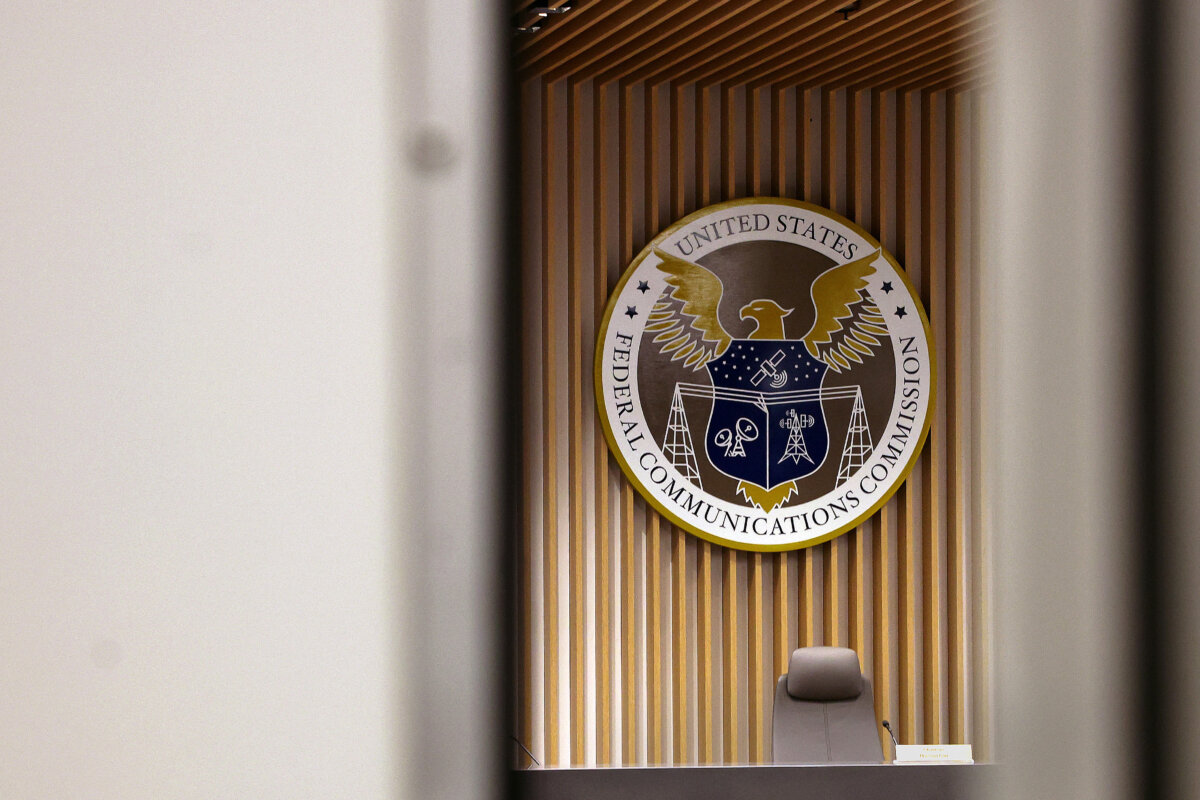

The Federal Communications Commission (FCC) will vote on Oct. 29 on rules that restrict electronics testing to U.S. labs and countries that offer reciprocal recognition, with Chinese labs expected to be hit hardest.
The commission said in a statement Wednesday that it lacks confidence in testing done in economies without a reciprocal framework, where it has seen a pattern of egregious violations. It also said shifting testing abroad has left the equipment-authorization program overconcentrated and harder to oversee.
The statement did not mention China, which handled about 83 percent of FCC certification applications in 2025. China does not grant U.S. testing labs reciprocal recognition.
Before a phone, camera, computer, or any other electronic device can be marketed in the United States, it has to be tested at an FCC-recognized lab. The Oct. 29 order would change which labs can hold that recognition.
“For decades, officials in D.C. looked the other way when foreign nations abused their relationships with America and adopted trade practices that failed to account for basic concepts of reciprocity and fair dealing,” FCC Chairman Brendan Carr said in the statement.
“Those efforts included the offshoring of testing capacity to foreign labs and the gutting of American jobs and domestic industry.
“Flash forward to now and less than 4% of all electronic devices are tested in labs located inside the U.S., and the lion’s share are tested in countries that do not operate a reciprocal economy.”
If the commission adopts the order at its Oct. 29 open meeting, testing, certification, and accreditation would have to occur in the United States or a reciprocal economy beginning Dec. 1, 2028.
Beijing’s Lab Ties
China is among the countries that do not have a reciprocal agreement with the United States.
In 2025, labs in China tested 38,491 of the 46,402 applications for FCC equipment certification, or 83 percent, according to an April 2026 tally by the commission’s Office of Engineering and Technology. U.S. labs handled 1,631 of those applications, or 4 percent.
The FCC proposal follows the “bad labs” rules adopted last year, which barred ownership or control of a test lab by entities the commission treats as national security threats, including foreign adversaries. Twenty-nine labs have since lost FCC recognition because of those ties.
On Sept. 8, 2025, the FCC opened proceedings to withdraw recognition for seven China-based labs it said were owned or controlled by the Chinese communist regime. It denied recognition applications for two other labs and said it would not renew recognition for two more whose recognition had expired.
By Sept. 26, 2025, the commission had begun proceedings to withdraw recognition, or had denied applications, from 15 labs controlled by Beijing.
On April 8, the FCC said it wanted to go further and bar every lab in China from testing devices such as smartphones, cameras, and computers for the U.S. market, not only labs owned or controlled by the Chinese regime.
A review found labs that “potentially have deep ties to the Chinese Communist Party (CCP),” including Chinese state-owned enterprises and companies that do work for the Chinese military, the FCC said.
“These labs have tested thousands of devices bound for the U.S. market over the last several years,” the FCC said.
Carr said the Justice Department’s National Security Division had warned the FCC that if a foreign adversary exploited test labs as a loophole, it could infiltrate American networks “on a broad scale.”
 Friends Read Free
Copy
Facebook
Tweet
Friends Read Free
Copy
Facebook
Tweet