
Multiple federal agencies have ended contracts with Springer Nature, publisher of the journal Nature, according to spokespersons and a government database.
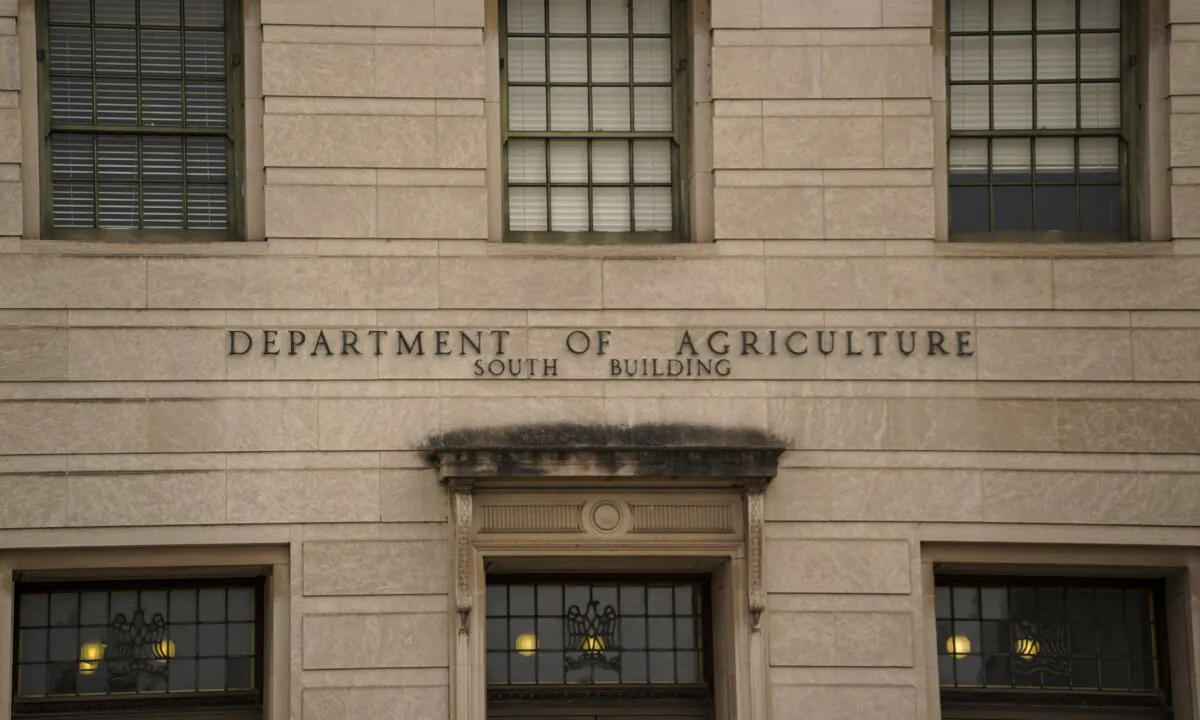
The U.S. Department of Agriculture (USDA) terminated contracts worth nearly $2.5 million, although the funds are all marked as outlaid, according to USA.Spending.gov.
The largest contract, worth $2.3 million, was for a subscription to Springer Nature journals, backfiles, electronic books, and other resources published by the company.
“USDA has cancelled all contracts and subscriptions to Springer Nature. The journal is exorbitantly expensive and is not a good use of taxpayer funds,” a spokesperson for the USDA told The Epoch Times in an email on July 1.
A spokesperson for the Department of Energy told The Epoch Times in an email on July 1 that it has canceled the remainder of a $583,000, three-year contract with Springer Nature that had been scheduled to end on Dec. 31, 2025. The spokesperson did not disclose a reason for the cancellation.”
A spokesperson for the Department of Health and Human Services (HHS) told news outlets in a statement that “all contracts with Springer Nature are terminated or no longer active” and that “precious taxpayer dollars should not be used on unused subscriptions to junk science.”
Federal law enables agencies to terminate contracts “if the Contracting Officer determines that a termination is in the Government’s interest.”
The spokesperson did not provide details, but Nature has been criticized for publishing an article in 2020 called “The Proximal Origin of SARS-CoV-2” that purported to “clearly show that SARS-CoV-2 is not a laboratory construct or a purposefully manipulated virus.” SARS-CoV-2 is one of the names of the virus that causes COVID-19.
A House of Representatives select subcommittee in 2024 concluded that COVID-19 likely originated from a laboratory in Wuhan, China, and noted that emails indicate Dr. Anthony Fauci, a top U.S. official during the COVID-19 pandemic, helped draft the Nature article but was not credited by its co-authors.
The White House also updated its website in April to say COVID-19 likely came from the high-level lab in Wuhan, and highlighted how media outlets and officials promoted the “Proximal Origin” paper to support the idea that COVID-19 originated in nature.
Springer Nature recently signed a five-year contract with a new organization called Nature Health Global to manage a scientific journal called EcoHealth. The new group was started by Dr. Peter Daszak after the nonprofit he headed, EcoHealth Alliance, closed its doors.
Both Daszak and EcoHealth earlier in the year were banned from receiving U.S. taxpayer money because of how they funneled U.S. money to the lab in China to carry out risky research.
A spokesperson for Springer Nature told outlets in a statement, “We don’t comment on individual contracts, but across our U.S. business there is no material change to our customers or their spend.”
A spokesperson for the company also told Nature that the company “continues to have good relationships with U.S. federal agencies.”
Across time, Springer Nature has 687 contracts listed in the government database worth $61 million. HHS has awarded the most money, $22.8 million, to Springer Nature.
No HHS contracts with Springer Nature have been terminated recently, according to the database, although HHS has not submitted information to the database since May 29.
Health Secretary Robert F. Kennedy Jr. in May said existing journals have serious problems, although he did not identify Springer Nature as one. He also said that government scientists would probably stop publishing research in the journals and instead use new government publications.
Dr. Jay Bhattacharya, head of the National Institutes of Health, said later that his agency would start up a new journal that releases results of replication research.
 Friends Read Free
Copy
Facebook
Tweet
Friends Read Free
Copy
Facebook
Tweet