
The Federal Reserve’s preferred inflation gauge has topped 4 percent for the first time since 2023.
Last month’s annual personal consumption expenditure (PCE) price index rose to 4.1 percent, the highest level since April 2023, according to new Bureau of Economic Analysis data released on June 25.
Economists had a consensus forecast of 4.1 percent.
Monetary policymakers place greater emphasis on this measure than on the consumer price index because PCE updates its weights more frequently and includes a more comprehensive basket of goods and services.
On a monthly basis, PCE edged up 0.4 percent, below the market estimate of 0.5 percent.
Energy costs have been the primary driver of rising price pressures due to the war in Iran. But with the Middle East conflict potentially winding down, oil and gas prices have been plummeting, making May’s data a lagging indicator.
A barrel of West Texas Intermediate—the U.S. benchmark for oil prices—declined below $70 on the New York Mercantile Exchange for the first time since the early days of the war.
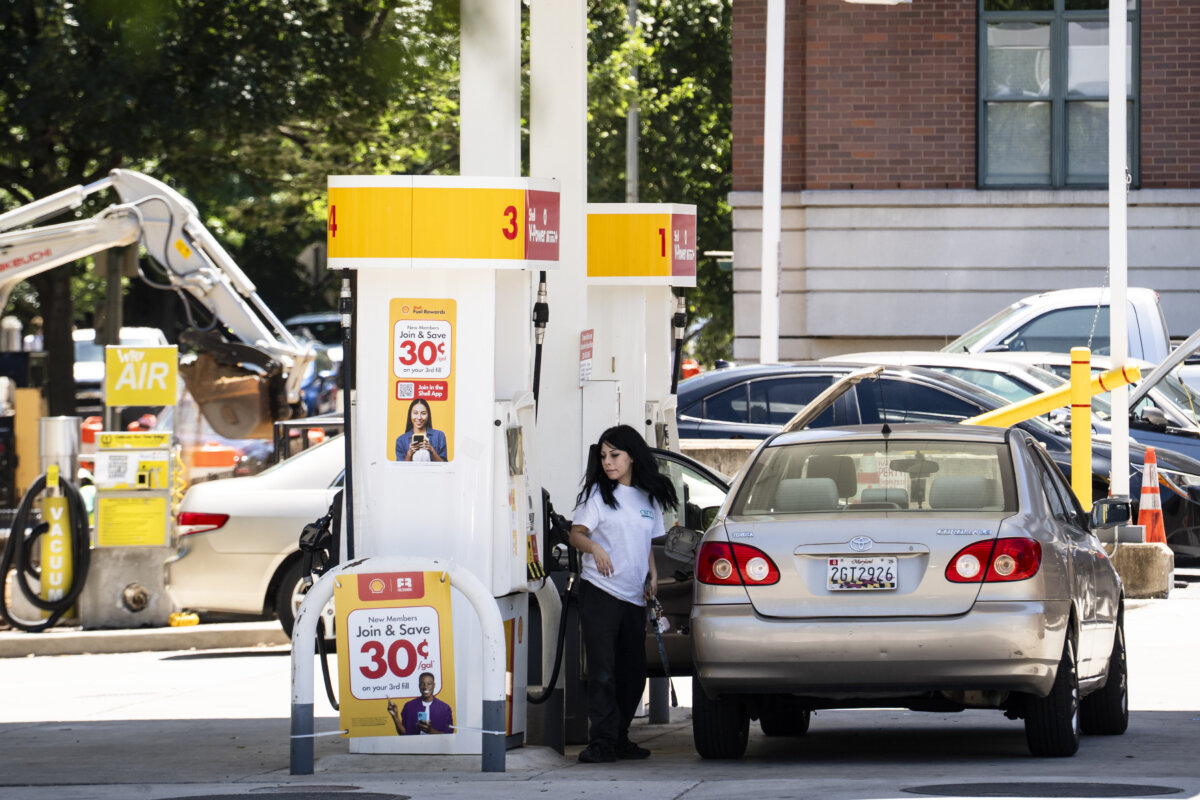
Gasoline prices have also come down sharply over the last several weeks, defying the typical rockets-and-feathers asymmetrical price transmission.
The national average for a gallon of gasoline was $3.918 on June 25, according to the American Automobile Association. This is down almost 60 cents from a month ago.
President Donald Trump accused oil companies of “gouging” drivers as gas prices have not fallen “like a rock.”
“The big Oil Companies are not dropping their price at the pump commensurate with the sharply lower prices they are paying for Oil,” Trump said in a June 24 Truth Social post.
“Those prices are dropping like a rock! In other words, customers are being ‘gouged.’ I have instructed the DOJ to immediately start looking into this. Gasoline prices better start going down a lot faster than what I’m seeing!”
Excluding food and energy, the 12-month core PCE inflation rate was tamer, rising to 3.4 percent from 3.3 percent in the previous month.
The market had penciled in a reading of 3.4 percent.
From April to May, core PCE climbed 0.3 percent, in line with expectations.
Personal income and spending both rocketed at a higher-than-expected pace of 0.7 percent last month.
Stabilizing Forces
While financial markets had already anticipated elevated May inflation readings, investors and monetary policymakers are hunting for evidence of inflation stabilizing.
“The key question for investors is whether inflation is stabilizing or starting to reaccelerate,” Jay Woods, chief market strategist at Freedom Capital Markets, said in a note emailed to The Epoch Times.
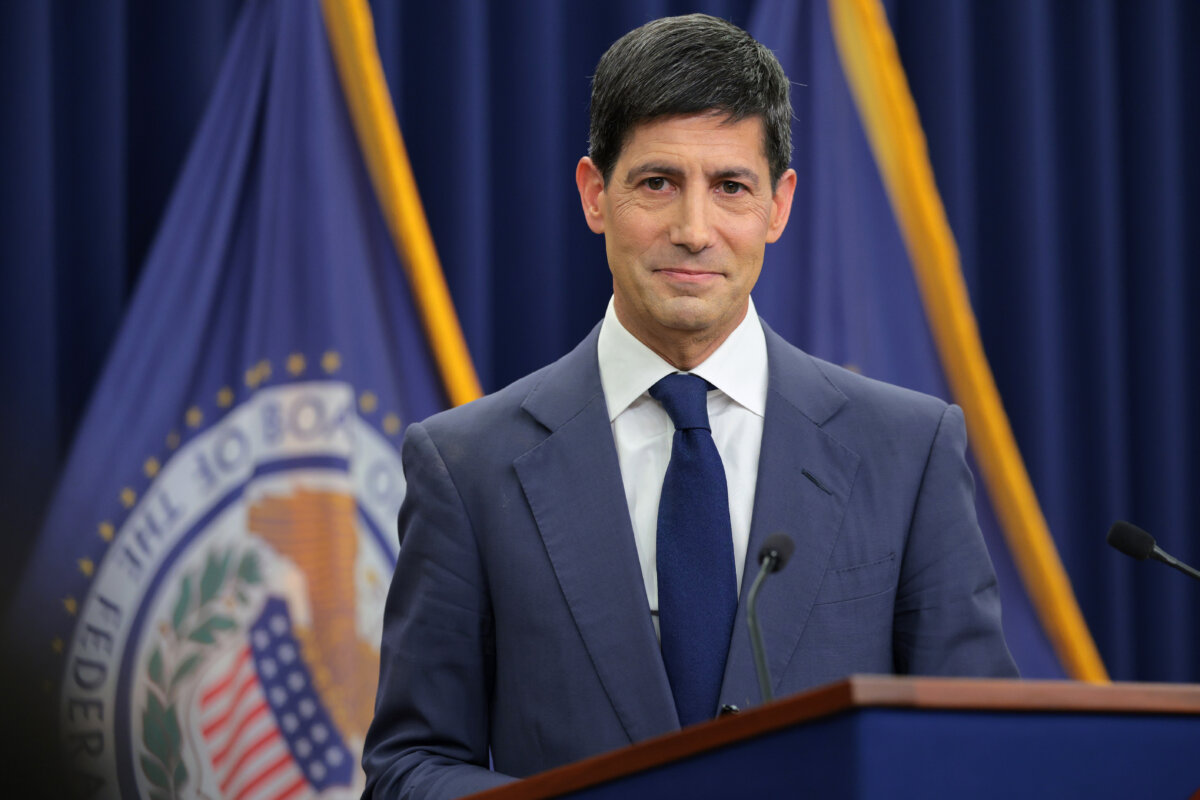
“For the Fed and new Chair Kevin Warsh, the focus won’t be on one headline number, but the underlying trend. Warsh has made it clear he wants to move away from relying on forecasts and focus on incoming data.”
Treasury Secretary Scott Bessent, in a June 24 interview with CNBC’s “Squawk Box,” said inflation has been largely concentrated in services.
“When we look at the data, the structural inflation has been in services,” Bessent said, adding that higher goods prices have been paid by the producers rather than consumers.
But this could also be concerning, as the Fed’s playbook suggests that services inflation is a better barometer of underlying trends. Services are labor-intensive and could be the fuel for persistently elevated inflation rather than temporary supply shocks.
At the same time, structural inflation does not appear to be surging ahead.
The June CPI report is expected to show a 0 percent monthly reading and a 12-month rate of 4 percent, according to the Cleveland Fed Inflation Nowcasting Model. Core CPI is also projected to rise 0.2 percent month over month and slow to 2.9 percent.
Warsh has also expressed support for using multiple inflation measures to inform monetary policy. One of these is trimmed-mean inflation, which removes outliers that cause spikes or sharp drops in monthly readings.
Dallas Fed economists are still calculating the numbers, but April’s annual trimmed-mean PCE inflation rate came in at 2.3 percent, compared to 3.8 percent.
The upcoming tranche of inflation news could have implications for investors’ interest rate forecasts.
Futures market data suggest traders are pricing in an almost 70 percent chance of a rate hike at the September Federal Open Market Committee policy meeting.
The 2-year Treasury yield—typically viewed as a reflection of Fed policy expectations—has eased slightly from the 4.23 percent level recorded on June 22.
Financial markets might not welcome raising interest rates, but experts say that tightening monetary policy could be one way for the new chairman to restore credibility.
“It’s hard to be overly critical. Inflation is one of the biggest threats to fixed income returns, so establishing credibility on that front matters,” Christian Hoffmann, head of fixed income at Thornburg Investment Management, said in an emailed note to The Epoch Times.
The Fed’s next two-day policy meeting will take place on July 28 and 29.
 Friends Read Free
Copy
Facebook
Tweet
Friends Read Free
Copy
Facebook
Tweet