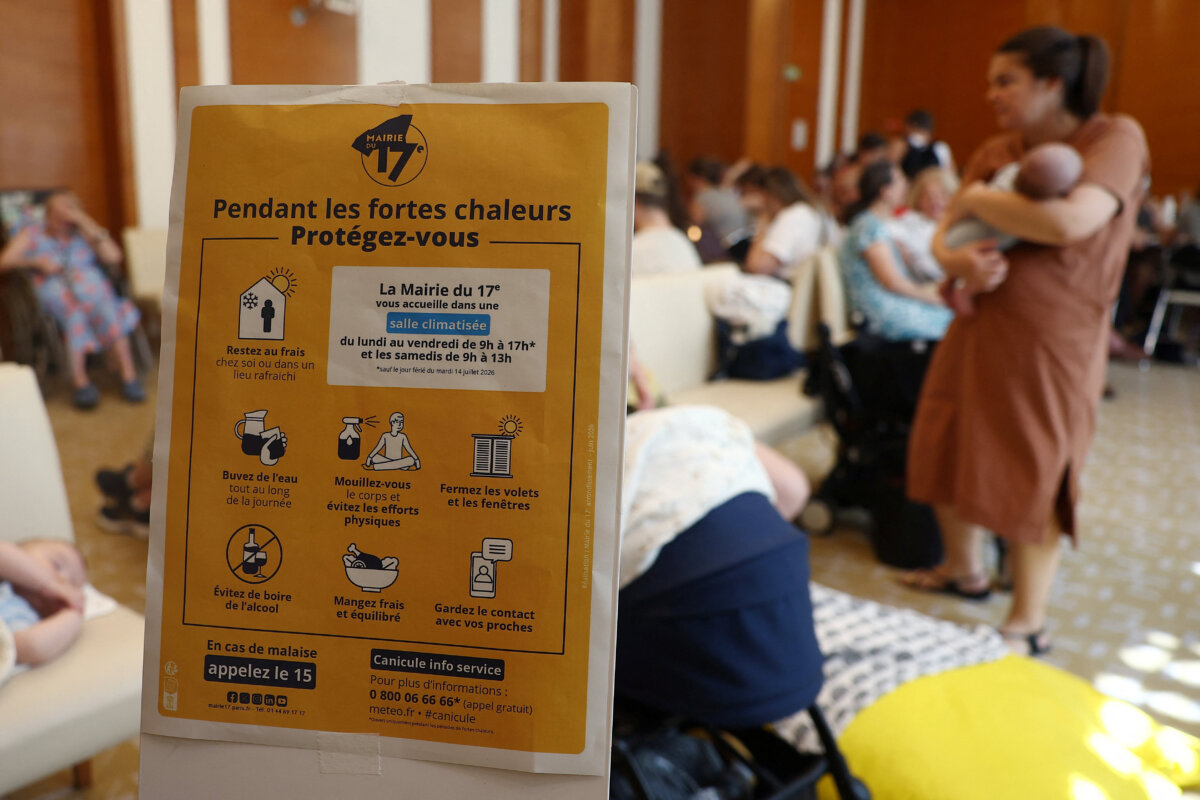
The head of the Paris police has imposed temporary bans on public alcohol consumption, saying it is necessary to take pressure off the city’s hospitals, which are struggling to cope with increased intake due to the heatwave affecting France.
Patrice Faure told BFM TV on June 25 that there would also be a ban on the sale of alcoholic products from midday local time on June 26 until 7 a.m. on June 27, repeated on Saturday and Sunday.
“I will publish a prefectural order this evening banning the consumption of alcohol in public places from midday tomorrow,” Faure said.
“As you know, drinking alcohol in direct sunlight can obviously have devastating effects, potentially leading to our firefighters and emergency medical services becoming overwhelmed or called out when other people may also need them.”
French police chiefs have the power to restrict liberties, such as drinking alcohol in public or purchasing it, under the country’s legal code.
Thirsty Soccer Fans
Thousands of French soccer fans are expected to congregate in Paris on the evening of June 26 to watch the country’s final match in World Cup Group I, against Norway. But they will have to watch the game while sipping water or soft drinks.
France endured its hottest day ever on June 23, with the weather agency Météo-France recording an average temperature of 29.8 degrees Celsius (85.6 degrees Fahrenheit) nationwide during the day.
On June 24, a new record of 30 degrees Celsius (86 degrees Fahrenheit) was recorded, with a high of 43.8 degrees Celsius (110.8 degrees Fahrenheit) in the town of Pulluau.
Peak temperatures on June 25 were just under 40 degrees Celsius (104 degrees Fahrenheit) at Parc Montsouris in southern Paris.
French health minister Stéphanie Rist said on June 25 that the country was in a “crisis situation” and that the government had decided to move to level three of the Orsan plan, an operational response to exceptional health situations introduced in 2014.
“We are just at the start of seeing an increase in people going to emergency wards,” Rist told a news conference.
She said the ambulance service in Paris had reported four times more cardiac arrests than normal over a 24-hour period.
The French health ministry said in a statement that 100 million euros (about $113 million) was being released “to address the urgent need for cooling in hospital wards.”
In 2003, a heatwave in France claimed the lives of around 15,000 people.
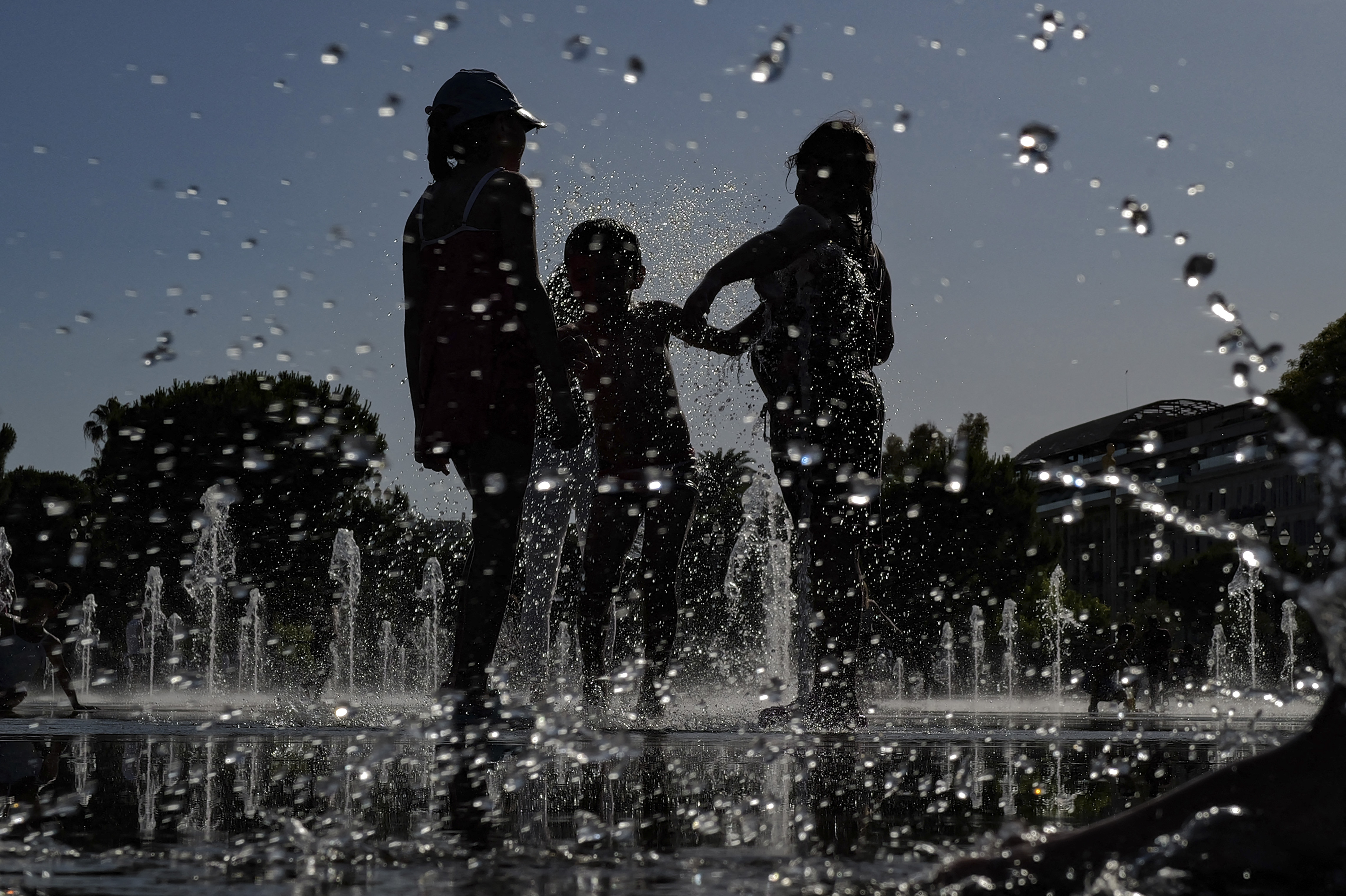
Much of Western Europe is enduring a heatwave, with both the UK and Switzerland recording all-time June highs, leading to the closure of many schools.
‘Omega Block’ to Blame
Meteorologists, such as those at the UK Met Office, have attributed the heatwave to a so-called “Omega block,” a weather feature that resembles the Greek letter.
“An area of high pressure will be sandwiched in between two lows to the east and west, and also slightly to the south,” the Met Office said. “These blocks frequently occur on the eastern edges of the Atlantic and eastern Pacific.”
Last week, French Prime Minister Sebastien Lecornu banned alcohol consumption at the annual Fete de la Musique festival on June 21 and at other public events in 35 of the worst-affected departments or regions.
At least 40 people have drowned in bodies of water in France in the past week while trying to cool down.
On June 23, Lecornu said most of those who drowned were young people.
The French authorities have repeatedly warned people about the dangers of unsupervised swimming.
Among those who died was Kenzo Kies, a 21-year-old professional soccer player with En Avant Guingamp, a club in the second tier of the sport.
Kies, a goalkeeper, was pulled from the Rhone River near Lyon on June 22 in critical condition and was later declared brain dead.
“En Avant Guingamp extends its most sincere condolences to Kenzo Kies’s family as well as to all his loved ones, and offers them its full support during this painful ordeal,” the club said in a June 24 post on X.
His former club, St. Etienne, also posted on X, saying he was a talented player who had “lost his life in dramatic circumstances.”
The Associated Press and Reuters contributed to this report.
 Friends Read Free
Copy
Facebook
Tweet
Friends Read Free
Copy
Facebook
Tweet