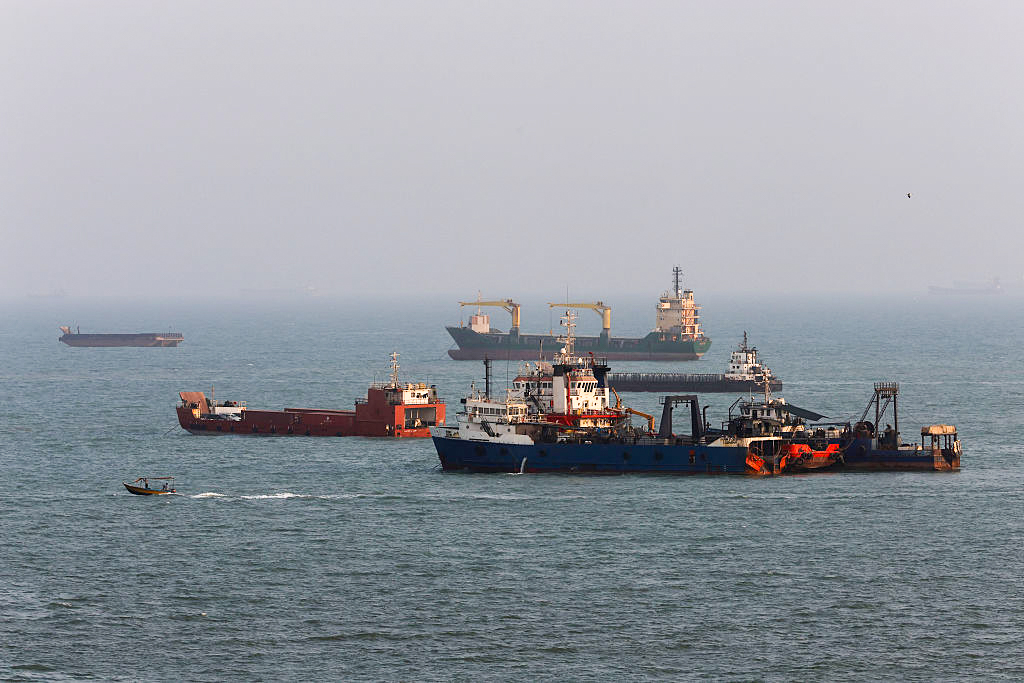

Oil prices could climb to $120 a barrel if attacks on commercial shipping in the Persian Gulf broaden and intensify, according to Goldman Sachs, as escalating U.S.–Iran strikes keep crude flows well below prewar levels.
The prospect of $120 crude was outlined by Daan Struyven, co-head of global commodities research at Goldman Sachs, in a Sep. 7 appearance on Bloomberg Television. He said that recent events in the Middle East show that the danger of shipping disruptions “broadening and intensifying” has become significant.
Struyven’s remarks came as Brent crude rose by 89 cents, or 0.9 percent, to $97.17 a barrel by 9:33 a.m. ET on Sept. 7, after touching $97.93, its highest level since July 24. U.S. West Texas Intermediate (WTI) gained 79 cents to $92.27 a barrel.
It also comes as U.S. gasoline prices, which have been pushed higher by constraints on crude shipments due to the U.S.–Iran conflict, rose to a Labor Day record high of $4.15 per gallon on Sept. 7, according to AAA data.
Monday’s gains in crude followed a sharp rally last week, when Brent rose about 8 percent and WTI nearly 10 percent after the United States and Iran resumed attacks on vessels in and around the Strait of Hormuz.
Goldman Sachs estimates that Persian Gulf oil exports have fallen to about 16 million barrels per day, down from a prewar average of 23 million.
“So that is roughly two-thirds, with important contributions from pipelines and also dark flows that initially don’t show up in the data but eventually show up … once the ships turn on their transponders,” Struyven said.
Risk of Broader Disruptions
Struyven said the volume of oil leaving the Gulf remains the most important factor for crude prices. If regional exports return to normal, Goldman expects Brent to fall toward $80 a barrel, broadly in line with the level suggested by current commercial inventories.
But further attacks could send prices sharply higher.
“In an upside scenario where shipping attacks broaden and intensify, we see Brent potentially reaching $120 per barrel,” Struyven said, adding that the risk of further disruptions to tanker traffic is an “important one” while describing the upside risk to crude prices as “meaningful.”
U.S. forces struck three Iranian oil tankers on Sept. 5, including one near Kharg Island, Iran’s main oil export hub, according to U.S. Central Command. The strikes came in response to attempts by Iran’s Islamic Revolutionary Guard Corps (IRGC) to launch ballistic missiles toward two U.S. Navy warships.
The IRGC said it targeted three tankers that were using unauthorized routes through the Strait of Hormuz, along with three U.S.-linked vessels elsewhere. Iran has also said it plans to establish a restricted zone outside the strait, potentially exposing more ships in the region to attack.
Marisks, a maritime intelligence firm, called Saturday’s strikes a “major escalation,” saying commercial tankers were increasingly being used as instruments of economic pressure.
ING commodities strategists Warren Patterson and Ewa Manthey said in a Sept. 7 note that the oil market remained “well-supported,” with little sign of peace between Washington and Tehran.
An average of 10 commodity ships sailed through the Strait of Hormuz per day over the past 10 days, the lowest since May, according to data released on Monday by analytics firm Kpler.
“If tanker traffic begins to slow materially, the market could price in a much larger supply shock. And there are already signs that this is happening,” said Priyanka Sachdeva, head of market insights at Phillip Nova.
Despite the escalation, oil continues to move through the Strait of Hormuz under U.S. Navy escort.
ING analysts said European natural gas prices were showing a stronger price reaction than oil because liquefied natural gas shipments via Hormuz had not recovered as quickly as crude.
European benchmark gas prices rose nearly 4 percent early on Sept. 7 as the region approached the 2026–27 heating season with what Patterson and Manthey described as “increasingly vulnerable” supplies.
Reuters contributed to this report.
 Friends Read Free
Copy
Facebook
Tweet
Friends Read Free
Copy
Facebook
Tweet