
A group of centrist House Democrats warned on July 9 that rising power demand and recent policy changes could threaten grid reliability and drive up costs unless Congress acts to modernize the country’s energy system.
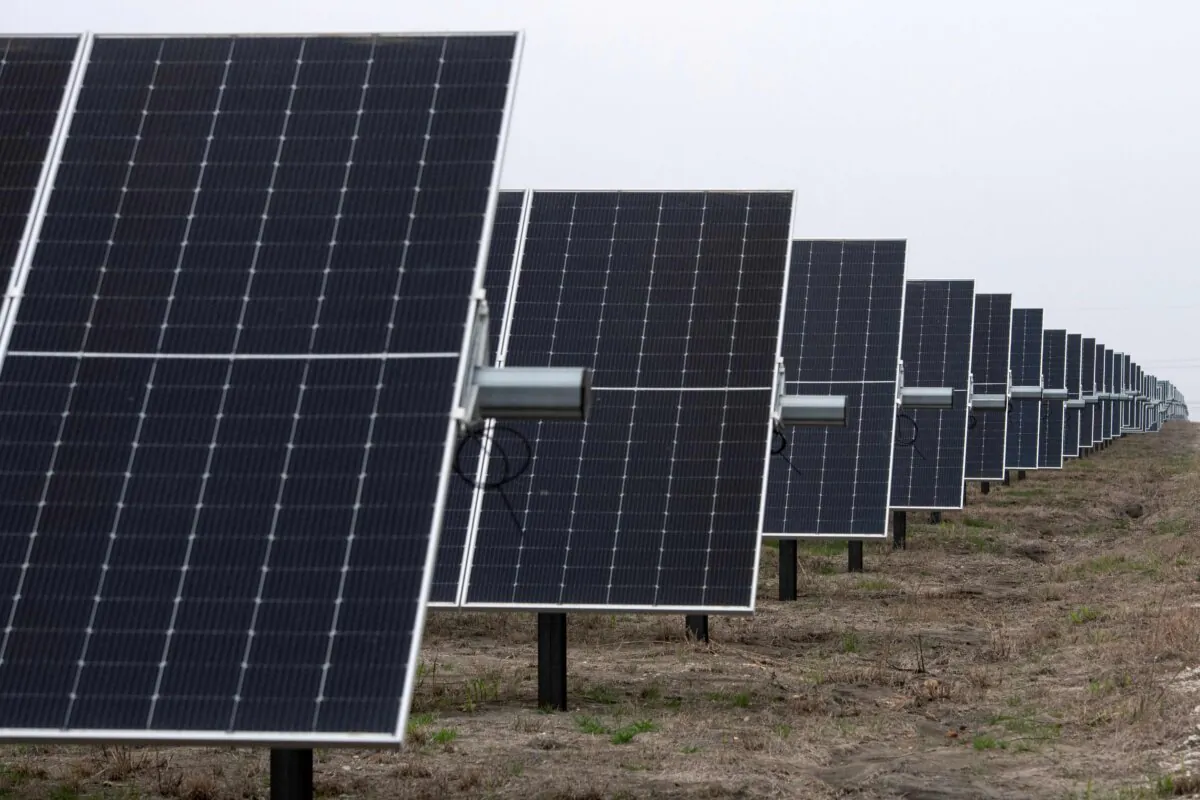
The New Democrat Coalition released a framework on July 9, laying out steps to expand clean energy, strengthen transmission infrastructure, and speed up federal permitting.
The announcement follows the passage of the Republican-backed budget bill that repeals key clean energy tax credits enacted under the Inflation Reduction Act. Signed by President Donald Trump on July 4, the megabill will end or phase out credits for home solar, batteries, heat pumps, electric vehicles, and large-scale wind and solar projects.
Rep. Scott Peters (D-Calif.), who leads the Coalition’s Environment, Climate, and Clean Energy Working Group, said the country faces “a massive increase” in demand and needs to respond urgently.
“For the first time in decades, America faces a massive increase in energy demand, due to AI data centers, onshoring manufacturing, and the electrification of our economy,” Peters said in a statement.
“We need affordable power, good-paying jobs, and reliable service—abundant clean energy is the answer.”
Peters said the GOP megabill incentivizes “outdated and expensive fossil fuels like coal,” and that taking “cheap and easily deployable clean energy offline” increases the chance of blackouts along with higher energy bills.
The White House stated in a July 7 executive order that the rollback is the policy of the United States to “rapidly eliminate the market distortions and costs imposed on taxpayers by so-called ‘green’ energy subsidies.”
The order stated that wind and solar energy are “expensive and unreliable,” displace affordable dispatchable power, and create dependencies on “supply chains controlled by foreign adversaries.” It directed federal agencies to strictly enforce the repeal of solar and wind tax credits, limit safe harbor provisions for construction timelines, and review Interior Department policies for any preferential treatment of renewable energy sources.
While many Republicans support the rollback as a way to reduce federal spending, some have raised concerns about the impact on jobs and long-term investment. Some more moderate GOP senators from states with expanding wind and solar industries—including John Curtis (R-Utah) and Lisa Murkowski (R-Alaska)—warned during negotiations that ending the credits could threaten employment and energy investments.
The New Democrat Coalition’s policy roadmap includes defending existing tax credits for renewables, removing subsidies for coal, modernizing mining laws for critical minerals, and investing in advanced nuclear technology. It also calls for giving the Federal Energy Regulatory Commission more authority over siting transmission lines and offering a 30 percent tax credit for regionally significant grid projects.
Much of the plan focuses on permitting reform, proposing faster timelines, a cloud-based application system, and earlier community engagement to avoid local opposition. The group said the effort is a practical, bipartisan response to energy pressures and political uncertainty.
Some clean energy developers and industry leaders have echoed the coalition’s concerns.
Elon Musk, CEO of Tesla, criticized the energy provisions in the GOP bill, calling them “a massive strategic error” that could “leave America extremely vulnerable in the future.”
Democratic lawmakers who support the coalition’s proposal say it offers a path forward to meet surging demand without sacrificing affordability or reliability. While the coalition holds no leadership positions in the current Congress, members say they hope that the framework can serve as a blueprint for future bipartisan negotiations.
“Our country has done big things in the past,” Peters said. “We’ve mobilized to win two world wars, put a man on the moon, and invent the semiconductor. That same sense of urgency and innovation is now required to fight climate change and deliver affordable energy for years to come.”
 Friends Read Free
Copy
Facebook
Tweet
Friends Read Free
Copy
Facebook
Tweet