
House Republicans want to unravel prior administration polices, they say, that eliminate fossil fuels as an energy option in building and appliance codes, raising housing and electricity costs, and limiting consumer choice.
House Democrats maintain that GOP lawmakers want to eliminate renewable energies as an energy option in building and appliance codes, raising housing and electricity costs, and limiting consumer choice.
That was the back and forth theme for nearly five hours of debate during a Sept. 16 House Energy and Commerce Committee Energy Subcommittee hearing on eight proposed bills addressing building and appliance codes.
The marathon included Department of Energy (DOE) Acting General Counsel Jeff Novak providing testimony and responding to questions for more than three hours, as well as a 90-minute panel discussion with five witnesses, which was paused for 45 minutes to accommodate a House vote.
Subcommittee chair Rep. Bob Latta (R-Ohio) said the bills will relieve families of burdens imposed by “misguided and redundant policies” that, “Number one, price out first-time home buyers; two, destroy appliance affordability; three, discourage production of affordable manufactured homes through regulatory morass.”
“Bad building codes have decreased housing production and can add up to $31,000 to the price of a new home,” House Energy and Commerce Committee Chair Rep. Brett Guthrie (R-Ky.) said.
“Egregious appliance standards have caused homeowners to spend 34 percent more on appliances than they did 15 years ago, while having to replace them at a faster rate,” he continued. “Anti-fossil fuel agendas have raised energy prices and jeopardized reliability for millions of customers.”
Rep. Kathy Castor (D-Fla.) countered, “Household electricity prices are up 10 percent this year. One-in-three households is cutting back on basic necessities, like groceries, to afford electric bills. Three-in-four Americans are concerned with utility bills increasing, and should be—over 100 gas and electric utilities have either raised or proposed higher rates.”
The proposed bills “rip away appliance rebates, building code and workforce funding,” Rep. Frank Pallone (D-N.J.) added. “They go after federal building efficiency and efficiency standards for manufactured housing. These bills will dramatically increase household energy expenses.”
Six measures are related to building codes, including proposals to: prohibit state/local governments from banning natural gas; defund the 2022 Inflation Reduction Act programs that financially incentivize states to adopt “green” building requirements; eliminate “duplicative” standards for manufactured homes; terminate the “phase-out of fossil fuels” and repeal energy performance standards in federal buildings; and reauthorize DOE’s weatherization program.
Another two measures seek to reform Biden-era DOE efficiency standards in domestic appliances and codify an industry definition for showerheads.
Reforming 1975 Energy and Conservation Act
Novak, nominated as DOE counsel by President Donald Trump in May, noted three of the eight bills propose revisions to the Energy Policy and Conservation Act of 1975 (EPCA), which established testing, labeling, and safety specifications for domestic appliances; performance and energy requirements were added under the 1979 Appliance and Equipment Standards Program.
“DOE has been taking aggressive actions to eliminate regulations that drive up costs and lower quality of life for the American people,” he testified.
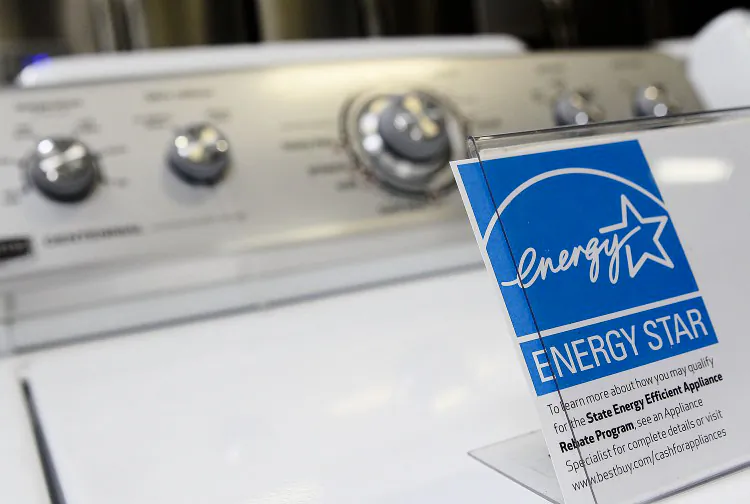
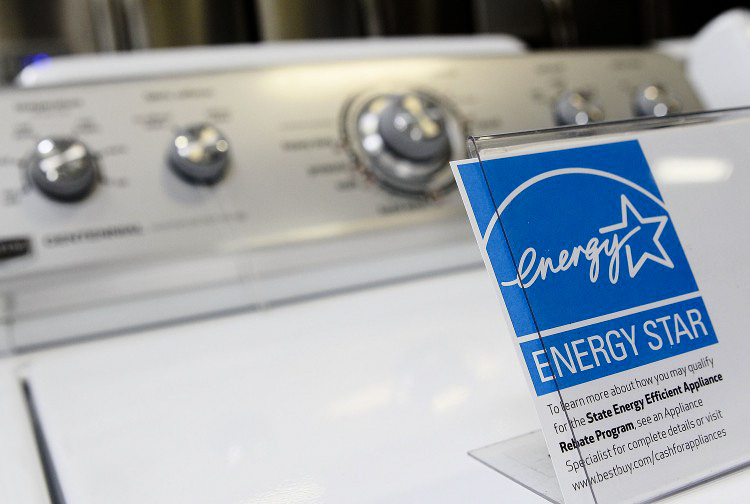
HR 4626, the Don’t Mess With My Home Appliances Act, seeks to amend the 1975 law and its standards program, which regulates more than 60 domestic appliances that, according to the subcommittee’s majority staff memo, govern “about 90 percent of home-energy use.”
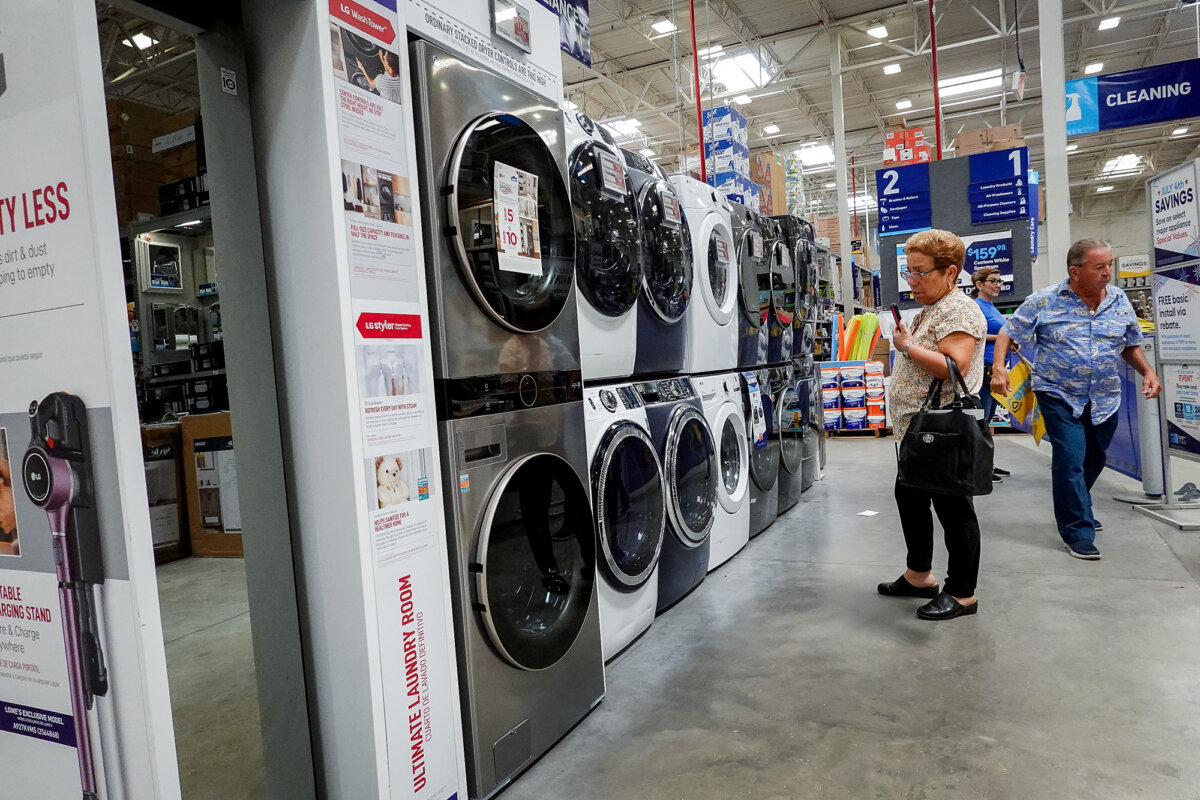
The EPCA requires DOE to review appliance energy efficiency standards every six years. It stipulates a new rule must “result in a significant conservation of energy” and be “technologically feasible and economically justified.”
Panel Republicans said the Biden administration’s DOE proposed or finalized rules that don’t “save a significant amount of energy,” are not cost-effective, and—citing a December 2022 New Innovation Agenda to “electrify homes, businesses, and transportation”—discourages use of natural gas in favor of electric appliances.
GOP panelists argued that this mandate was issued regardless of cost or consumer preference, thereby violating consumer protection measures outlined in the 1975 law.
The proposed Don’t Mess With My Home Appliances Act amends the EPCA to prohibit DOE from prescribing a new appliance efficiency standard that “is not technologically feasible and economically justified.”
Industry Seeks Further Changes
American Gas Association Vice President for Governmental Affairs George Lowe said in his testimony, “EPCA reform is long overdue” and should be structured to create certainty for industry.
“History demonstrates the natural gas industry supports appliance efficiency requirements,” he said, noting the association, which represents more than 200 companies that serve nearly 75 million U.S. customers, was self-regulating long before 1975.
“Unfortunately, in recent years,” Lowe said, “DOE has utilized various methods to shift the purpose of the energy efficiency rule-making process away from the plain meaning of EPCA … in a way that harms consumers, particularly those in low-income and senior households.”
Association of Home Appliance Manufacturers Vice President Jennifer Cleary testified calling for stronger federal authority to be the rule-maker for appliances to ensure a consistent national market, rather than letting individual states set their own conflicting rules.
The association, which includes more than 150 companies that produce 95 percent of household appliances sold in the United States and Canada, suggested several “enhancements” to the bill, including: guaranteeing DOE accountability, ensuring DOE follows its own rules and EPCA’s requirements, and requiring the DOE to demonstrate that its actions will not harm consumers.
Cleary added that the proposed bill should also “lower costs for consumers and reduce regulatory burden.” It should eliminate EPCA’s “six-year look-back” provision, she said, noting the 50-year-old bill is out of touch with modern appliances.
The six-year review requirement fosters “a never-ending regulatory churn, regardless of who is in the White House,” she added. “Regulations should be based on the opportunity to conserve energy in a cost-effective way that preserves consumer choice, not on a ticking clock.”
Pushback on Proposed Changes
Rep. Castor said EPCA’s standards “have saved households more than $500 in energy bills each year,” and Appliance Standards Awareness Project Executive Director Andrew deLaski, in his voluminous written testimony, said the standards program, “established and updated numerous times on a bipartisan basis, protects consumers and small business owners.”
Low- and moderate-income households spend more on energy as a proportion of income than more affluent households and are often renters, he said.
“Renters are usually not able to choose the appliances their landlords purchase,” deLaski said. “Robust appliance standards help ensure renters benefit from savings on utility bills from more efficient appliances.”
EPCA’s standards also save businesses money, he noted, citing a March DOE fact sheet documenting “existing standards reduced consumer and business utility bills by a collective $105 billion in 2024.”
DeLaski said the standards are popular, citing a 2025 Consumer Reports poll that found 87 percent of respondents support them and “a majority of Americans want them strengthened.”
Appliance standards “lessen strain on the power grid,” he said, mocking Republicans’ claims they restrict consumer choice when there are more than 11,000 refrigerator models, 1,600 washing machine models, and 1,400 dishwasher models available.
But the bottom line, Latta said, is Republican lawmakers don’t believe “consumers should pay more for a dishwasher to offset the social cost of carbon emissions.”
“At a personal level, I would say I don’t either,” Novak said, “just having bought a dishwasher that doesn’t do what I’d like it to do.”
 Friends Read Free
Copy
Facebook
Tweet
Friends Read Free
Copy
Facebook
Tweet