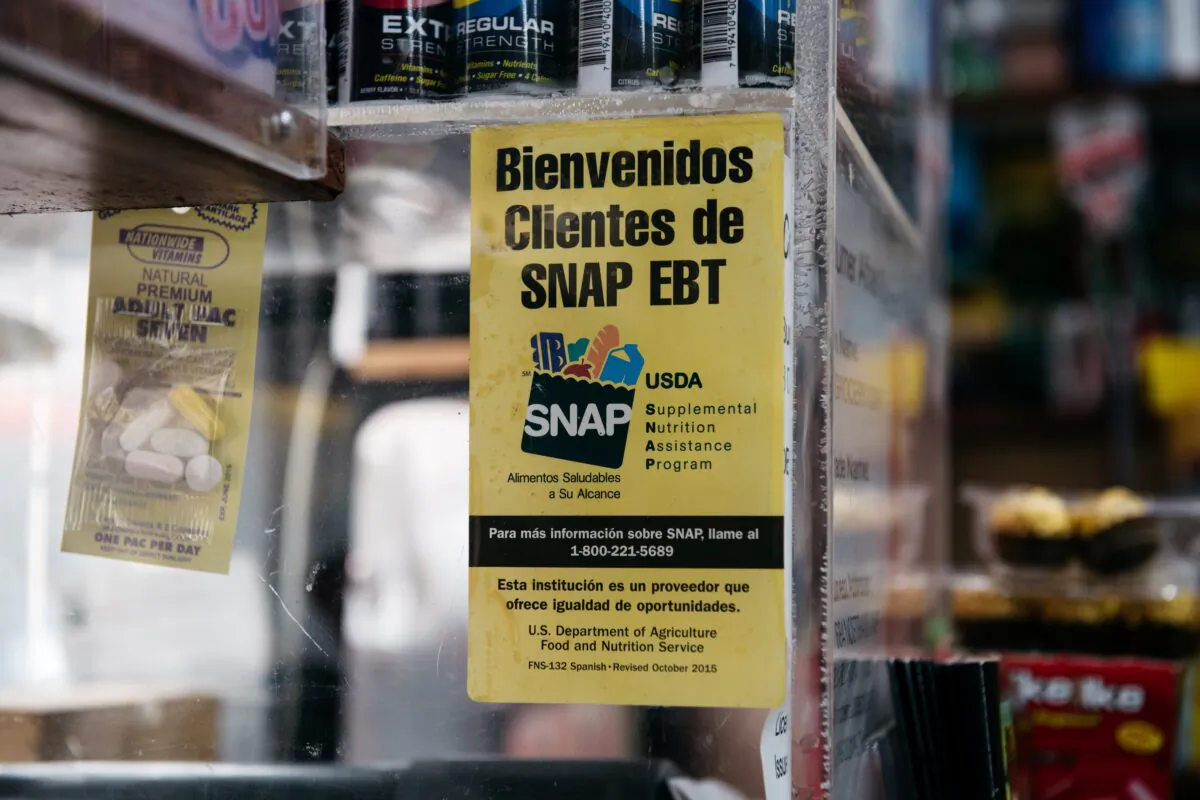

The cost of food assistance programs in the United States is rapidly approaching the trillion-dollar threshold, and some legislators are trying to pump the brakes.
During a Feb. 16 hearing discussing the 2023 Farm Bill, four senators voiced concerns while sharing the findings of a new Congressional Budget Office report.
The cost analysis for nutritional subsidies such as the Supplemental Nutrition Assistance Program (SNAP) and Thrifty Food will increase an additional $93 billion over the next 10 years. That’s in addition to the $250 billion the Thrifty Food program has spent since 2018.
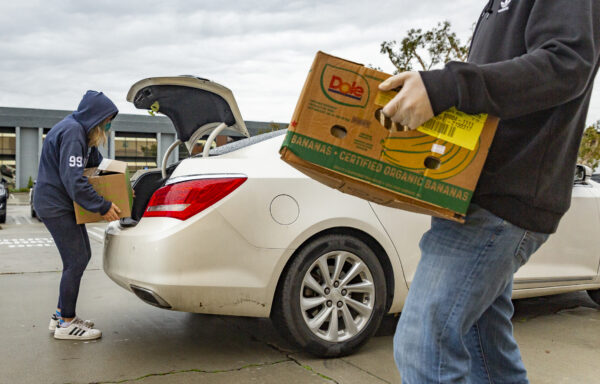 Volunteers at Laguna Niguel Presbyterian work with San Clemente-based Family Assistance Ministries to hand out food donations to a line of cars in Laguna Niguel, Calif., on Dec. 23, 2021. (John Fredricks/The Epoch Times)
Sen. John Boozman (R-Ark.) pointed out that Thrifty Food had always been “cost neutral” prior to the pandemic and that SNAP already spends more than $100 billion per year.
“SNAP is one of the largest entitlement programs in the federal government,” Boozman said during the hearing.
Compounding the sticker shock, 10 percent of the more than 41 million SNAP recipients are listed as “able-bodied adults without dependents.”
Much of that has been attributed to the relaxation of income requirements to enroll in federal food assistance programs during the pandemic, a loophole that will expire once the public health emergency officially ends, which is currently set for May 11.
“The pandemic can’t be used as an excuse to ramp up federal spending,” Sen. Chuck Grassley (R-Iowa) said.
What began as helping Americans who lost jobs during COVID-19 has also become an increasingly difficult program to manage.
Deputy Undersecretary of Agriculture for Food, Nutrition, and Consumer Services Stacy Dean told legislators the suspension of certain enrollment requirements was meant to support and motivate workers.
However, Dean said it’s “not having that result.” She added food hardship among SNAP recipients has actually increased.
“It does not result in increasing employment. As designed, it’s not working,” Dean stated.
Benefits Outpacing Inflation
Sen. Roger Marshall (R-Kan.) noted that while food inflation is up 20 percent since January 2021, SNAP benefits increased 50 percent.
“So why are SNAP benefits outpacing inflation?” Marshall asked during the assembly.
He also took a hard stance on the 10 percent of SNAP recipients who are “able-bodied adults without dependents.” He called for states to tighten their belts on the use of income waivers.
Marshall clarified he doesn’t want anyone who truly needs the program to go hungry, however, “When we have 7 million able-bodied men between the ages of 25 and 45 not working, potentially qualifying for SNAP benefits, it just doesn’t seem fair.”
Dean reiterated that exploitation of the income regulation loophole was part of the pandemic fallout. She said the rule surrounding income waivers for SNAP is “incredibly complicated” and that there are both underemployed and over-employed people using food assistance subsidies.
“We often see individuals who should be exempt from it [SNAP] fall prey to it,” Dean said.
“We also have an obligation to make sure these federal funds are not abused,” Sen. Joni Ernst (R-Iowa) said, expressing discontentment with the soaring nutritional assistance budget. “We have seen just a shocking level of fraud throughout the SNAP program.”
Following suit, Grassley didn’t mince words over food subsidy spending. He highlighted that historically, programs like SNAP are a reflection of how the economy is doing. When employment rates are up, enrollment in those programs tends to go down.
Despite President Joe Biden’s Jan. 6 announcement that unemployment in the United States is at a 50-year low, the cost of federal nutrition assistance is skyrocketing. Current participation in SNAP is 12 percent higher than in February 2020, according to Grassley.
He added the cost of food subsidies has increased “300 percent” since 2019.
“We have to start tackling that issue right now.”
 Friends Read Free
Copy
Facebook
Tweet
Friends Read Free
Copy
Facebook
Tweet