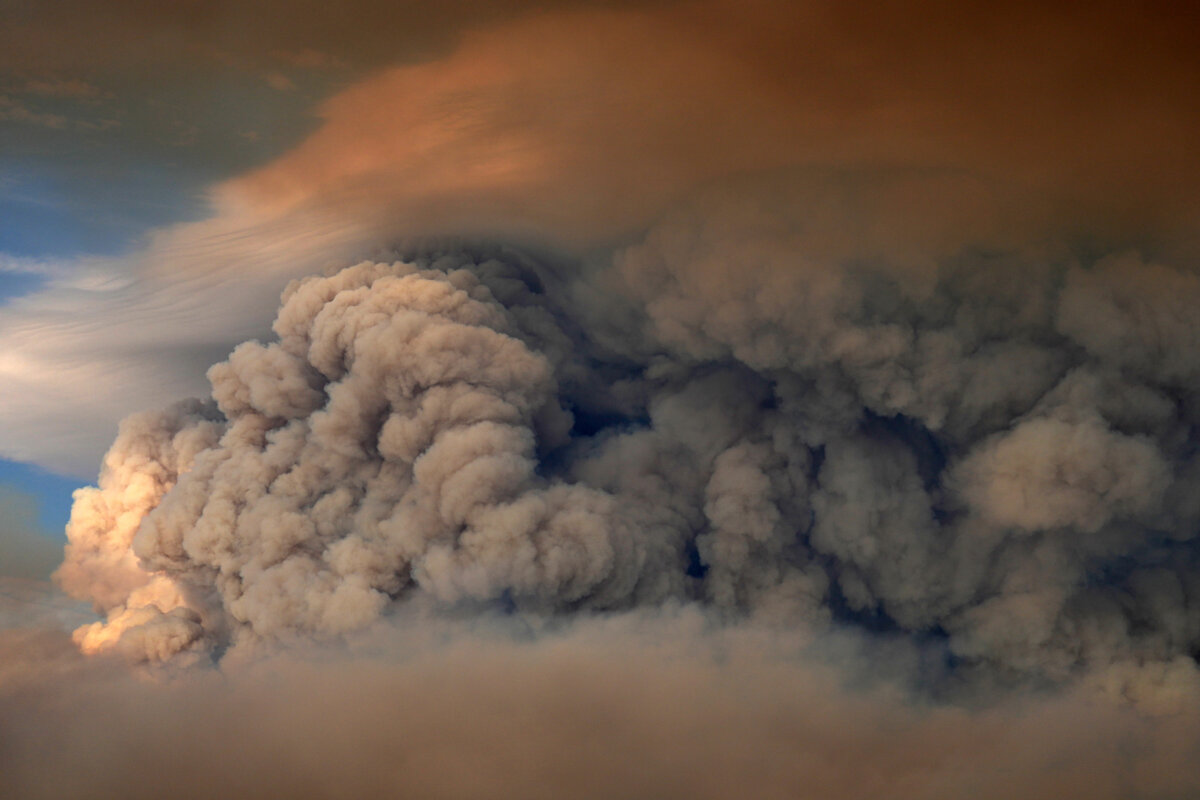

MIDDLETOWN, N.Y.—The air quality for tens of millions of Americans and Canadians is being negatively affected by a series of fires in western Ontario and northern Minnesota.
Fires broke out earlier this month during a dry and hot streak hitting the northeast, affecting the border region between Ontario and Minnesota and the regions northwest of Lake Superior. The smoke has drifted over many Northeastern states, including New York City and Boston, and could move south toward the District of Columbia.
The smoke has created hazy sky conditions and reduced air quality. The New York governor’s office issued warnings about the combined effects of smoke and heat, saying that it could hurt young and sick people, and that strenuous outdoor activities should be limited.
The air quality index for New York City as of July 15 is 153, according to air quality tracker AQICN. That is less than half of what the city experienced during the major 2023 Canadian wildfires, when the city topped over 300 on the air quality index.
The Central, Western, and Eastern Lake Ontario areas of New York state are currently under unhealthy air conditions, according to the state’s Department of Environmental Conservation, with the rest of the state’s air quality ranked “unhealthy for sensitive groups.”
National Oceanic and Atmospheric Administration mapping shows heavy smoke from Ontario flowing southeast over north Wisconsin and Michigan, most of New York, and southern Vermont and New Hampshire. The states of Massachusetts, Connecticut, and Rhode Island are completely covered by heavy smoke. The Canadian city of Toronto is in the smoke stream as well.
Most affected states have issued advisories about unhealthy air quality or pollution.
Predictions and map models from the AirFire Research Team, which is a part of the U.S. Forest Service’s Research and Development branch, show that the smoke could move farther south over July 16 and 17. The smoke could cover eastern Pennsylvania and all of New Jersey, severely affecting population centers like New York City; Newark and Trenton, New Jersey; and Philadelphia.
The model predicts that the smoke will disperse over Delaware, Maryland, and the Washington, D.C. area on the night of July 17.
Breathing in wildfire smoke can cause breathing issues, asthma attacks, chest pain, and other health problems. People with chronic conditions such as asthma, diabetes, or heart disease are at higher risk of the negative effects of wildfire smoke. Children and pregnant women are also more vulnerable.
 Friends Read Free
Copy
Facebook
Tweet
Friends Read Free
Copy
Facebook
Tweet