
Nevada sued the Trump administration Monday to prevent its Colorado River water plan from moving forward. Officials say the cuts could ravage the state and end long-observed river rules.
The Interior Department on Friday completed the plan, which orders a 21 percent cut in water deliveries to Arizona, California, and Nevada for two years beginning in 2027. Those reductions for the lower basin states could nearly double after 2028. Arizona and Nevada have said deeper cuts would hit their economies hard.
“Under the proposed plan issued by the Department of the Interior, southern Nevada could lose more than 70 percent of its already meager Colorado River allocation while the Upper Basin states of Colorado, Utah, New Mexico, and Wyoming are not required to contribute a drop,” Nevada Governor Joe Lombardo said. “This isn’t about political posturing; this is a matter of survival for a community that represents about two-thirds of our state’s citizens and the lion’s share of its economy.”
The four upper basin states—Colorado, Utah, New Mexico, and Wyoming—face no mandatory reductions under the new 10-year framework. The river supplies water to one in 10 Americans and generates power for 6 million people.
States spent more than three years trying to renegotiate the current plan, which is set to expire this year. They never came to an agreement, in particular due to upper basin officials refusing mandatory cuts. They argue the decades-long Western drought is already forcing steep reductions on them. Lower basin states counter that all seven states must share the burden.
Nevada, the Colorado River Commission of Nevada, and the Southern Nevada Water Authority (SNWA) filed the first lawsuit against the plan in federal court in Las Vegas. Defendants include the Department of the Interior, Interior Secretary Doug Burgum, the U.S. Bureau of Reclamation and its commissioner, Aubrey Bettencourt.
The complaint alleges the administration violated administrative law, environmental law, and the Law of the River, a collection of treaties, agreements, and court rulings that govern the waterway.
SNWA did not immediately return a request for comment, but General Manager John Entsminger said in a statement provided to media outlets that the reductions chosen by the Interior are unreasonable.
“Over the past 25 years, southern Nevada has become a global leader in water efficiency, reducing our Colorado River consumption by about 40 percent even as the community added 800,000-plus residents, so we have clearly demonstrated our ability to adapt and do more with less,” Entsminger said. “However, conservation has its limits, and there is just no way to meet even the basic needs of this community with the volume of water Interior has proposed.”
Officials did not consider alternatives and foreseeable economic impacts, according to the suit. They also did not fully respond to comments or adequately analyze mitigation measures.
“Consequently, decisionmakers and stakeholders are left to guess at how federal defendants interpret and apply the Law of the River, which all agree governs the proposed action,” the lawsuit said.
The plan comes up for review every two years, meaning potentially deeper cuts if drought conditions worsen and reservoir levels continue to fall.
Lake Mead and Lake Powell, the nation’s two largest reservoirs, have already dropped to critically low levels due to years of overuse and dry weather. The lower basin states have historically drawn more water than the upper basin under the original 1922 compact that divided the river approximately in half.
Nevada holds the smallest allocation among the lower basin states. Officials there say the proposed reductions would leave the state with far less than it requires to support southern Nevada’s population and economy.
The lawsuit requests the court to find that federal officials failed to follow required procedures under environmental and administrative statutes.
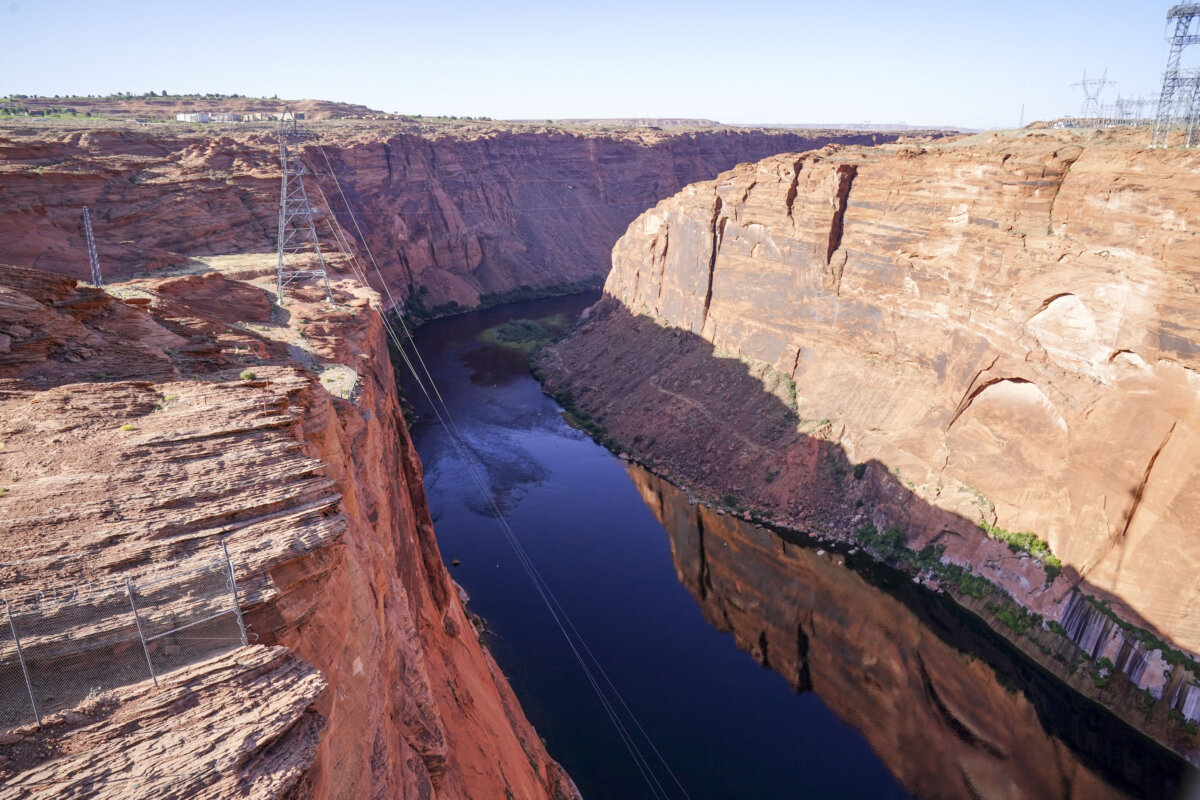
The Colorado River has supported farms, cities, and power generation across the Southwest for more than a century, and has been experiencing persistent drought since 2000.
 Friends Read Free
Copy
Facebook
Tweet
Friends Read Free
Copy
Facebook
Tweet