
A new state law in Ohio requiring certain social media operators to obtain parental consent before creating accounts for children under 16 will take effect in about two weeks.
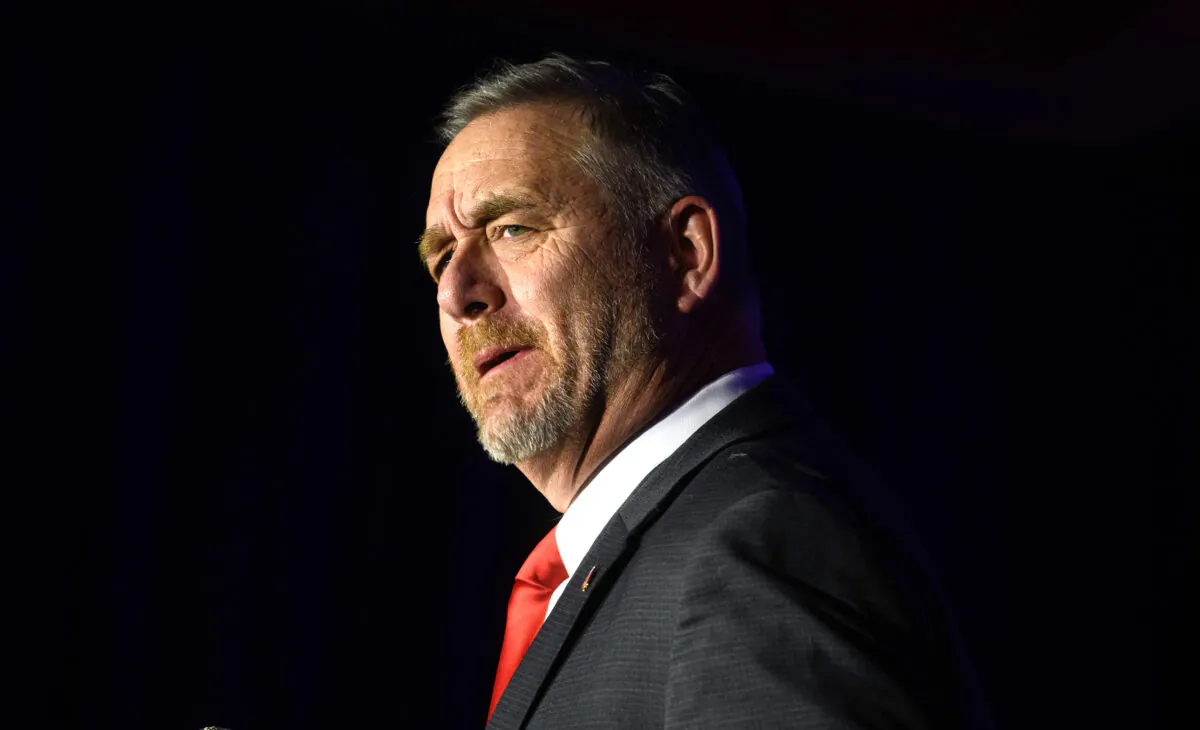
Ohio Attorney General Dave Yost, a Republican, issued a press release on Dec. 27 alerting the public that the Parental Notification by Social Media Operators Act will take effect on Jan. 15. The state’s General Assembly approved the legislation in July.
“This law aims to give parents more control over their children creating new social media accounts,” Mr. Yost said. “So just like any other time, if you feel like you’ve been wronged by a company, we take those complaints and work to resolve any issues—this is no different.”
Mr. Yost is in charge of enforcing the new law, which applies to websites, services, and products that are “targeted to children or reasonably expected to be accessed by children,” the release said.
Online operators will need parental consent to establish accounts for children younger than 16 years old. The companies must also present parents with “a list of censoring or content moderation features,” according to the release.
After consent is granted, operators must send “written confirmation” of the online account to the parent or legal guardian, the release said.
“In cases in which operators fail to provide notification or a parent wishes to terminate a child’s access, parents should contact the website operator who then has 30 days to terminate the child’s access,” it added.
Mr. Yost’s office has established a website, OhioProtects.org, where parents can file a complaint if they encounter difficulties deleting their children’s accounts. According to the release, operators aren’t required by law to inform parents about accounts created before Jan. 15.
The law applies to traditional social media companies—such as Facebook, Snapchat, X, and TikTok–gaming platforms, and shared message boards.
The law specifies that companies could face significant fines for violations. According to the language of the legislation, courts can impose fines of up to $1,000 a day for the first 60 days of violation. The amount increases to $5,000 a day after 60 days and $10,000 a day after 90 days.
Social Media
The legislation—which was passed in Ohio’s operating budget for the fiscal year 2024–2025 (House Bill 33)—was championed by Ohio Gov. Mike DeWine and Lt. Gov. Jon Husted, both of whom are Republicans.
“We know that the algorithms that are in many of these social media apps are targeting children to addict them to these platforms. That’s what they do. It’s designed to be addictive, so that your children spend time on, receiving information that is very destructive to their mental health, their physical health, [and] their academic progress,” Mr. Husted said during a press conference on the legislation in June.
“I have literally met doctors who have entire practices set up on treating children who have addictions to these platforms,” Mr. Husted said. Such addiction “didn’t even exist in our society a decade ago,” he said, and now “it’s an epidemic among our teens and preteens.”
Earlier this month, Mr. Husted took to X, formerly Twitter, to share a recent Pew Research Center survey and wrote, “Our children need help against these addictive, algorithmic platforms.”
The survey—conducted between Sept. 26 and Oct. 23 among 1,453 13-to-17-year-olds—found that nearly 1 in 5 teens said they were on YouTube or TikTok “almost constantly.”
In January, Mr. DeWine issued an executive order to ban the use of “any social media application, channel, and platform that is owned by an entity located in China”—such as TikTok, which is owned by Beijing-based ByteDance—on government devices.
In July, many organizations applauded the DeWine-Husted administration for signing the Parental Notification by Social Media Operators Act into law.
“Their leadership and proactive work have provided parents and other caring adults with a valuable tool to help keep Ohio’s children safe online,” Frances Gerbig, executive director of the Prevention Action Alliance, said in a statement.
“The establishment of the Social Media Parental Notification Act is a win for Ohio’s children and families and will serve as the catalyst for conversations regarding social media best practices for children and youth.”
Sarah LaTourette, chief advocacy officer for the Ohio Children’s Alliance, said in a statement that the legislation “champions youth mental health by combatting rising social media addiction and exposure to unsafe content.”
“In the wake of new data linking popular social media apps to negative health outcomes, Ohio is already stepping up and responding to create safer spaces for kids on social media.”
 Friends Read Free
Copy
Facebook
Tweet
Friends Read Free
Copy
Facebook
Tweet