
Almost two years and four months after the accident occurred, the National Institutes of Health (NIH) has announced a five-year, $10 million research project to study the long-term health outcomes from the Feb. 3, 2023, toxic train derailment in East Palestine, Ohio.
The agency, which is managed by the Department of Health and Human Services, said the initiative represents the first large-scale coordinated federal program to provide science-backed answers to the long-term health concerns of East Palestine residents.
The NIH said that the study was sought by Vice President JD Vance, who had just started his freshman term as a U.S. senator from Ohio when the crash happened.
“You helped drive the first large-scale, coordinated, multi-year federal study dedicated to the long-term health effects of the East Palestine, Ohio disaster,” HHS Secretary Robert F. Kennedy Jr. said in the NIH statement, referencing Vance.
“The people of East Palestine have a right to clear, science-backed answers about the impact on their health.”
Vance commented on the federal government’s initial response to the accident.
“As a senator, it was incredibly frustrating watching the Biden administration refuse to examine the potentially dangerous health impacts on the people of East Palestine following the train derailment,” Vance said in the same statement.
“This historic research initiative will finally result in answers that this community deserves, and I’m grateful for the work of Secretary Kennedy and [NIH] Director Bhattacharya on these efforts.”
Toxic Spill
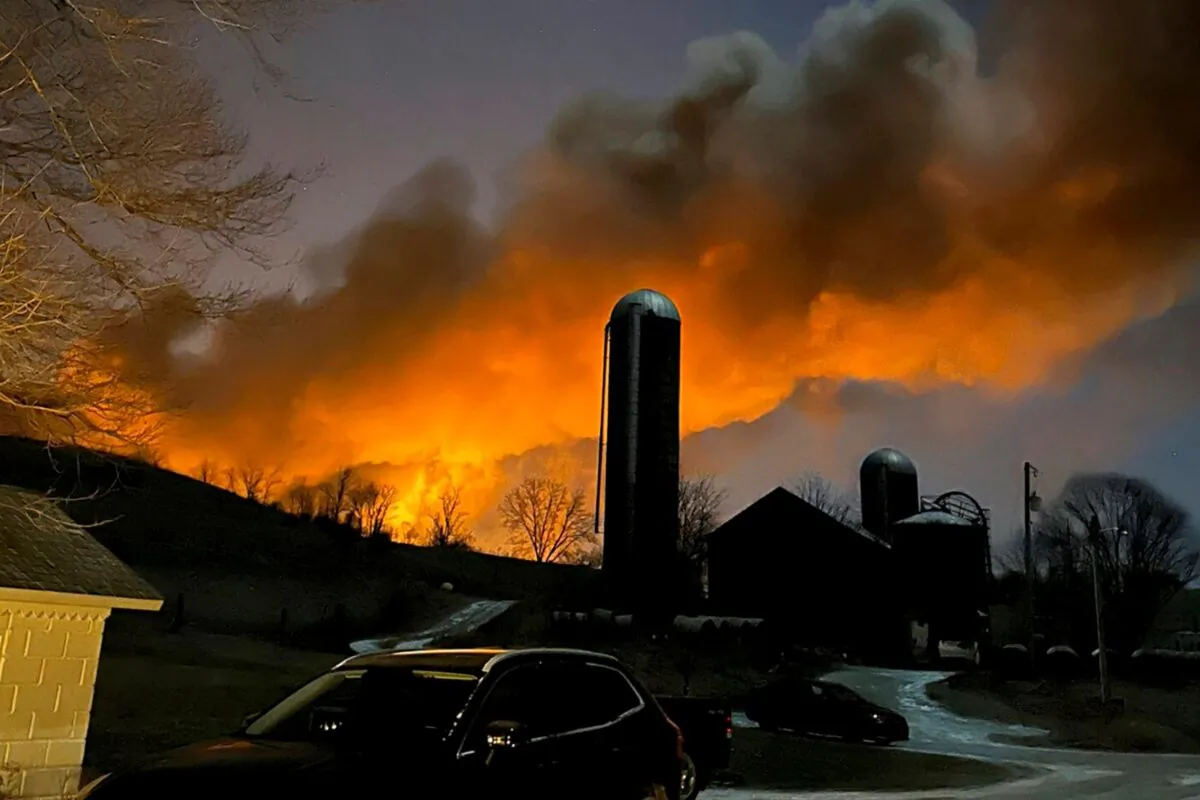
Life in East Palestine, located near the Ohio–Pennsylvania line, abruptly changed around 9 p.m. on Feb. 3, 2023.
The crew of a Norfolk Southern Railway freight train carrying 151 cars saw smoke and fire, and realized that 38 cars had derailed.
The flammable, toxic chemicals in 11 derailed cars had ignited, with flames spreading to an additional 12 cars.
According to the National Transportation Safety Board, nine cars were carrying hazardous materials in addition to the 11 that derailed.
The hazardous chemicals, including vinyl chloride in some of the rail cars, began to spill onto the ground and into the air.
Vinyl chloride is used to make PVC pipes and other products. The National Cancer Institute notes that the toxic chemical has been linked to cancers of the brain, lungs, blood, lymphatic system, and liver.
Vinyl chloride creates carbon monoxide and hydrogen chloride when it burns. When the latter mixes with water, it generates hydrochloric acid, a corrosive substance that can burn the skin and eyes, and is toxic if inhaled.
Burning vinyl chloride also produces a small amount of phosgene gas, which was used as a chemical weapon on World War I battlefields.
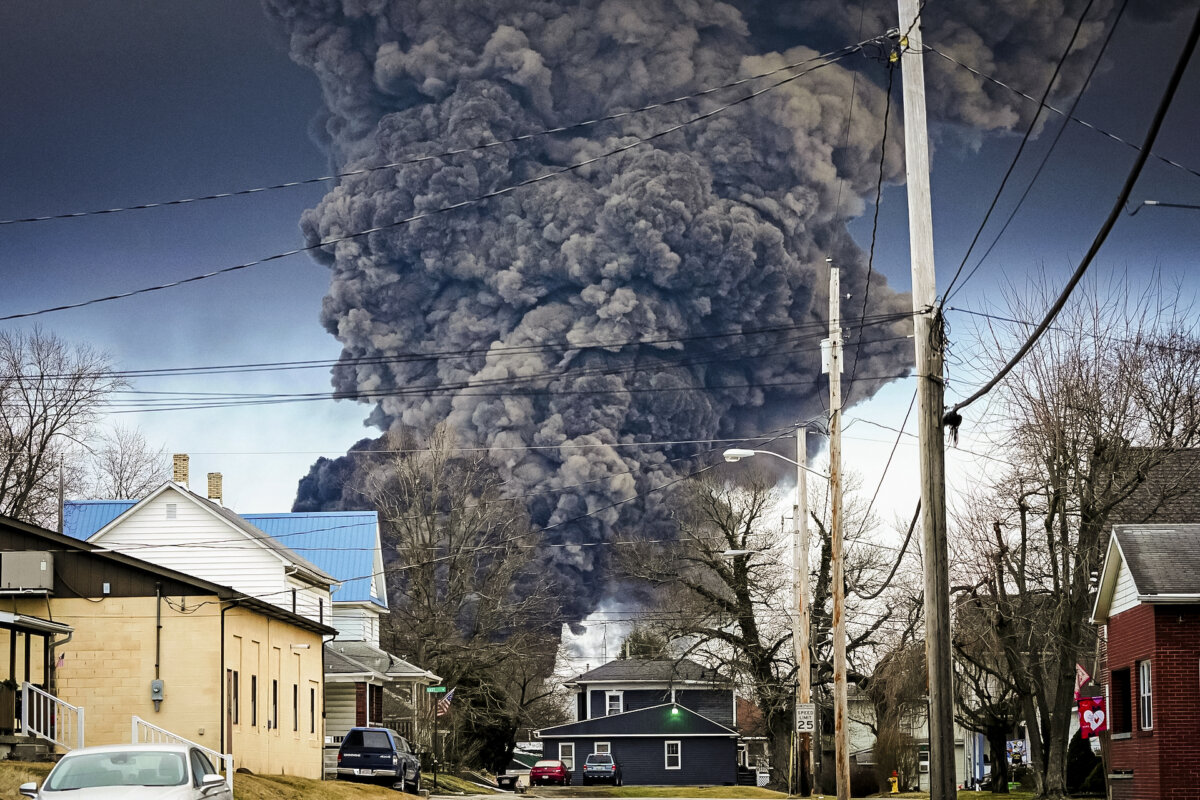
As the fire continued, authorities on Feb. 6—fearing shrapnel from a major explosion—decided on a controlled detonation of five cars, which sent a massive cloud of black smoke into the sky. Visible for miles, it was likened to the mushroom cloud caused by a nuclear weapon.
The government characterized it as a “controlled burn,” but residents said it was anything but controlled. A dark cloud of chemical-filled smoke could be seen for miles, and debris landed on properties several miles away.
The train cars were ruptured in the detonation, and spilled the rest of their contents into a drainage ditch connecting to Sulphur Run, a stream that flows through the heart of East Palestine.
Before the burn, Ohio Republican Gov. Mike DeWine urged residents to evacuate a one-by-two-mile area surrounding East Palestine, which included parts of Ohio and Pennsylvania.
DeWine described the urgent evacuation as a “matter of life and death.”
Three days later, DeWine held a press conference announcing that the evacuation order had been lifted and residents could return to their homes. Norfolk Southern trains resumed their routes through East Palestine, and federal and state officials said testing showed that the air and water were safe.
Fear and uncertainty remain among East Palestine residents, with some reporting a toxic smell in the air, burning eyes, rashes, headaches, and other health issues. Officials from federal and state agencies have repeatedly stated that tests show the air and water are safe in East Palestine and its surrounding communities.
The research program, which will start this fall, “will focus on public health tracking and surveillance of the community’s health conditions to support health care decisions and preventive measures,” Bhattacharya said in a statement.
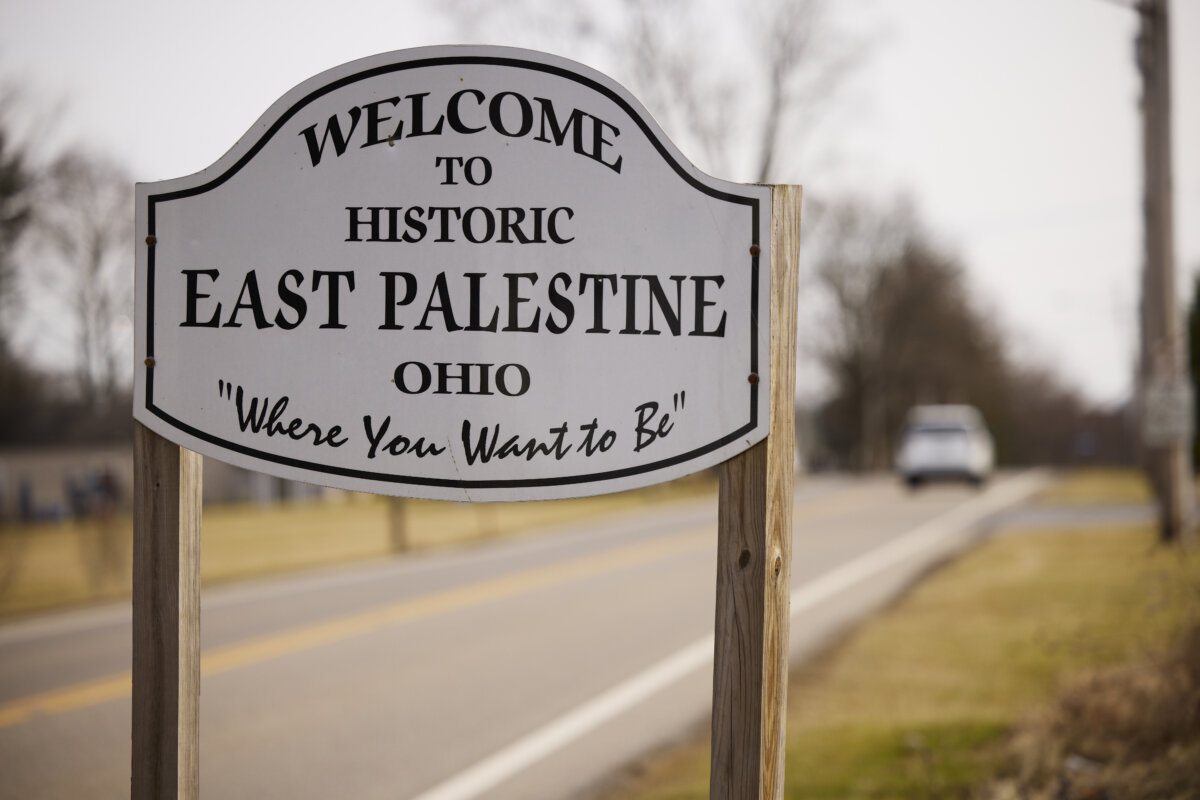
The studies will also include longitudinal epidemiological research to determine the short- and long-term health effects of chemical exposure.
Jami Wallace, a former East Palestine resident and founder of the Chemically Impacted Communities Coalition, expressed mixed feelings about the study.
“We still need relocation, we still need health insurance, and we still need access to doctors that specialize in chemicals,” Wallace said.
“We’re now moving from symptoms to seeing more long-term illnesses. A lot of respiratory issues, liver issues, thyroid, breathing, eye problems. There is a whole list of things that we’re now getting diagnosed with,” she said.
“Everyone wants to make this a political issue. It’s not a Democratic issue, it’s not a Republican issue. It’s an issue of human lives.”
Sen. Jon Husted (R-Ohio), who is also a former lieutenant governor of the state, said that East Palestine residents deserve transparency.
“On its path to full recovery, East Palestine deserves the reassurance that comes with transparency, and, thanks to the Trump Administration, that’s what they’re getting,” Husted said in a statement.
“My commitment to East Palestine means making sure that we have the facts necessary to respond effectively and compassionately – now and into the future.”
 Friends Read Free
Copy
Facebook
Tweet
Friends Read Free
Copy
Facebook
Tweet