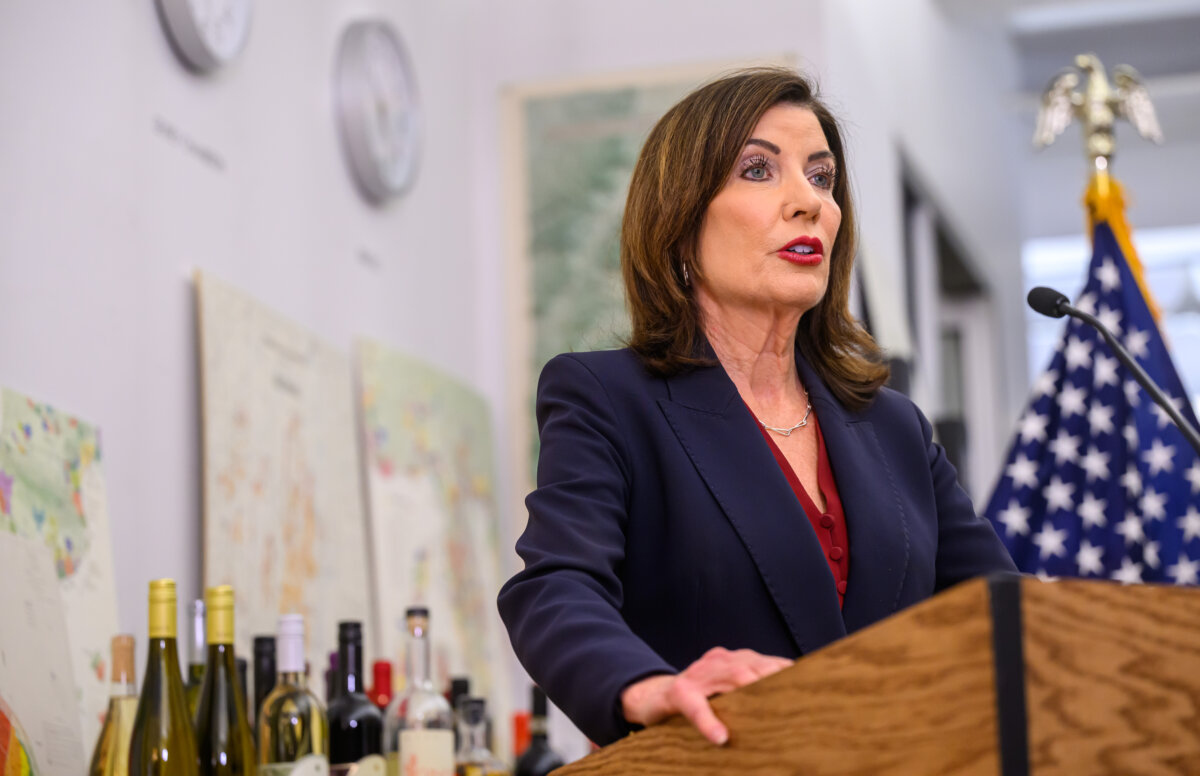

New York Gov. Kathy Hochul has said that in order to prevent increases in energy prices, she is proposing changes to the 2019 Climate Act.
Hochul outlined her vision in an op-ed published in the Empire Report on March 20, saying that she will focus on creating more clean, affordable energy as New York faces potential energy shortages and increasing costs in the face of unforeseen “headwinds and obstacles.”
Hochul said she will be working with legislators during the budgeting process to delay the 2030 emissions requirements created by the Climate Leadership & Community Protection Act and reform utility company laws in an effort to make energy affordable for New Yorkers.
Hochul restated her dedication to reaching the law’s original goals but also said that changes since the act’s adoption—such as post-COVID inflation, tariffs, President Donald Trump’s federal policies, and the war in Iran—have made it unviable. The act’s mandated goal is to reduce greenhouse gas emissions to 40 percent of 1990 levels by 2030, which the governor is seeking to push back to 2040.
“I remain fully committed to the blueprint for a sustainable future laid out in that landmark legislation,” Hochul said. “But so much has radically changed since the Climate Act was enacted, necessitating common-sense adjustments that keep us on our path.”
The governor listed several major factors in her decision, including that post-COVID inflation and supply chain disruptions have created a difficult economic situation and that tariffs are increasing costs. She said the federal government’s shifting away from green energy and canceling grants and tax credits for wind power and other initiatives have also had an effect.
Hochul said local-level not-in-my-back-yard mentalities, suspensions of activity, and bans have made alternative energy facilities, such as on-land wind, solar power, and battery storage, impossible in many areas of New York state.
The state closing too many fossil fuel plants and not opening enough renewable energy systems is projected to cause brownouts and blackouts in downstate New York, according to electric system operators.
“To make sure we keep the lights and heat on and costs down for New Yorkers, I have adopted an all-of-the-above approach to energy that includes more renewables, emission-free, reliable round-the-clock nuclear, and other needed power sources,” Hochul said.
She said she will seek support from lawmakers to amend the act’s 2030 emission reduction deadline in the state budget discussions.
Hochul said it is necessary to legally change the requirements because activists have filed suit against the state to make it meet the 2030 emission reduction targets. A judge ruled in the activists’ favor.
Hochul, citing the New York State Energy Research and Development Authority, said that for New York to reach the mandated 2030 emission goals, it would be necessary for upstate households using oil and natural gas to pay $4,000 more per year, and New York City households using natural gas to pay $2,300 more. Gas prices would also need to be increased by $2.23 per gallon.
 Friends Read Free
Copy
Facebook
Tweet
Friends Read Free
Copy
Facebook
Tweet