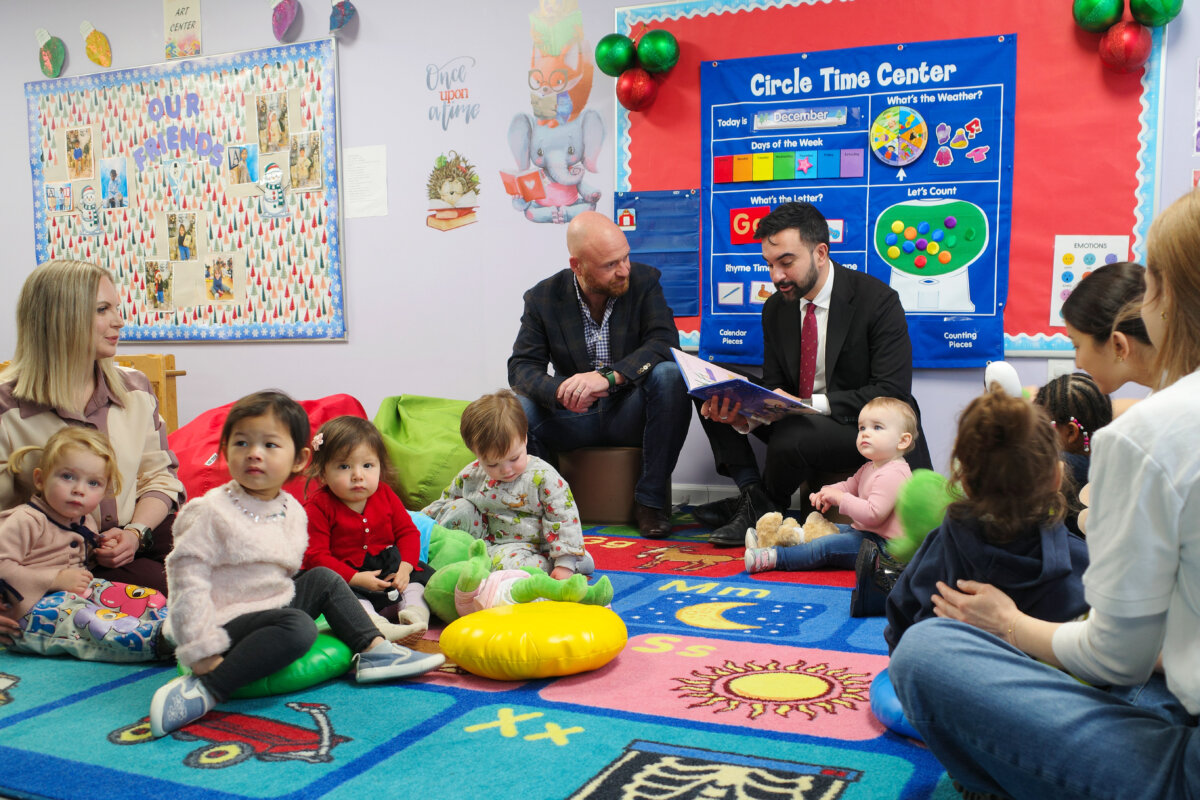

New York City Mayor Zohran Mamdani has placed a one-year moratorium on classroom use of generative artificial intelligence tools for pre-K-8 grades, and all public high school students will be required to complete AI awareness refresher courses twice a year.
“Just because technology is everywhere, doesn’t mean it belongs everywhere,” he said on Sept. 2 during a news conference at Brooklyn Steam Center School, where he was joined by school administrators and state legislators. “We must ask, what helps our children learn? How can we protect their developing minds?”
Districtwide, AI functions on 38 ed-tech products will be disabled, while five tools will remain in use for the purpose of career and technical education or professional workforce development programs in grades 9–12. Exceptions will be made for students with disabilities or those still learning English, Mamdani said.
Ahead of the 2027–2028 school year, administrators, teachers, students, and parents will evaluate the results of the moratorium and determine whether to amend it or continue it as is.
The mayor criticized ed-tech companies for putting profits ahead of students, saying he has yet to see one study that shows AI benefits elementary and middle school students.
“They [students] need to know what it feels like to not know the answer,” he said. “This is what learning is all about.”
The mandatory high school AI awareness courses will be 45 minutes. All high school students must complete one twice per year, or once per semester, said Kamar Samuels, school district chancellor.
For elementary and middle school students, he added, the elimination of AI use provides more space for strong instruction, discussion, play, creativity, “and the chance to work through hard problems instead of outsourcing it to a machine.”
Samuels said the one-to-one laptop per student policy has been amended to exclude students below grade three, and classroom screen-time recommendations by grade level are established.
Officials did not disclose the names of tools that will be disabled and those that will be preserved, but they did provide examples of allowed exemptions. Eye-tracking software is allowed to assist children with cerebral palsy, while language interpretation applications will serve students who are still learning English.
Assemblyman Bobby Carroll said he has drafted legislation that would impose similar restrictions on schools statewide.
Assemblywoman Jo Anne Simon said overreliance on AI in young people has reached the point where they don’t know the difference between critical thinking and getting answers from an online browsing device.
New York City schools resume classes on Sept. 10.
Ahead of the coming school year, American Federation of Teachers President Randi Weingarten called for a ban on digital learning environments for students in pre-kindergarten through second grade and said AI chatbots should not be available to any students under 16.
 Friends Read Free
Copy
Facebook
Tweet
Friends Read Free
Copy
Facebook
Tweet