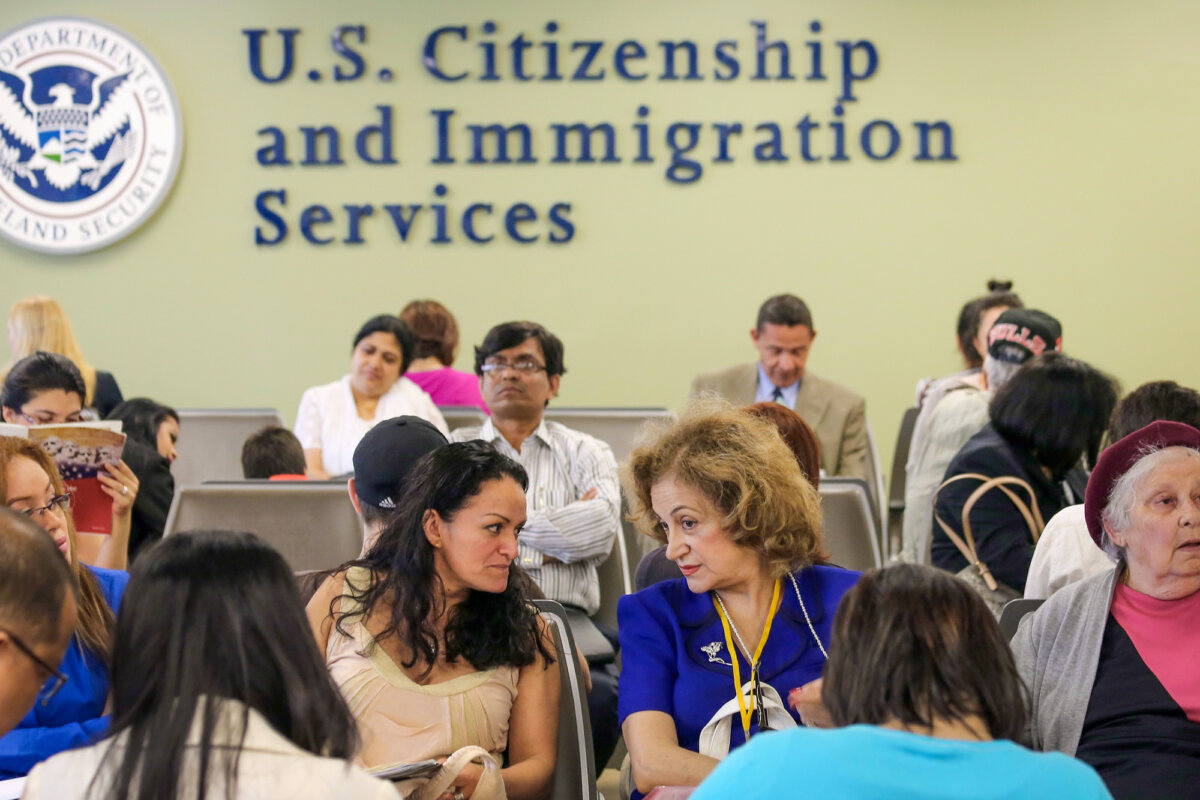

U.S. Citizenship and Immigration Services (USCIS) officially restarted neighborhood investigations for citizenship applicants after dropping the practice 35 years ago, according to a policy alert published by the agency.
“By resuming neighborhood investigations, USCIS will scrutinize: alien’s residency, good moral character, attachment to the U.S. Constitution & disposition to the good order & happiness of the United States,” USCIS wrote in an X post on Aug. 29.
The policy went into effect immediately after being announced on Aug. 25.
Neighborhood investigations were abandoned in 1991 after USCIS, previously called the Immigration and Naturalization Service (INS), decided to rely almost exclusively on FBI criminal history checks and other organizations to confirm that the applicant had a “good moral character.”
“Becoming a U.S. citizen is a rare privilege meant for those who will contribute positively to the nation,” USCIS added.
During a neighborhood investigation, USCIS will interview people who know the applicant—including neighbors, landlords, employers, coworkers, and nearby business staff—to collect observations and information about the aspiring citizen that may not have appeared on a background check.
The checks aren’t mandatory for every applicant, as some may be able to get the probes waived.
An applicant can try to skip the investigation by voluntarily providing testimonial or character reference letters from U.S. citizens who endorse their eligibility, character, loyalty to the United States, and attachment to the principles of the U.S. Constitution.
The letters could cause USCIS to waive the neighborhood investigation, but not always.
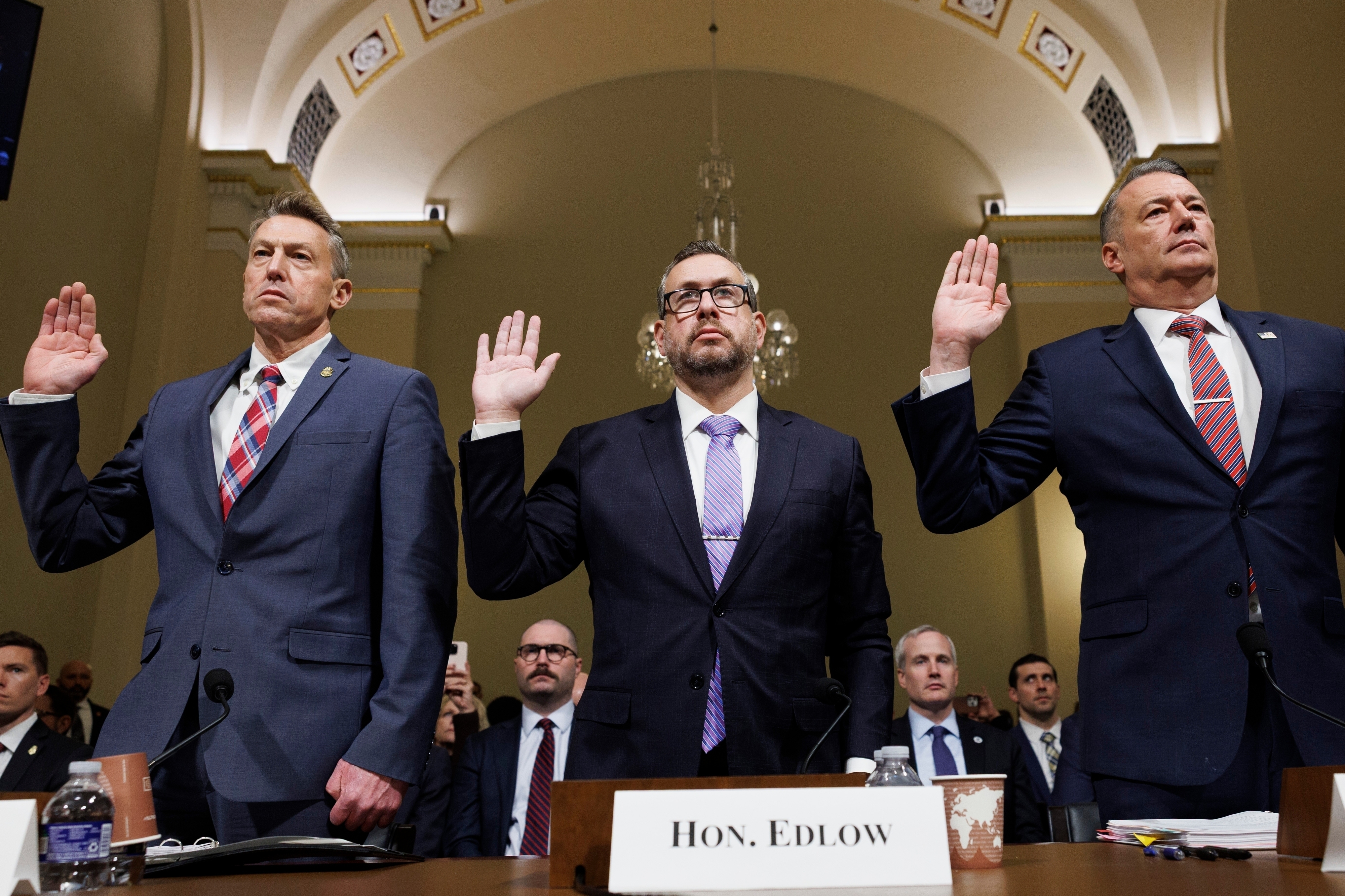 From left, Rodney Scott, commissioner of Customs and Border Protection, Joseph Edlow, director of U.S. Citizenship and Immigration Services, and Todd Lyons, acting director of the Immigration and Customs Enforcement, are sworn in during a House Committee on Homeland Security oversight hearing of the Department of Homeland Security: ICE, CBP, and USCIS, on Capitol Hill on Feb. 10, 2026, in Washington. (AP Photo/Tom Brenner)
“Neighborhood investigations are vital to maintaining the integrity of the naturalization process, assuring proper assimilation into American values and culture, and safeguarding the value and privilege of American citizenship,” Edlow said during the committee hearing.
The neighborhood checks aren’t the only changes the USCIS has made for people seeking U.S. citizenship.
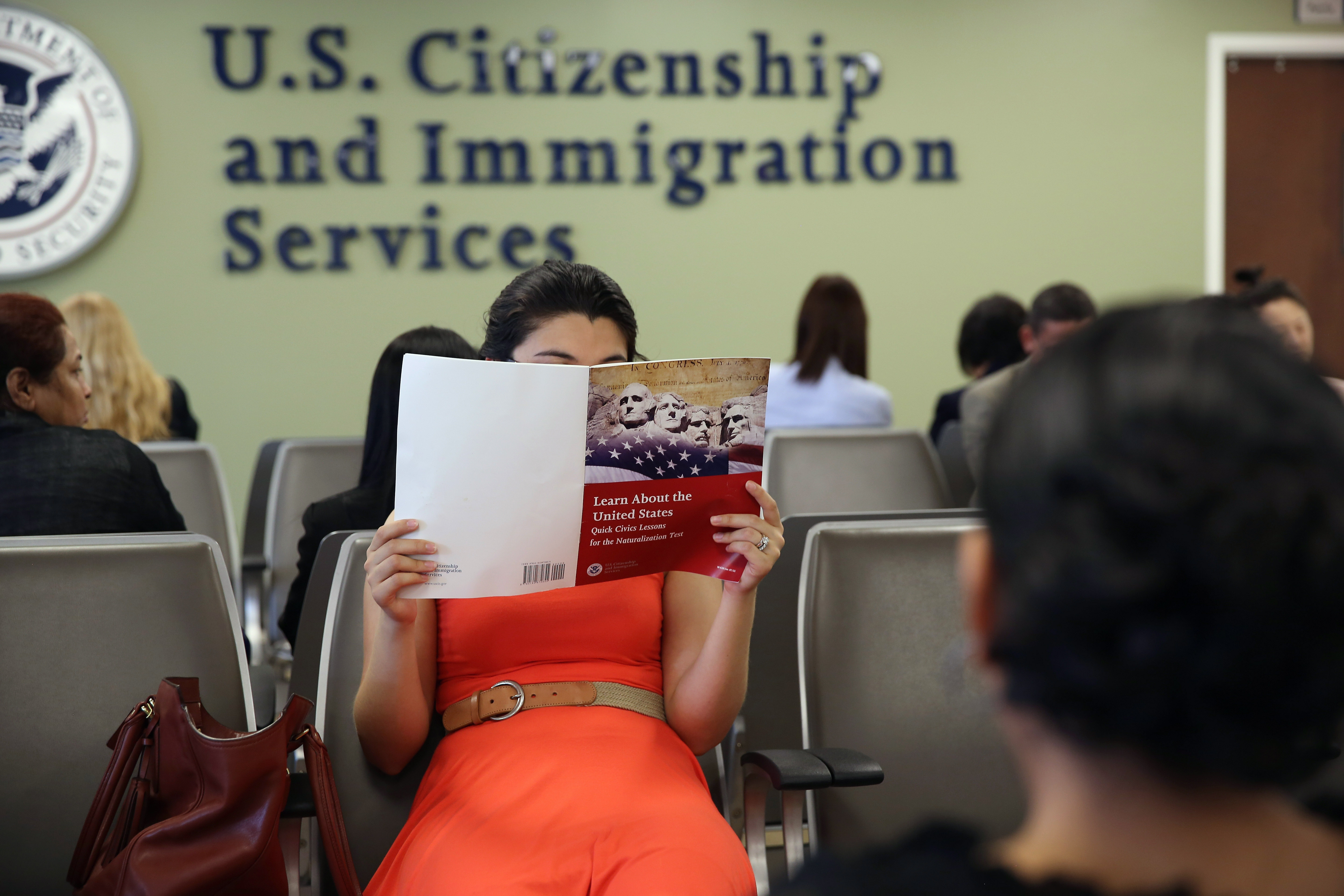 A Colombian immigrant studies ahead of her citizenship exam at the U.S. Citizenship and Immigration Services (USCIS) Queens office in the Long Island City neighborhood of the Queens borough of New York City on May 30, 2013. (John Moore/Getty Images)
It changed the study bank from 100 questions to 128 and allowed officers to ask up to 20 questions, up from 10.
The agency doubled the number of correct answers required, requiring people to get 12 questions right opposed to six questions, with an exception for applicants who are 65 years old or older and have held a green card for 20 years or longer.
All applicants still need to answer 60 percent of the questions correctly to pass.
 Friends Read Free
Copy
Facebook
Tweet
Friends Read Free
Copy
Facebook
Tweet