
Attorneys general from 23 states said in an Aug. 26 letter that the Environmental Law Institute (ELI) had provided training through its Climate Judiciary Project to more than 2,000 U.S. judges who may rule on climate lawsuits, and that this program “is designed to sway judges” in support of plaintiffs and against the energy industry.
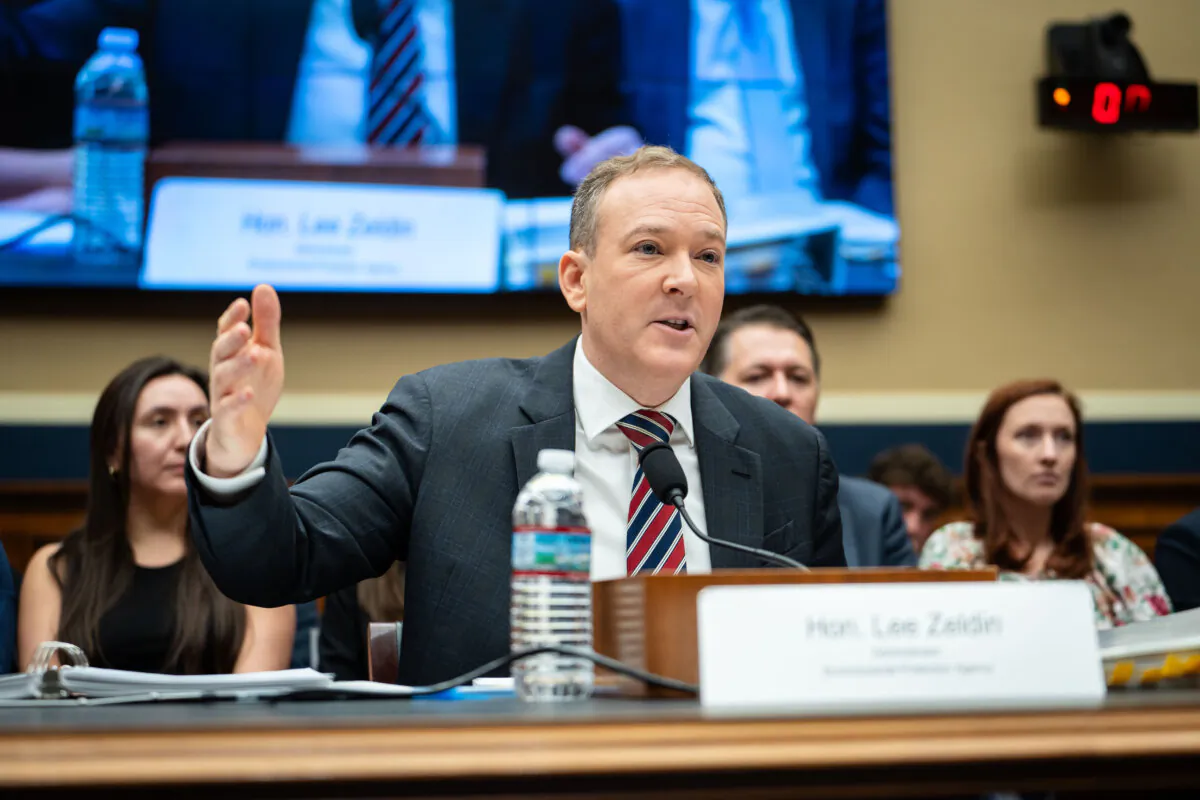
The attorneys general stated that Environmental Protection Agency (EPA) grants accounted for 13 percent of the ELI’s revenue in 2024 and called on EPA Administrator Lee Zeldin to stop funding this organization.
Many advocates of climate-related policies say that they represent a consensus among scientists that greenhouse gas (GHG) emissions from the burning of fossil fuels are causing a dangerous warming of the Earth and that the science of climate change is “settled.” But critics disagree.
“The science on climate change is not settled, and there are two sides to all these arguments,” Montana Attorney General Austin Knudsen, author of the letter, told The Epoch Times.
“[The ELI] is an organization that looks like they’re running around the country trying to convince judges that they should use the power of their black robes and gavels to enforce climate change justice.”
To date, more than 20 states and cities have filed lawsuits against energy companies, including ExxonMobil, Shell, Sunoco, Citgo, Chevron, Koch Industries, and BP, according to the Center for Climate Integrity, which tracks the suits. The charges range from harming communities to deceiving the public about the effects of GHG emissions, and the claims could amount to trillions of dollars.
“Between 1985 and 2018, we estimate partial damages of the combined CO2 emissions from 25 companies—oil and gas carbon majors—of about $20 trillion USD,” Climate Analytics, a climate policy advocacy group, stated in November 2023.
Some policy analysts say the Climate Judiciary Project is just one link in a chain that includes progressive nonprofit organizations that raise millions of dollars in tax-deductible funds to hire private attorneys to represent municipalities in the lawsuits. Working with judges is a way to help the plaintiffs win in court, they say.
“They [climate activists] are not going to leave anything to chance,” O.H. Skinner, executive director of the Alliance for Consumers, told The Epoch Times.
“They need this climate lawfare to succeed in order to accomplish their policy goals.
“They know that if they’re able to win these cases at a high enough rate, they can fundamentally reshape society into their vision.”
The ELI, however, states on its website that its climate education programs are neutral and objective.
“Far from ‘radical,’ the programs in which the Climate Judiciary Project (CJP) participates are no different than other judicial education programs, providing evidence-based training on legal and scientific topics that judges voluntarily choose to attend,” the ELI said in a statement emailed to The Epoch Times. “Moreover, CJP is entirely funded by non-government sources, and EPA’s grants to ELI are not related to judicial education.”
Creating Climate Policy in Courts
Critics of climate lawsuits say they are a way to circumvent the democratic process and that they deny Americans a vote on how their energy resources will be produced and regulated.
“These are people who have not been effective at getting their agenda passed in the halls of Congress, how it’s supposed to be done as a matter of policy, so they’re trying to use the courts as the last resort,” Knudsen said.
Legal analysts say that winning only a few of the lawsuits in liberal jurisdictions could be sufficient to impose significant costs on U.S. industries and effectively impose energy policies on all Americans. This could include not only oil and gas companies, but also power plants, cars and trucks, appliances, and air travel.
“If they win, the costs are staggering,” Skinner said. “It’s everyday people who are just trying to raise their families who will bear the cost.”
The ELI said it has partnered with the EPA for more than 30 years, with a focus on providing Americans with clean air and water. Under the Obama and Biden administrations, however, the EPA and many environmentalists shifted much of their focus to include the reduction of CO2 and other GHGs.
During President Donald Trump’s second term, the EPA has reversed many of these efforts.
In July, Zeldin rescinded the EPA’s 2009 “endangerment finding” that had determined that GHGs were a dangerous pollutant, thus undermining the vast majority of emissions caps that prior administrations had placed on autos and power plants. And in March, the EPA canceled more than 400 climate-related diversity, equity, and inclusion grants worth $1.7 billion and announced an FBI investigation of what it said was “$20 billion parked at a financial institution by the Biden–Harris Administration in a rushed effort to obligate money with reduced oversight.”
The letter to Zeldin urging that ELI be defunded was signed by the attorneys general of Alabama, Alaska, Arkansas, Florida, Georgia, Idaho, Indiana, Iowa, Kansas, Kentucky, Louisiana, Mississippi, Missouri, Montana, Nebraska, North Dakota, Oklahoma, South Carolina, South Dakota, Texas, Utah, West Virginia, and Wyoming.
 Friends Read Free
Copy
Facebook
Tweet
Friends Read Free
Copy
Facebook
Tweet