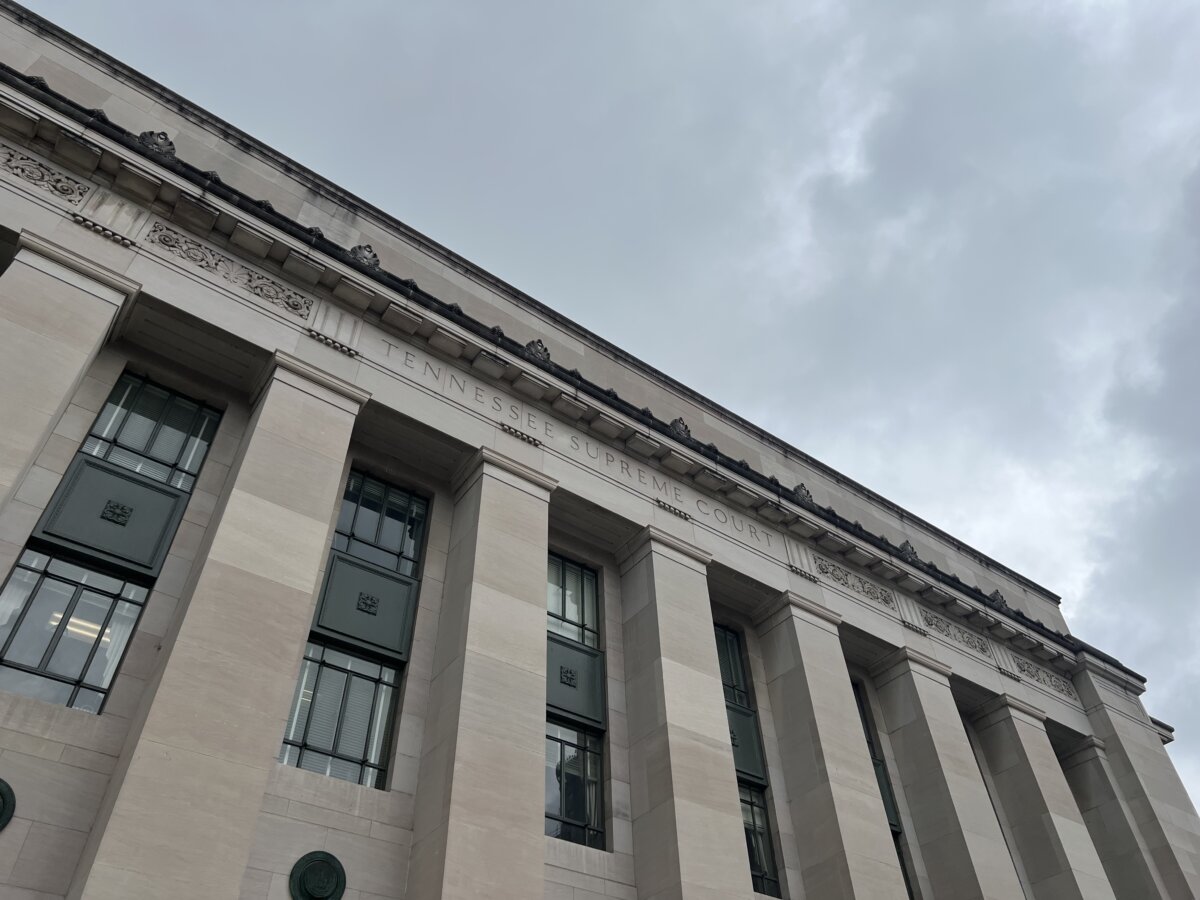

The Tennessee Chancery Court dismissed an emergency lawsuit that aimed to block the state’s new congressional maps from going into effect ahead of the 2026 midterms.
A three-judge panel appointed by the Tennessee Supreme Court rejected the bid on May 26, days after hearing oral arguments from lawyers representing Tennessee voters and state election officials.
The 27-page order to uphold Tennessee’s new U.S. congressional map was issued on the same day that South Carolina and Alabama failed to move forward with efforts to redistrict.
The emergency lawsuit was filed in the Volunteer State by groups and voters, including the Tennessee State Conference of the NAACP, after a new U.S. congressional map passed the Republican-led Tennessee General Assembly and was signed into law by Gov. Bill Lee on May 7.
The map carved up Tennessee’s only Democratic stronghold, Memphis, into three Republican-leaning districts, meaning all nine of the state’s U.S. congressional districts lean Republican.
The plaintiffs had put forward a series of arguments in the dismissed lawsuit.
Lawyers for the NAACP suggested that the legislative process violated Tennessee law, which allows congressional districts to be changed only every 10 years. The judges rejected the argument, claiming that lawmakers passed legislation allowing mid-census redistricting during the special session.
The lawyers also argued that the new maps violated the Tennessee Constitution, which limits special sessions to the orders listed in proclamations.
NAACP lawyer Anthony Ashton said on May 21 that the General Assembly did not follow the specific words and phrases in Lee’s proclamation, and therefore, the new maps were unconstitutional.
The Tennessee Chancery Court ruled that the General Assembly did act within its powers during the special session and that the court should not be in charge of “micromanaging its coequal Legislative Branch.”
“It is with good reason that it is sufficient for purposes of Article III, Section 9 that the legislation enacted in a special session be reasonably contained within the call of the Governor,” the order reads.
The Epoch Times reached out to lawyers representing the Tennessee State Conference of the NAACP and Tennessee Secretary of State Tre Hargett for comment.
A series of states kicked off redistricting efforts in May after the U.S. Supreme Court ruled on April 29 that race could not be used as the primary factor in drawing electoral district boundaries.
South Carolina’s efforts to eliminate the only Democratic Party seat in the state ahead of the midterms failed on May 26, after the Republican-led chamber voted 20–24 to reject a motion to advance the bill after it cleared the state House 74–37 on May 20.
The failed bill, which would have redistricted areas in Charleston, Greenville, and Columbia, is a loss for President Donald Trump and Republicans who have led the charge to have Southern states quickly redraw maps.
In Alabama, federal judges blocked implementation of a 2023 congressional district map that would have eliminated one of the state’s two districts with majority black populations; those districts were created in a court-ordered map first used in 2024 elections.
The three-panel court ruled on May 26 that a Republican-backed map intentionally discriminated against black voters and could not be used for the 2026 elections.
 Friends Read Free
Copy
Facebook
Tweet
Friends Read Free
Copy
Facebook
Tweet