

The Tennessee Valley Authority (TVA) is the first electric utility in the United States to formally commit to buying power generated by a small modular nuclear reactor, as part of a collaborative pact with Google and Kairos Power unveiled on Aug. 18.
Under the agreement, the California-based reactor manufacturer’s Hermes 2 Plant in Oak Ridge, Tennessee, will deliver up to 50 megawatts of electricity—enough to power 35,000 homes—by 2030 to power Google data centers in Montgomery County, Tennessee, and Jackson County, Alabama.
“This collaboration is an important enabler to making advanced nuclear energy commercially competitive,” Kairos Power CEO and cofounder Mike Laufer said in a joint Kairos–TVA statement, noting that under the agreement, the reactor’s capacity will increase from 28 megawatts to 50 megawatts.
“The re-envisioned Hermes 2 gets us closer to the commercial fleet sooner and could only be made possible by close collaboration with TVA and Google, and a supportive local community,” Laufer said in the statement.
The TVA agreement is the first of several that Kairos is negotiating with electric utilities after signing an October 2024 deal with Google to buy 500 megawatts of nuclear energy, enough to power 350,000 homes, generated by small modular reactors it plans to build by 2035.
Google’s global head of data center energy, Amanda Peterson Corio, said the TVA–Kairos pact “will accelerate the deployment of innovative nuclear technologies” and will bring “firm carbon-free energy to the electricity system.”
Kairos began construction of its Hermes Low-Power Demonstration Reactor in July 2024 at the former Oak Ridge Gaseous Diffusion Plant after securing a $303 million grant from the Department of Energy (DOE) in a joint project with Oak Ridge National Laboratory, Idaho National Laboratory, Electric Power Research Institute, and Materion Corporation.
Energy Secretary Chris Wright said DOE’s Advanced Reactor Demonstration Program is geared to “accelerate the next American nuclear renaissance,” calling the TVA–Kairos agreement a key step in ensuring that the nation’s energy grid can provide the electricity needed to power a rapidly digitalizing economy.
“The deployment of advanced nuclear reactors is essential to U.S. AI dominance and energy leadership,” he said.
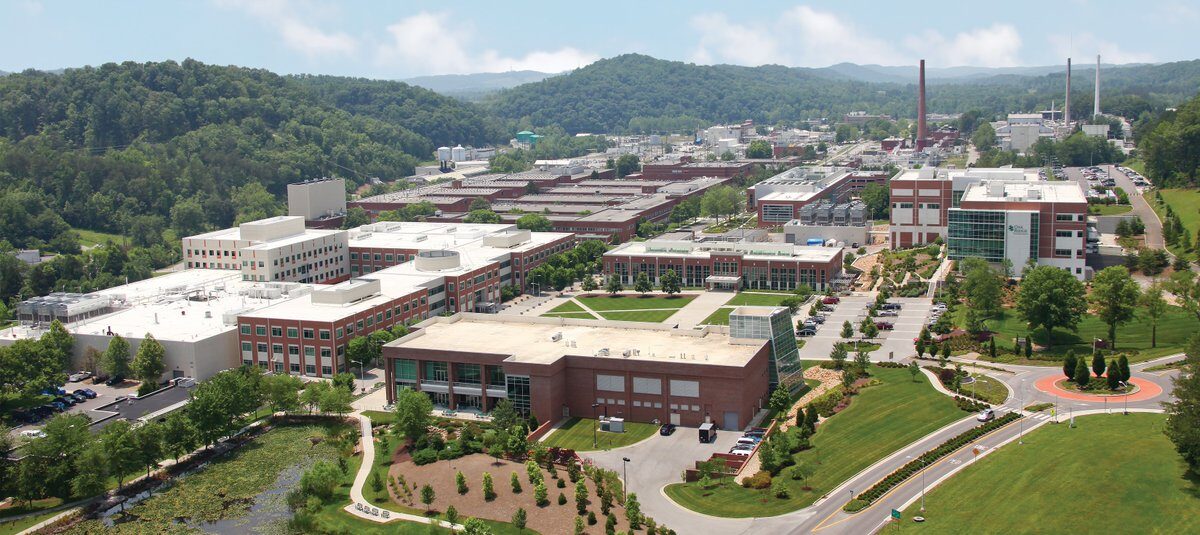
Tennessee Legacy
Kairos’s Hermes 2 plant is the first “Generation IV” reactor approved for construction by the U.S. Nuclear Regulatory Commission and the first non-light-water reactor permitted in the United States in more than 50 years.
Gen IV reactors include many of the new or revived reactor technologies reaching demonstration stages to assess commercial viability.
The designation includes natrium-cooled reactors—such as Kairos’s Hermes 2—“fast neutron” reactors, helium-cooled reactors, lead-bismuth reactors, and sodium-cooled reactors, often with advanced fuel cycles and designed as “plug-in” small modular reactors that can be mass-produced and portable.
“Lessons from the development and operation of the Hermes 2 plant will help drive down the cost of future reactors, improving the economics of clean firm power generation in the TVA region and beyond,” Google’s Peterson Corio said.
The formal Aug. 18 announcement, which Google first disclosed in an Aug. 14 release, follows DOE’s Aug. 12 selection of 11 projects that will receive federal support in advancing “first-mover” nuclear technologies under the Energy Reactor Pilot Program authorized by President Donald Trump in May.
As defined by the Nuclear Regulatory Commission (NRC), “criticality” is “when each fission event releases a sufficient number of neutrons to sustain an ongoing series of reactions,” a stable consistency that can eventually be used to generate electricity.
The pilot program was established in June in accordance with Trump’s executive order reforming DOE’s nuclear reactor testing program “to expedite the testing of advanced reactor designs … at sites located outside national laboratories.”
That action was among four May 23 executive orders issued by the president aimed at quadrupling the nation’s nuclear energy capacity by 2050 with the goal of licensing 10 new reactors by 2030, including three by July 4, 2026.
The United States is the world’s largest generator and consumer of nuclear energy, with 94 nuclear reactors in 55 power plants, which the U.S. Energy Information Administration calculates generated 18.6 percent of the country’s electricity in 2023.
However, most were built between 1970 and 1990 and average more than 40 years in service. The only new reactor to come online in the United States since 2016 is Vogtle’s fourth reactor in Georgia.
Under current NRC regulations, it takes 10 to 12 years to license and permit a new nuclear reactor in the United States.
Dramatically accelerating those timelines is among the primary aims of Trump’s May orders seeking to “reinvigorate” the nation’s nuclear energy industry,
Tennessee U.S. Sens. Bill Hagerty and Marsha Blackburn contributed congratulatory statements to the joint announcement, both noting Tennessee’s key role in developing the nation’s nuclear energy and nuclear weapons deterrence capacities.
“Advancing nuclear technology is essential to unleashing American energy and driving a nuclear renaissance that secures our competitive edge in the global market. This agreement is a critical step toward this goal,” Hagerty said. “Cutting-edge innovation has a home in Tennessee, and I intend to see that our state remains at the forefront of developing transformative technologies to maintain America’s lead in the all-important energy sector.”
During a March Atlantic Council “Atoms for Appalachia” discussion, Rep. Chuck Fleischmann (R-Tenn.), whose congressional district includes Oak Ridge National Lab, said Tennessee’s standing in advancing nuclear technologies is not based on its legacy laurels but on investments by the East Tennessee Economic Council and its state Legislature, which has authorized funding to draw reactor and fuel developers.
Other states, especially in the Appalachians, could do that, too, he said.
“Obviously, these areas were served by coal for quite some time, but the reality is, it’s a very fertile environment for new nuclear,” Fleischmann said. “Let’s face it, Appalachia has been traditionally underserved. But what tremendous potential—wonderful people, great schools. We need everybody in the game.”
 Friends Read Free
Copy
Facebook
Tweet
Friends Read Free
Copy
Facebook
Tweet