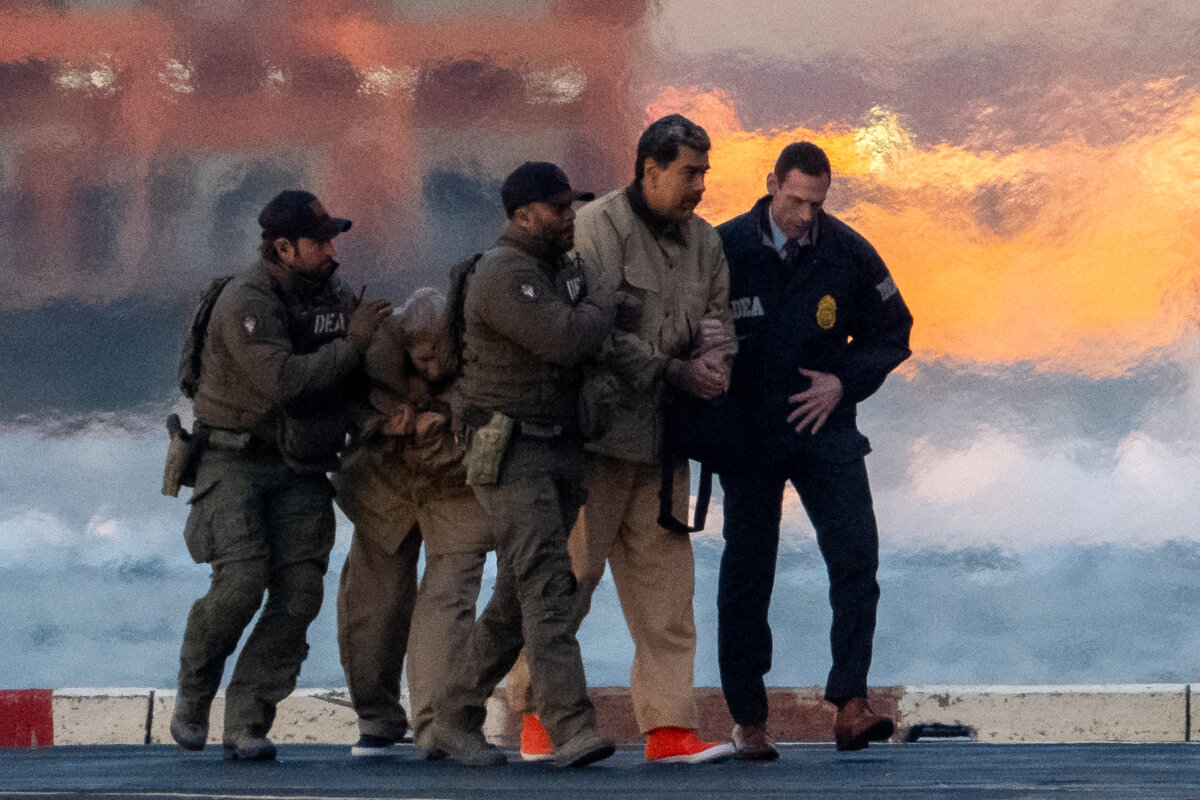

The U.S. government is preventing Venezuela from paying the legal representation fees for deposed former leader Nicolás Maduro in the ongoing case against him in New York, Maduro’s counsel, Barry J. Pollack, wrote in a letter filed at the U.S. District Court for the Southern District of New York on Feb. 25.
Maduro was captured by U.S. forces last month and moved to the United States. On Jan. 5, Maduro and his wife, Cilia Flores, were indicted with a string of charges, including narcoterrorism and conspiracy to import cocaine into the United States.
In the Feb. 20 letter to Judge Alvin K. Hellerstein, who is overseeing the case, Pollack said he had written to court on Jan. 5 that Maduro and the government of Venezuela are subject to sanctions by the Treasury Department’s Office of Foreign Assets Control (OFAC), and therefore the counsel would need to obtain a license from the OFAC to represent Maduro and obtain attorney’s fees and other costs.
At the time, the court had directed the U.S. Attorney’s Office to work with Maduro’s counsel regarding the OFAC license, according to the letter. On Jan. 7, Maduro and his wife each applied for a license.
“Under Venezuelan law and custom, the government of Venezuela pays the expenses of the President and First Lady. Accordingly, the license applications specifically sought authorization to represent the respective clients and to accept funds from the government of Venezuela for their respective representations,” the letter reads.
“On January 9, 2026, OFAC granted both licenses. Less than three hours later, however, OFAC, sua sponte and without explanation, amended the license related to the representation of Mr. Maduro (but not the license related to the representation of Ms. Flores). The amended license related to Mr. Maduro does not authorize the receipt of defense costs from the government of Venezuela.”
On Feb. 11, the counsel asked the OFAC to reinstate the original license granted to Maduro, arguing that the agency was interfering with the former Venezuelan leader’s ability to retain counsel and thus breaching his right under the Sixth Amendment to get counsel of his choice, according to the letter.
Since then, the OFAC has allegedly granted several commercial licenses related to transactions with Venezuela but has failed to honor counsel’s request.
“If OFAC fails to act on the request to reinstate the original license, or denies that request, Mr. Maduro will file a formal motion in the coming days seeking relief from the Court,” Pollack wrote in the letter.
The Epoch Times reached out to the Treasury and the Southern District of New York U.S. Attorney’s Office for comments, but did not receive a response by publication time.
During their court appearance on Jan. 5, Maduro and his wife pleaded not guilty to the charges levied against them.
“I am innocent. I am not guilty of anything that is mentioned here,” Maduro said.
He questioned the legality of his arrest. Neither Maduro nor his wife sought bail at the time.
At the hearing, Pollack said his client was the “head of a sovereign state and entitled to privilege.”
In a Jan. 11 commentary published by The Epoch Times, defense expert Mike Fredenburg wrote that there is a lot of evidence that shows Maduro and his Venezuelan regime systematically encouraged, facilitated, and profited from drug trafficking.
For one, Fredenburg said, the Maduro regime appointed Néstor Reverol as interior minister despite U.S. incitements and evidence that he accepted bribes while heading the country’s anti-narcotics unit and tipped off drug traffickers. The regime also shielded Tareck El Aissami, who was sanctioned by the United States in 2017 and later indicted for drug trafficking, he said.
“This pattern of promoting and protecting figures implicated in trafficking drugs, combined with an estimated 200–250 metric tons of cocaine transiting Venezuela annually, shows a deliberate regime-wide tolerance for trafficking,” Fredenburg wrote.
The head of U.S. military operations in Latin America met with acting Venezuelan leader Delcy Rodríguez and cabinet members on Feb. 18 to advance President Donald Trump’s plan to stabilize the country.
This was the first visit to Venezuela by a U.S. military delegation since U.S. forces captured Maduro last month. During the meeting, U.S. officials reiterated Washington’s commitment to a “free, safe and prosperous Venezuela,” according to the U.S. Southern Command.
 Friends Read Free
Copy
Facebook
Tweet
Friends Read Free
Copy
Facebook
Tweet