

Multiple Ivy League and prominent state schools have declined the Trump administration’s Compact for Academic Excellence in Higher Education as of an Oct. 20 deadline for offering feedback.
So far, at least seven of nine universities have refused the compact, which would offer them preferred consideration for federal funding. Vanderbilt University and the University of Texas are still considering the offer but others like the University of Arizona have released statements expressing their opposition.
The compact, offered to nine universities on Oct. 1, offers financial incentives such as preferred consideration for federal grants and flexibility in research costs if the school promises to follow certain guidelines.
These include eliminating preferential treatment by race, requiring SAT scores in student applications, limiting undergraduate admission of foreign students to 15 percent, freezing tuition for five years, maintaining a policy of institutional neutrality on political and social issues, and accepting all transfer credits from military members and veterans.
The compact would also require schools to post average earnings from graduates in each program and refund tuition to undergraduates who drop out during their first semester.
University of Arizona President Suresh Garimella told the campus community on Oct. 20 that some of the administration’s proposals deserved “thoughtful consideration.”
“At the same time,” Garimella said, “principles like academic freedom, merit-based research funding, and institutional independence are foundational and must be preserved. As a result, the university has not agreed to the terms outlined in the draft proposal.”
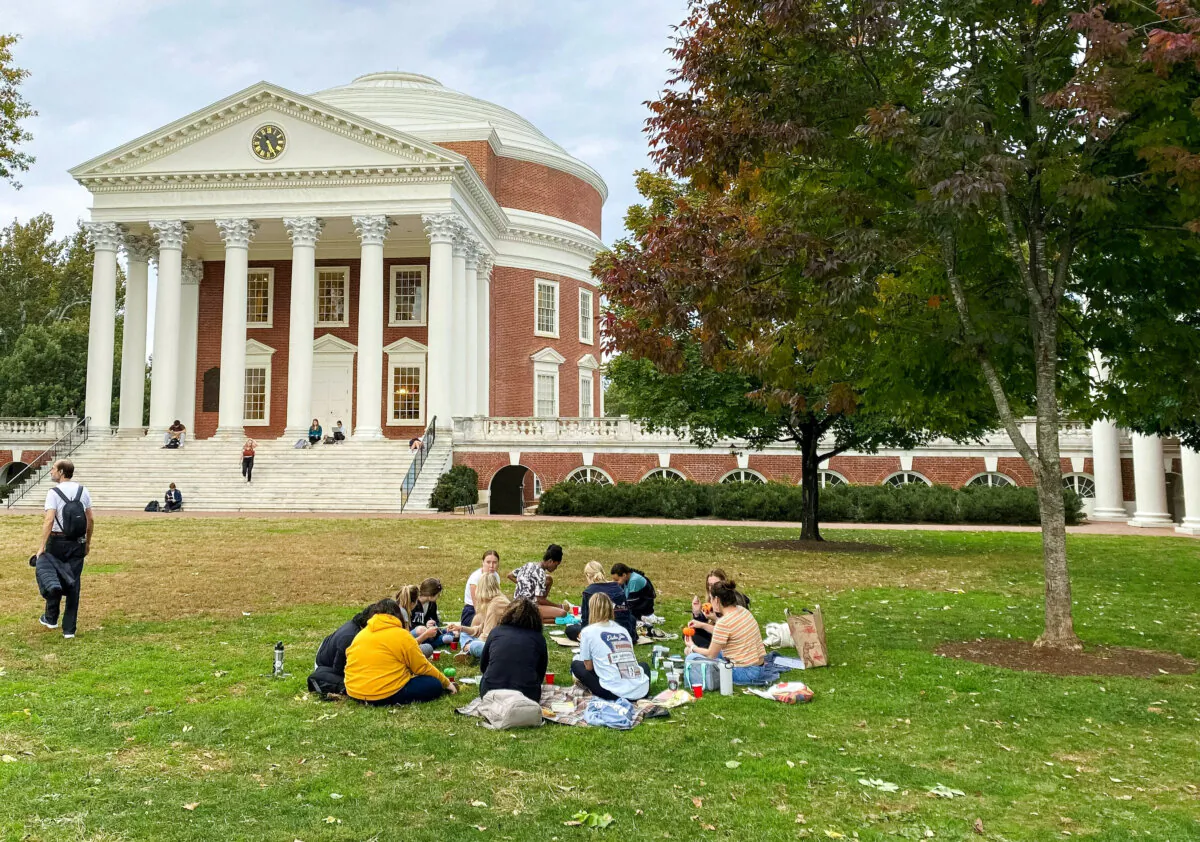
On Oct. 17, University of Virginia interim President Paul Mahoney told Education Secretary Linda McMahon that his institution, based in Charlottesville, seeks “no special treatment in exchange for our pursuit of those fundamental goals” related to education, research, and medical patient care.
“Higher education faces significant challenges and has not always lived up to its highest ideals,” he said in a statement.
“We believe that the best path toward real and durable progress lies in an open and collaborative conversation. We look forward to working together to develop alternative, lasting approaches to improving higher education.”
Dartmouth College, based in New Hampshire, issued its response on Oct. 18. President Sian Leah Beilock said she personally called the White House and then sent a brief letter.
“As I shared on the call, I do not believe that the involvement of the government through a compact—whether it is a Republican- or Democratic-led White House—is the right way to focus America’s leading colleges and universities on their teaching and research mission,” the letter reads.
The Trump administration has never announced the compact or confirmed it as the universities confirmed the existence of the offer. The Epoch Times has reached out to the Department of Education for comment.
The heads of Brown, the Massachusetts Institute of Technology, the University of Pennsylvania, and the University of Southern California previously declined the offer, saying the agreement would infringe on their institutional independence.
“Without an environment where students and faculty can freely debate a broad range of ideas and viewpoints, we could not produce outstanding research, teach our students to think critically, or instill the civic values needed for our democracy to flourish,” the University of Southern California wrote in a letter to McMahon.
Critics, including the American Association of University Professors union, have called the compact a loyalty oath to the Trump administration.
Supporters of the compact say it is a reasonable step toward education reform that combats racial discrimination, promotes viewpoint diversity on campuses that have traditionally favored liberal ideologies, and makes higher education more affordable, accessible, and transparent.
“These are the best practices,” Goldwater Institute Education Policy Director Matthew Beinburg told The Epoch Times.
“It’s an indictment that higher education has strayed so far from its mission.”
Reuters contributed to this report.
 Friends Read Free
Copy
Facebook
Tweet
Friends Read Free
Copy
Facebook
Tweet