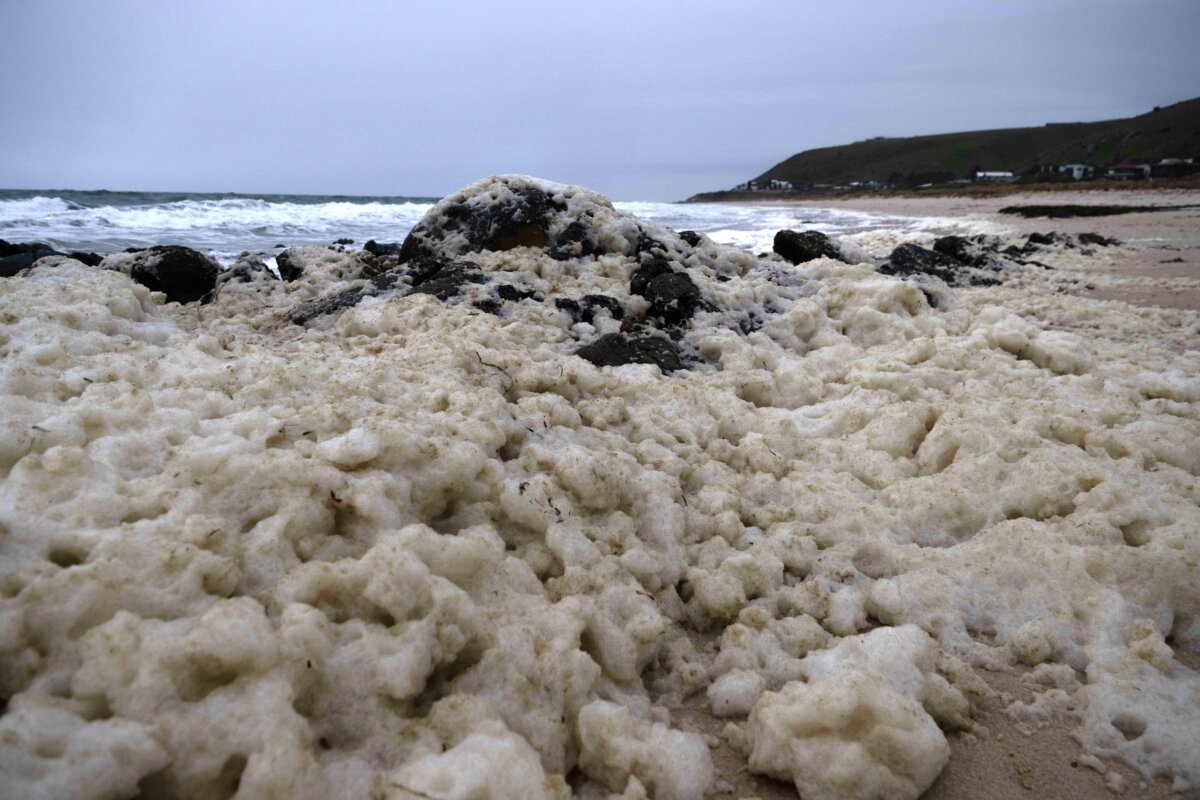

Six months after algal blooms wiped out more than 400 marine species in South Australia, the government has announced a national algae testing lab in Adelaide to speed up detection of harmful toxins.
The facility will focus on identifying brevetoxins—naturally occurring poisons produced by some algae that can accumulate in shellfish and make them unsafe to eat.
These toxins have already forced closures of local oyster and mussel farms, disrupting the seafood industry.
Unveiled on Aug. 20, the new lab will allow samples to be tested locally, cutting waiting times and reducing the risk of prolonged shutdowns for fisheries.
Until now, testing for brevetoxins has been carried out by the South Australian Quality Assurance Program, which has had to send shellfish samples to New Zealand for analysis—delaying results by up to a week.
Under a $28 million joint support package with the Albanese Government, local firm Agilex Biolabs will now develop methods to conduct brevetoxin testing in Adelaide.
Although most of South Australia’s oyster industry remains open, brevetoxins were detected in shellfish for the first time in Australian waters, triggering temporary closures.
Mussel farms reopened earlier this month after consecutive tests showed reduced levels.
Officials confirmed that all commercially available seafood remains safe.
Understanding Algal Blooms
Research from Flinders University explains that algal blooms occur when algae multiply rapidly, usually triggered by warm seas and nutrient build-up.
While many blooms are harmless and essential to oxygen production and marine food chains, toxic species can devastate ecosystems.
The current outbreak, dominated by Karenia mikimotoi, has persisted for months, suffocating marine life and crippling fisheries. Scientists describe it as among the most severe recorded in South Australia.
Narungga man and Moonrise Seaweed Co. Director Brad Darkson acknowledged algae’s ecological value but stressed this case is different.
“We need to start implementing both local and global solutions to mitigate against these events recurring,” he said.
Marine scientist Georgina Wood said extreme heat, still waters, and nutrient run-off created “a perfect storm.” She warned blooms like this may become more frequent.
The team at the university has linked bacteria and viruses to worsening oxygen depletion. They are also testing microbes that could suppress toxic algae.
Experts Warn Crisis Was Foreseeable
The Biodiversity Council described the event as foreseeable and “a human-mediated disaster—enabled by an extended marine heatwave, likely fed by a large pulse of nutrient-rich floodwater and coastal upwelling, and exacerbated by widespread loss of marine ecosystems that once provided natural water filtering and resilience.”
On July 24, it urged governments to act on seven priority measures. These include fast-tracking emergency interventions for species at risk, such as the giant cuttlefish aggregation near Whyalla.
The council recommended investing in immediate biodiversity impact research and accelerating decarbonisation to minimise ocean warming.
Governments are also being urged to restore and protect kelp, mangroves, seagrass, and shellfish reefs.
Albanese Defends Government’s Response
On Aug. 20, Prime Minister Anthony Albanese toured affected Adelaide sites and argued the bloom stemmed from natural factors—flooding, nutrient-rich run-off, and warmer waters—rather than government inaction.
“Clearly, this is an event that has occurred because of the run-off, firstly, from the Murray [River], the flooding events that have occurred in other parts of Australia, flowing through and the combination of nutrients flowing into water, which is hotter than usual,” he said.
He rejected claims that the federal response to the natural disaster was slow.
“No, absolute nonsense … I have been to South Australia, I reckon, more than any prime minister,” he said.
Pressed on delays, Albanese argued the government had acted quickly, funding immediate support and planning for longer-term resilience.
“There is nothing that has been suggested to us by any of the scientific community saying if government had done this, the bloom would not have occurred,” he said.
Meanwhile, with South Australia Premier Peter Malinauskas, he announced a $28 million relief package, including $10,000 grants for small businesses and up to $100,000 for fisheries.
It also funds financial counselling and mental health support, a new Coastal Monitoring Network with sensors and satellite tracking, rapid assessments of fish stocks, public forums, beach clean-ups, and a Community Fund for local projects.
Who Should Pay?
The Australia Institute argues the cost of such climate-driven disasters should not fall on taxpayers.
Noah Schultz-Byard, the Institute’s SA Director, believes fossil fuel producers must bear the cost of climate change.
 Friends Read Free
Copy
Facebook
Tweet
Friends Read Free
Copy
Facebook
Tweet