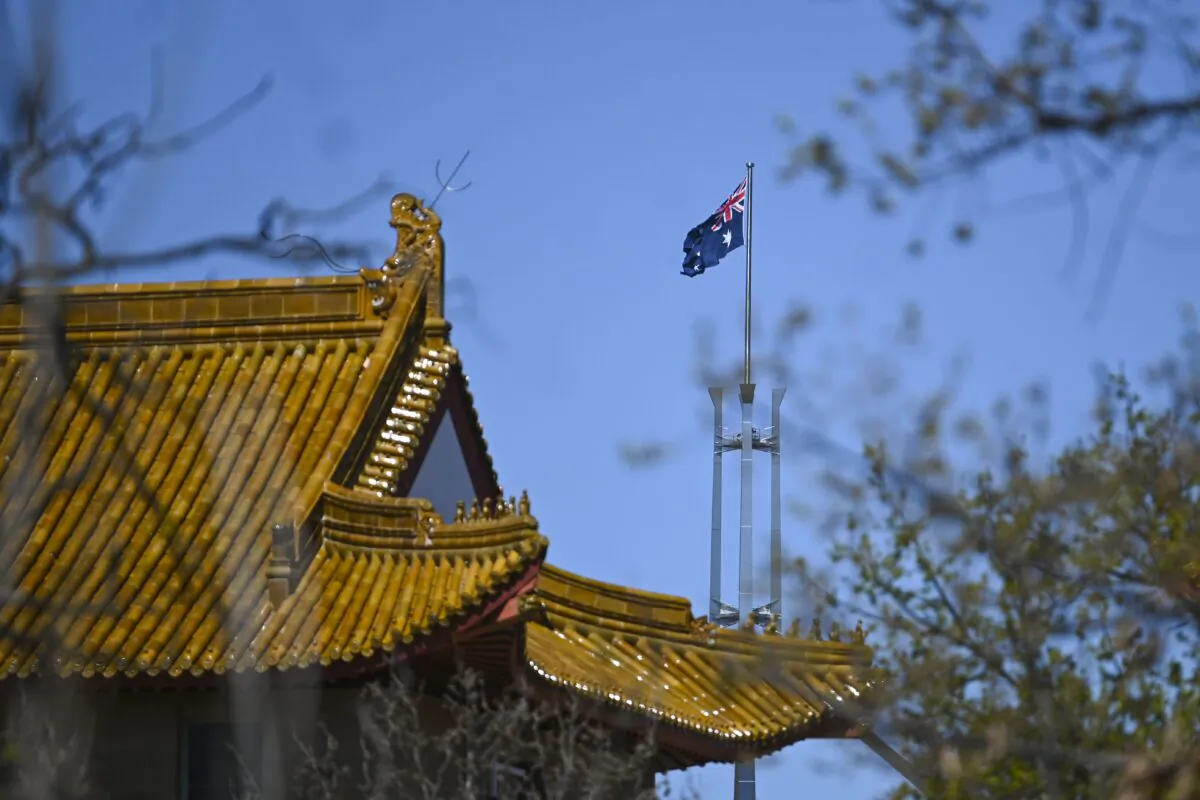

The regime in Beijing has been accused of attempting to interfere with an Australian Senate inquiry looking into foreign interference through social media.
Sen. James Paterson, who chairs the Senate’s Select Committee on Foreign Interference through Social Media, has criticised the Chinese Embassy in Australia, which he says made representations to the Department of Foreign Affairs and Trade (DFAT) about WeChat, a Chinese-language social media platform currently under scrutiny by the committee.
“In my seven years in the Senate, on no occasion am I aware of any instance of any foreign government making representations to DFAT about a parliamentary inquiry or of DFAT raising those representations with a Senate Committee,” Mr. Paterson said.
“It is extremely unorthodox and unusual.”

In an email to the senator from an official from DFAT’s China external and coordination branch, DFAT sought clarification about the Parliament’s powers to compel foreign actors to front public hearings.
“The select committee on foreign interference through social media is unable to compel foreign entities to participate in a hearing nor answer questions in writing,” the DFAT official said in comments obtained by The Australian.
“One additional detail that would [be] helpful to know is how best to characterise a decision by a foreign company not to participate in a hearing. We have seen suggestions that declining to participate in a hearing would ‘demonstrate contempt’ for Parliament and would welcome confirmation of if this is accurate.”
WeChat Under Pressure in Australia
The allegations from the senator come as WeChat faces increasing scrutiny in Australia after it failed to answer 53 questions from the inquiry following its refusal to attend despite personal invitations from the senator.
The questions included topics such as its ties to the Chinese Communist Party (CCP), whether it censors content critical of the CCP, if it promotes CCP propaganda, and if the app is used to “surveil and target Australian users critical of the regime.”
The company was also asked about its data storage locations, its connection to state-owned media outlets, and how many registered users it currently has on both Weixin and WeChat in Australia.
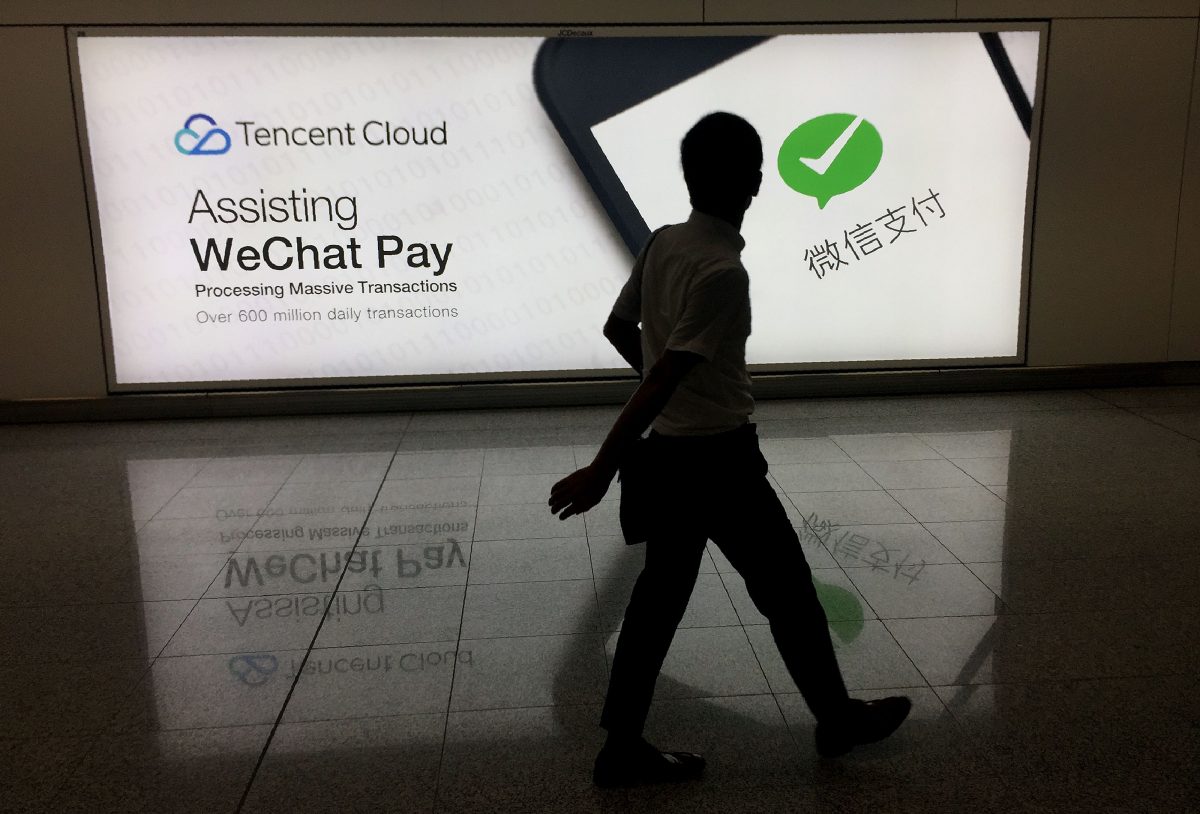
A Chinese instant messaging, social media, and mobile payment app, WeChat, alternatively known as Weixin, was developed by major conglomerate Tencent.
Globally, it was used by more than 1.2 billion active users in the month of September 2020, with about 690,000 daily active users in Australia (pdf).
App Allows Political Interference Expert Says
Seth Kaplan, a lecturer at Johns Hopkins University, who advises organisations such as the U.N., U.S. State Department, and the Organization for Economic Co-operation and Development, told the parliamentary inquiry that WeChat posed a bigger risk than the Chinese music app TikTok.
“Everything that we fear about what TikTok may become already is occurring on WeChat,” he said.
“Narratives are managed, information in there is managed, dissenting views are demoted or eliminated, and it’s basically a narrative machine for the CCP and what it wants to promote similar to what actually happens in China.”
Mr. Kaplan also told the inquiry that he was most concerned about the way the CCP is using the social media app to directly interfere in societies politically.
He cited a case from Toronto, where a political information campaign on WeChat saw a significant shift in the votes for a candidate in a district where there was a heavy Chinese migrant presence because the candidate was critical of the CCP.
Mr. Kaplan also said it was occurring at state and local levels, which are more vulnerable than their federal counterpart.
“For the bills, for example, that are currently being debated on land sales, or technology, WeChat is managing information, helping to mobilise Chinese speakers and then basically seeking coalition partners among the non-Chinese language speaking civil society, and all of this basically is direct interference in the politics of the country,” he said.
“Instead of your democracy being a debate among people who live in the country, there’s an additional voice that plays a large part in the conversation. And that voice is controlled by a foreign government that does not have your best interests at heart.”
 Friends Read Free
Copy
Facebook
Tweet
Friends Read Free
Copy
Facebook
Tweet