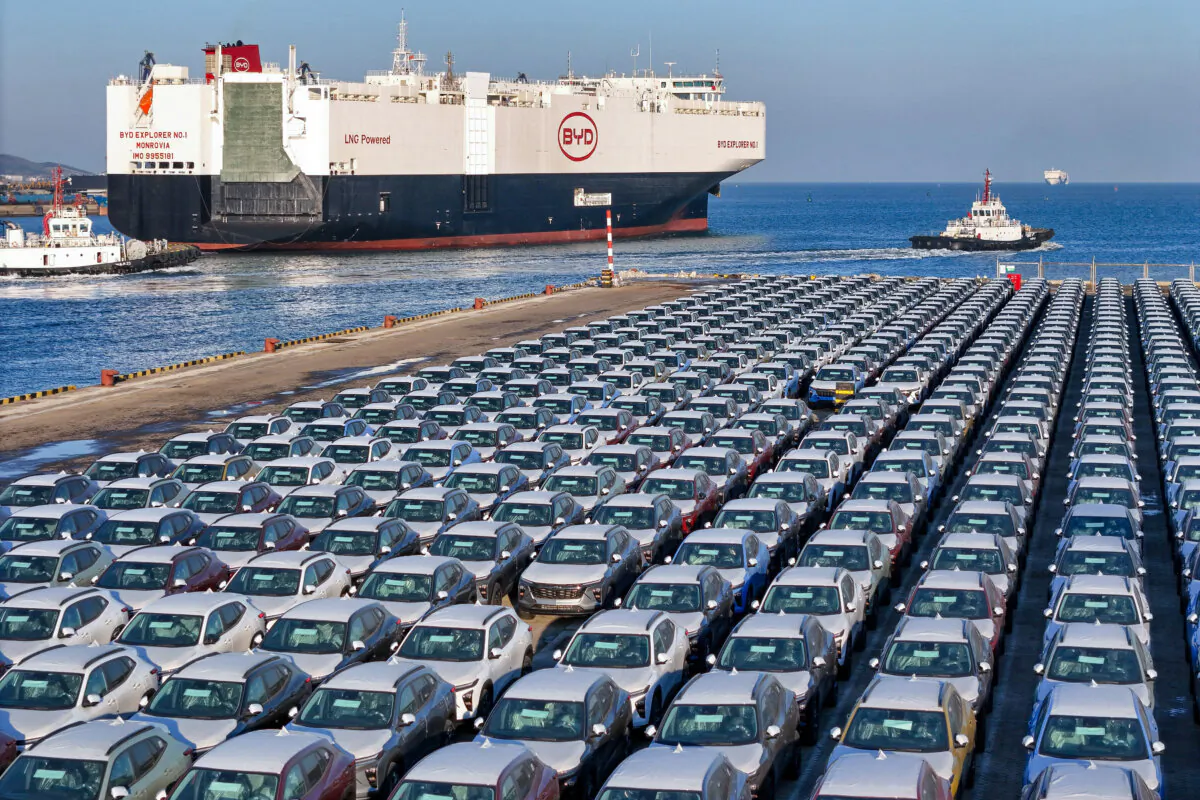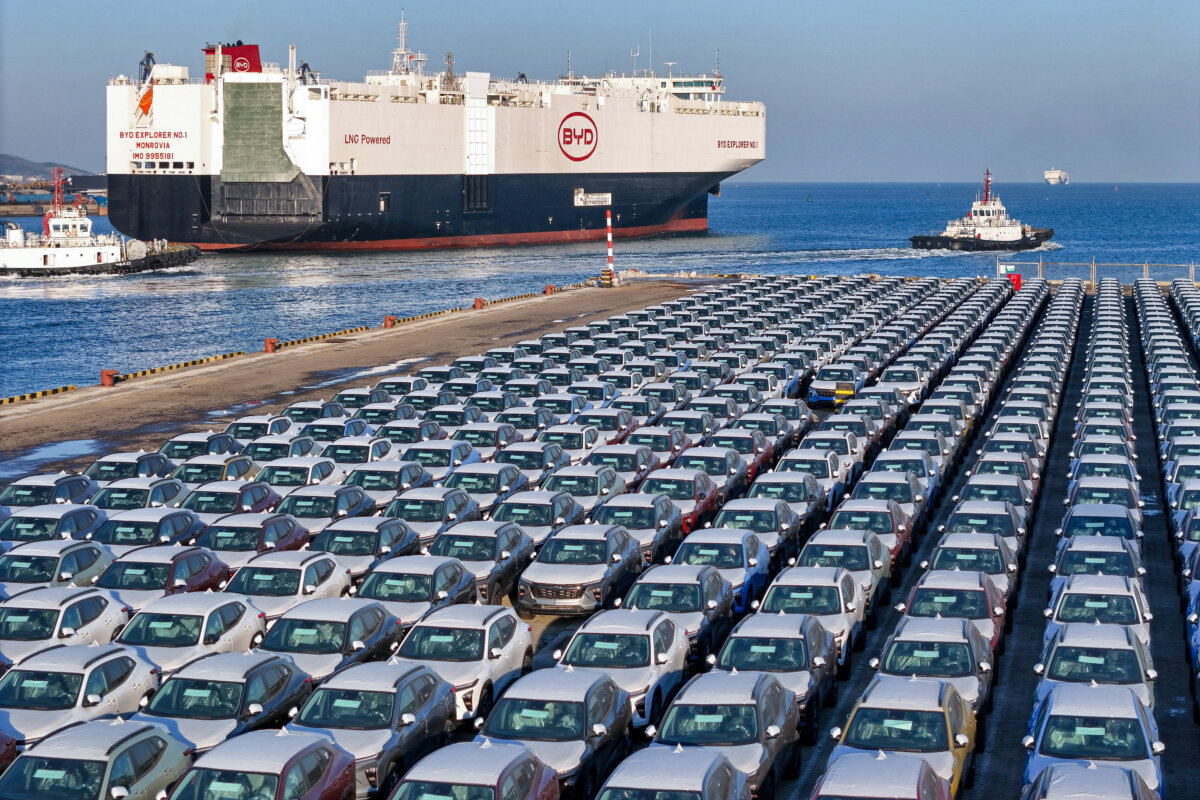

A former Canadian diplomat and China expert told MPs that Chinese electric vehicles can be sold at a low price because the real return Beijing seeks is not financial but “geostrategic.”
Charles Burton, a senior fellow with think tank Sinopsis, testified at the House of Commons science and research committee on April 20 and provided his assessment of some of the risks posed by Chinese electric vehicles (EVs).
Burton said China’s information-sharing laws can compel companies to assist state intelligence, potentially allowing Beijing to use data to advance its objectives.
“The regime can compel manufacturers to embed spyware into their vehicles and leverage massive state subsidies to flood Western markets with EVs at prices below production costs,” Burton said. “They sell these vehicles cheaply because the primary return on investment for China’s integrated regime is geostrategic, not financial.”
Various House committees have been studying Ottawa’s EV policies ahead of the arrival of tens of thousands of Chinese EVs into the Canadian car market.
The federal government imposed a 100 percent tariff on Chinese EVs in 2024 to prevent China from flooding the Canadian market with subsidized vehicles built with cheap labour. The Liberal government has invested billions to build an EV supply chain in Canada as it seeks to decrease the number of gas-fuelled cars on the roads.
Ottawa reached an agreement with Beijing in January to drop the surtax to 6.1 percent on an initial 49,000 Chinese EVs in exchange for China reducing or removing some tariffs on Canadian agricultural and seafood products for the rest of the year. The Liberal government said the deal will help improve EV affordability in Canada while helping Canadian agri-food exporters.

Burton said the EV deal appears to show that Canada has given up its concerns around security, transnational repression, and foreign interference to gain a trade advantage which might not be significant, while risking irking its largest trade partner, the United States.
Burton said the Chinese Communist Party has a plan to become the dominant power in the world by 2050, with an approach that integrates the military and commercial domains.
“I cannot think that their strong desire to have EVs running in Canada is not part of their overall foreign policy and defence agenda,” he said.
Burton said instead of imposing tariffs on Chinese EVs in 2024, Ottawa should have implemented an outright ban, like it has with other Chinese companies deemed to pose security risks. Ottawa banned Chinese telecoms Huawei and ZTE from the 5G wireless infrastructure over espionage concerns, and ordered surveillance equipment maker Hikvision to close its Canadian operations.
Burton and other experts and stakeholders appearing in committees have detailed the risks posed by Chinese EVs, including their potential to collect data on their users and surroundings, using the suite of high tech sensors they carry.
Burton also told the committee he foresees the additional risk that Beijing could weaponize Chinese EVs in a conflict by remotely controlling them.
“The darker concern is how these EVs, governed by sophisticated software that can be manipulated remotely from China through updates, might be weaponized for destabilization,” he said.
Burton mentioned a hypothetical scenario in which “legions” of suddenly immobilized Chinese EVs paralyze key transportation arteries.
“Chinese EVs pose a security threat to Canada, maybe not today or tomorrow, but certainly when the time is right, for example, when China goes to war with the U.S. or our allies,” he said.
Representatives of U.S. and global carmakers in Canada testified alongside Burton, also raising concerns about security risks tied to Chinese EVs.
Brian Kingston, president and CEO of the Canadian Vehicle Manufacturers’ Association, and David Adams, president and CEO of Global Automakers of Canada, said Ottawa should follow through with its earlier intent to regulate the presence of Chinese hardware and software in connected vehicles. The United States passed a related law and implemented regulations in 2025.
Public Safety Minister Gary Anandasangaree previously said that Chinese EVs would need to comply with privacy laws. Privacy Commissioner Philippe Dufresne told MPs on April 16 he was not consulted on Chinese EVs.
The Communications Security Establishment (CSE), Canada’s electronic spying agency which houses the Cyber Centre, declined to comment on the threat posed by Chinese EVs. “While electric vehicles are relatively new in many respects, the core principles of cyber security apply to them just the same as they do to all connected technologies, regardless of their origin,” the agency told The Epoch Times in a statement.
Editor’s note: the article was updated with a statement from CSE.
 Friends Read Free
Copy
Facebook
Tweet
Friends Read Free
Copy
Facebook
Tweet