
The Bloc Québécois (BQ) is calling on Ottawa to crack down on “exploitative practices” in Canada’s trucking industry, as a House of Commons committee continues to investigate an industry loophole that critics say is making the roads more dangerous.
Industry experts have warned that the rapid spread of so-called “Driver Inc.” business practices let operators drive down wages and safety standards, threatening the trucking industry’s wages and road safety. Driver Inc. refers to a practice wherein truckers hire workers as independent contractors instead of employees, allowing them to dodge payroll taxes, benefits, overtime and workplace protections, which critics say often result in worker exploitation and poorly trained drivers.
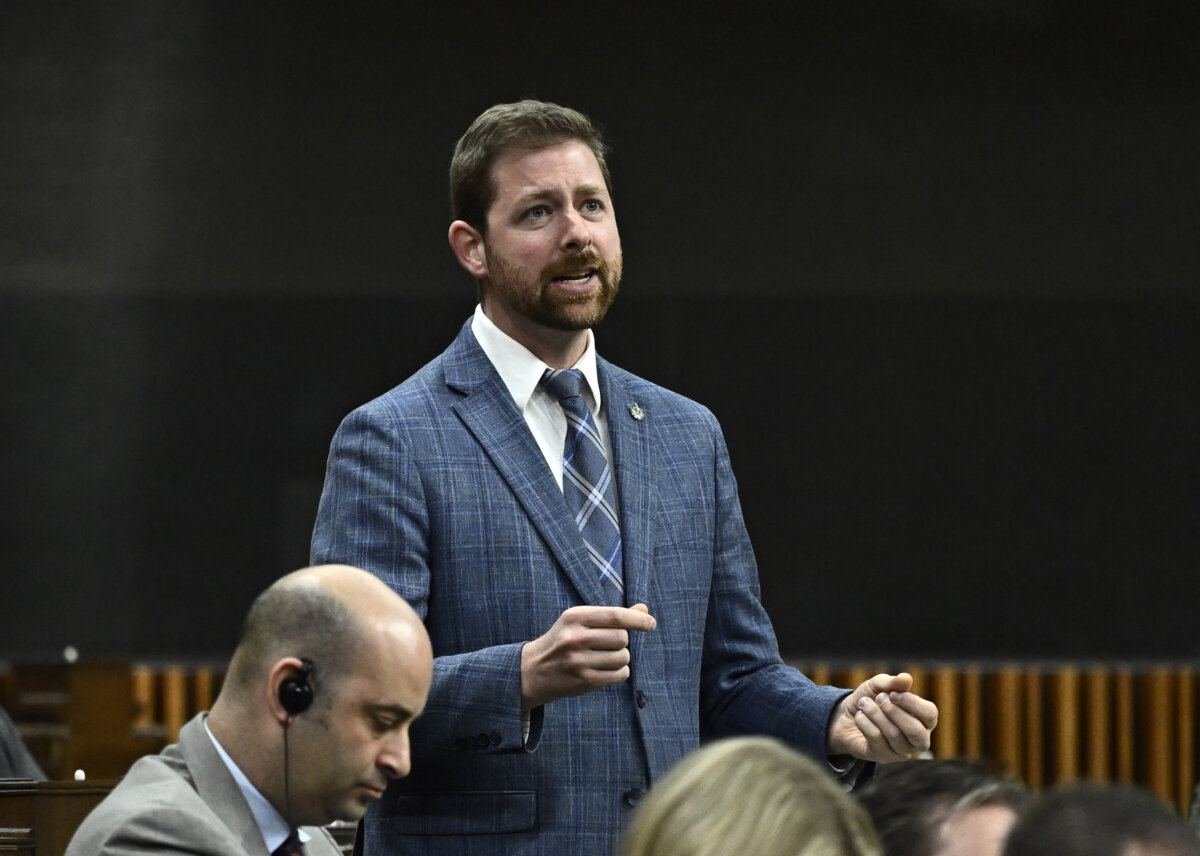
“It’s a downright cancer in the trucking industry. These discount drivers are often people who are shamelessly exploited by employers or contractors, and they ensure that regular, legitimate carriers are stuck with unfair competition,” BQ MP Xavier Barsalou-Duval said in French at a press conference in Ottawa on Oct. 6, and joined by several trucking industry representatives.
In addition to calling for a federal inquiry, Barsalou-Duval called on Ottawa to meet 10 demands he said would help restore road safety and end Driver Inc. practices.
Committee Study
An ongoing House of Commons transport committee study into trucking safety and regulations in Canada is currently looking into Driver Inc. practices.
“Our members are suffering under the truck driver misclassification scheme that’s proliferating in our industry known as Driver Inc.,” executive director of the Atlantic Provinces Trucking Association Chris McKee said during an Oct. 9 meeting of the committee. “Driver Inc. has weakened our industry from a safety, labour and competitive standpoint. This is a crisis of fairness, safety and the rule of law.”
Committee member Dan Albas, Conservative MP for Okanagan Lake West-South Kelowna said the committee has discovered that some federal government policies such as on immigration have been fuelling Driver Inc.
The study is scheduled to run for at least six meetings, during which members are expected to ask Minister of Transport Steven MacKinnon to testify, along with additional government ministers.
Organizations such as the Truck Training Schools Association of Ontario (TTSAO) previously submitted a brief to the committee saying the Driver Inc. practice “has fostered collusion between carriers and unscrupulous schools, resulting in compressed programs, document falsification, and the exploitation of trainees.”
TTSAO added that the practice has led to improperly trained truck drivers, exploitation of foreign workers pressured to work in unsafe conditions to keep their visas, and poorly maintained trucking fleets making Canadians roads increasingly dangerous.
Driver Inc. practices started in Ontario before spreading and proliferating in Quebec and other provinces across Canada, according to Barsalou-Duval. CEO of the Quebec Trucking Association Marc Cadieux said those engaging in the practices are “bringing intergenerational family businesses to their knees.”
BQ Demands
Among his demands, Barsalou-Duval is calling for an immediate ban on temporary foreign workers being employed under the Driver Inc. model, requiring companies operating without employees to issue T4A forms, auditing shell companies involved in the practice, and holding employers accountable for unpaid taxes and contributions under the scheme. Barsalou-Duval’s list also calls for creating a public registry of non-compliant companies and creating an enhanced certification program to provide oversight on trucking companies, among other proposals.
Numerous trucking accidents have brought the issue to national prominence, including a Sept. 10 crash east of Montreal in which a trucker injured two people after reportedly having been on the road for 57 hours.
“For three consecutive years, fatalities involving commercial vehicles have increased in Canada. Between 2023 and 2024 in Quebec, we’re talking about a 35 percent increase in fatalities,” Barsalou-Duval said.
In late September, Quebec truckers protested in various cities demanding stricter trucking rules and better oversight in the industry, following rising traffic accident fatalities the month before.
Alberta also recently shut down a number of driving schools and commercial trucking companies in the province, while tightening trucking regulations, citing a rise in poorly trained drivers and unsafe trucking fleets on the roads.
“Anyone cutting corners or operating unsafe trucks will be removed from our roads,” Alberta’s Transportation and Economic Corridors Minister Devin Dreeshen said in an Oct. 3 statement.
The Canadian Press contributed to this report.
 Friends Read Free
Copy
Facebook
Tweet
Friends Read Free
Copy
Facebook
Tweet