
Trade discussions between Canada and the United States were moving in a positive direction in the weeks before U.S. President Donald Trump abruptly cancelled talks, according to Canada’s ambassador in Washington.
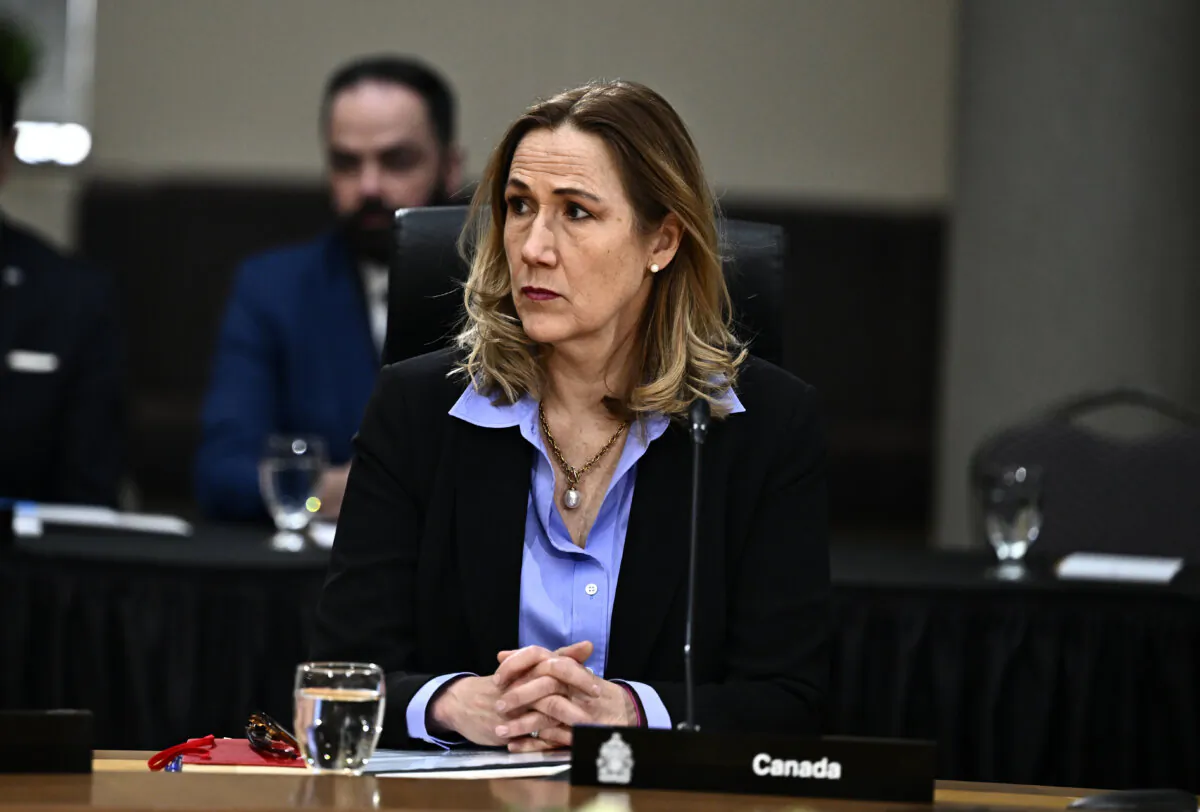
“I don’t want to suggest that we were on the verge of an arrangement, but we had made more progress—in my opinion, in those weeks—than we had in a very long time,” Canadian Ambassador to the United States Kirsten Hillman told the Senate foreign affairs committee on Oct. 29.
Hillman said following Prime Minister Mark Carney’s visit to the White House on Oct. 7, the two countries had engaged in “much more intensive discussions” on a trade deal that Ottawa hoped would include tariff relief.
“We still had gaps in our different perceptions of what would make a good deal. We weren’t there yet, but we were working on narrowing those, and we had succeeded in narrowing some of them,” Hillman said.
Trump said on Oct. 23 he was terminating all trade negotiations with Canada over Ontario’s $75 million anti-tariff ad campaign, which uses portions of a 1987 address from former U.S. President Ronald Reagan praising free trade, including with Canada. Trump said the ad misrepresented Reagan’s stance on tariffs and was meant to interfere with an upcoming U.S. Supreme Court hearing into his administration’s use of tariffs.
Ontario Premier Doug Ford said on Oct. 24 that his government would pull the ad, but not before it was played over the weekend during the baseball World Series. Trump announced on Oct. 26 that he would be raising tariffs on Canada by an additional 10 percent, in retaliation for the decision not to immediately stop the ad.
Hillman said in recent weeks, she has been making the case in Washington alongside Canada-U.S. Trade Minister Dominic LeBlanc that trade with Canada “contributes to U.S. resilience, and that Canadian imports do not threaten U.S. national security or the economy.”
Hillman said that despite the pause in negotiations, Canada is prepared to continue that work when the United States is “ready to move forward again.” Hillman also said she has continued to have exchanges with “a number of my contacts in the administration,” and her team has also been in touch with officials in the White House, albeit not to discuss trade.
Hillman said that while Ottawa had been seeking to remove all sectoral tariffs on Canada, including steel, aluminum, automobiles and softwood lumber, Washington had expressed a desire in recent weeks to “start with a few issues and try to move those along,” while focusing on other issues at a later time. The ambassador said the United States had focused on discussions around steel and aluminum.
Hillman said while this has been characterized as negotiations on one sector “to the exclusion of the other,” this is not accurate, but rather reflects the format and sequence of discussions.
“The U.S. is saying ‘we would like to sequence [discussions] this way’ … but softwood lumber is, as I say, it’s never not part of the discussion,” she said.
Canada has been impacted by a series of U.S. tariffs imposed this year, including a general 35 percent tariff on Canadian goods not covered under the United States-Mexico-Canada Agreement (USMCA), 10 percent tariffs on Canadian oil and potash, universal 50 percent tariffs on steel, aluminum, and copper, universal 25 percent tariffs on vehicles and auto parts, kitchen cabinets, bathroom vanities, and upholstered furniture, and a 10 percent increase on Canadian softwood lumber tariffs.
 Friends Read Free
Copy
Facebook
Tweet
Friends Read Free
Copy
Facebook
Tweet