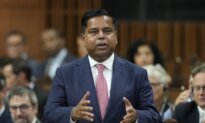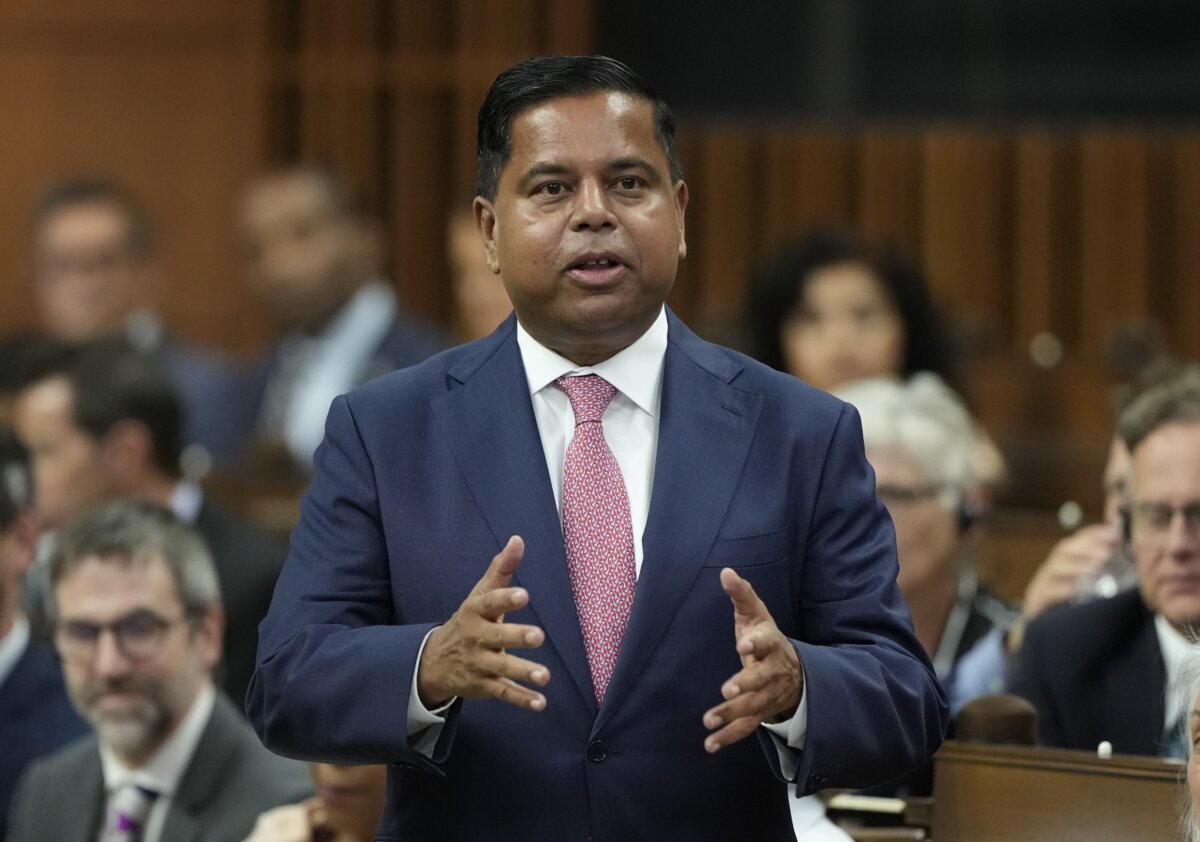

Ottawa will name its first foreign influence transparency commissioner within the next few weeks, Public Safety Minister Gary Anandasangaree says.
Anandasangaree told reporters ahead of the Jan. 27 cabinet meeting that he has dispatched a letter to opposition parties and the Senate to notify them of the government’s selection for commissioner.
“We’re looking for feedback, and in due course, we will be putting that name forward,” he said, adding he hopes to announce the name in the “next week or two,” but is awaiting feedback before the appointment is made.
Foreign interference legislation enacted by Parliament in 2024 requires the federal government to seek input from opposition parties before officially announcing a candidate. Anandasangaree has previously said he cannot announce any names until Ottawa is ready to make the appointment official.
Anandasangaree was asked by reporters why there have been delays with the registry after he said a name would be put forward by the end of 2025, and was questioned on whether recent trade negotiations with China had played a role on the prolonged timeline.
“No,” he replied. “We were not able to finalize it before we rose,” he added, referring to the break in Parliament for the holidays. “But we’re doing it essentially the first day back in Parliament.”
Anandasangaree told CBC as he was leaving question period on Jan. 26 that he had sent the letters out to the opposition parties that day.
He also described the nominee as someone of “a high level of integrity” who has served the country “over many decades” outside of the political world.
Anandasangaree’s remarks come more than a year-and-a-half after Parliament passed legislation to establish the role. Bill C-70 received approval in June 2024 to ensure the establishment of a public registry, a resource that Ottawa said would be up and running by the end of last year.
The government has had a candidate in mind for the role of commissioner since at least last fall. Public Safety Canada said in a statement to The Epoch Times in October that the department had “a name” in mind for the role, and looked forward to “presenting that name to the opposition” and conducting the appropriate consultations.
Anandasangaree told the House of Commons Public Safety Committee the following month that a commissioner would be appointed in “short order,” saying the government was “finalizing” the process and would soon bring forward a name for feedback.
Once a candidate has been appointed officially, the commissioner’s office must be established and staff recruited. A spokesperson from the public safety ministry said a secure IT solution needs to be developed and implemented, and the regulations must be finalized before the foreign interference registry can be launched.
The Conservative Party has repeatedly criticized Ottawa for the ongoing delays in choosing a commissioner and getting the registry up and running. Tory foreign affairs critic Michael Chong has consistently pushed for a mandatory, transparent registry—similar to those used in the United States, Australia, and UK—to combat interference from hostile regimes like China, and said that foreign interference threats are continuing to multiply in the meantime.
The final report of the Foreign Interference Commission released last January, said China is “the most active perpetrator of foreign interference targeting Canada’s democratic institutions.” The report also identified India as the second most active country engaging in electoral foreign interference in Canada.
The United States has maintained a foreign agent registry since 1938. Australia established one in 2018, and Britain followed suit in 2023.
Foreign Registry
Canada’s Foreign Influence Transparency Registry, established under the Foreign Influence Transparency and Accountability Act (FITAA) of 2024, requires individuals and entities to publicly register when they have an arrangement with a foreign principal and undertake certain influence activities related to Canadian government or political processes.
The registry is intended to enhance transparency by disclosing the nature of these relationships and activities, and applies where specific legal thresholds—such as communications with public office holders or public political messaging on behalf of a foreign principal—are met.
The responsibility of managing the registry will fall to the foreign influence transparency commissioner, who will work under Public Safety Canada. The commissioner’s role will be to promote transparency, work to increase public awareness, and enforce compliance by imposing administrative penalties of up to $1 million or by referring cases for criminal investigation, according to the foreign influence act.
The commissioner may serve in the position for a maximum of seven years and is eligible for reappointment for one further term, also lasting up to seven years, the government said.
 Friends Read Free
Copy
Facebook
Tweet
Friends Read Free
Copy
Facebook
Tweet