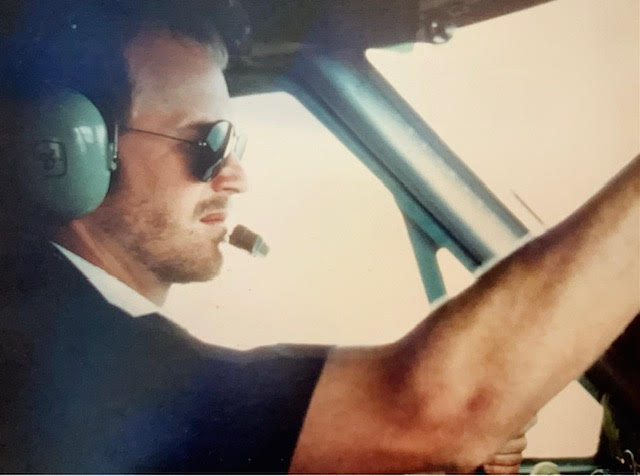
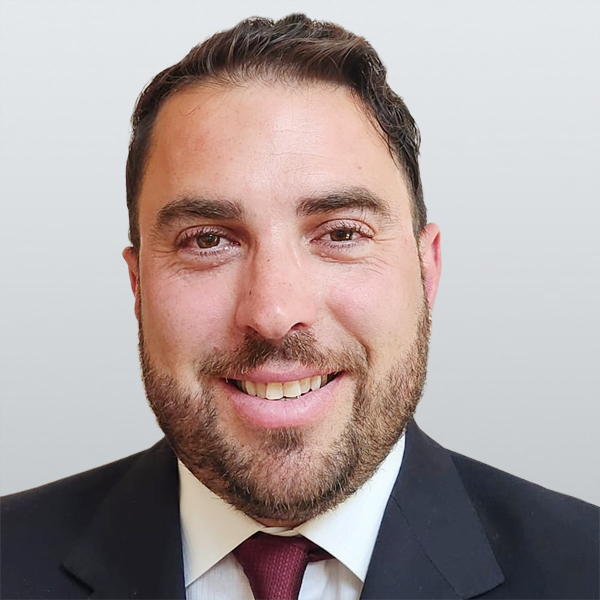
When William Rew left Montreal at age 30 in 1983 to fly aid missions in Ethiopia, he never expected it would help spark one of the largest charity broadcasts of all time two years later.
Rew joined up to deliver food and medicine to drought- and famine-stricken Ethiopia in late 1983 and throughout 1984 with Mission Aviation Fellowship of Canada (MAF). Those efforts contributed to the making of a groundbreaking BBC television report in 1984, which led to the 1985 Live Aid worldwide benefit concerts that raised over US$100 million in aid.
“I kept a diary, and in my one year in Ethiopia, I had more stuff to put in a diary than I did in the other, you know, 39 years of my commercial flying career,” recalled Rew in an interview with The Epoch Times.
Rew was born to Scottish parents but spent his childhood in Malaysia. They would periodically fly back to Scotland for vacation on lengthy flights during which Rew “absolutely fell in love with flying,” he said.
After moving to Canada at age 14, Rew graduated from high school and went on to become a commercial pilot with Air Canada. When he saw an advertisement for the MAF job in Ethiopia in the summer of 1983, he says he was driven by his Christian faith and upbringing to sign up and go help.
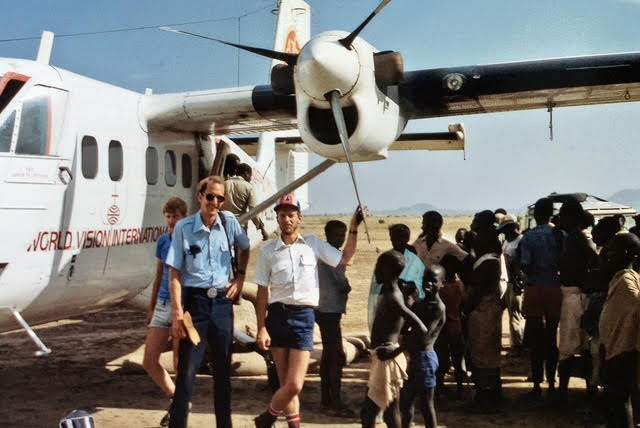
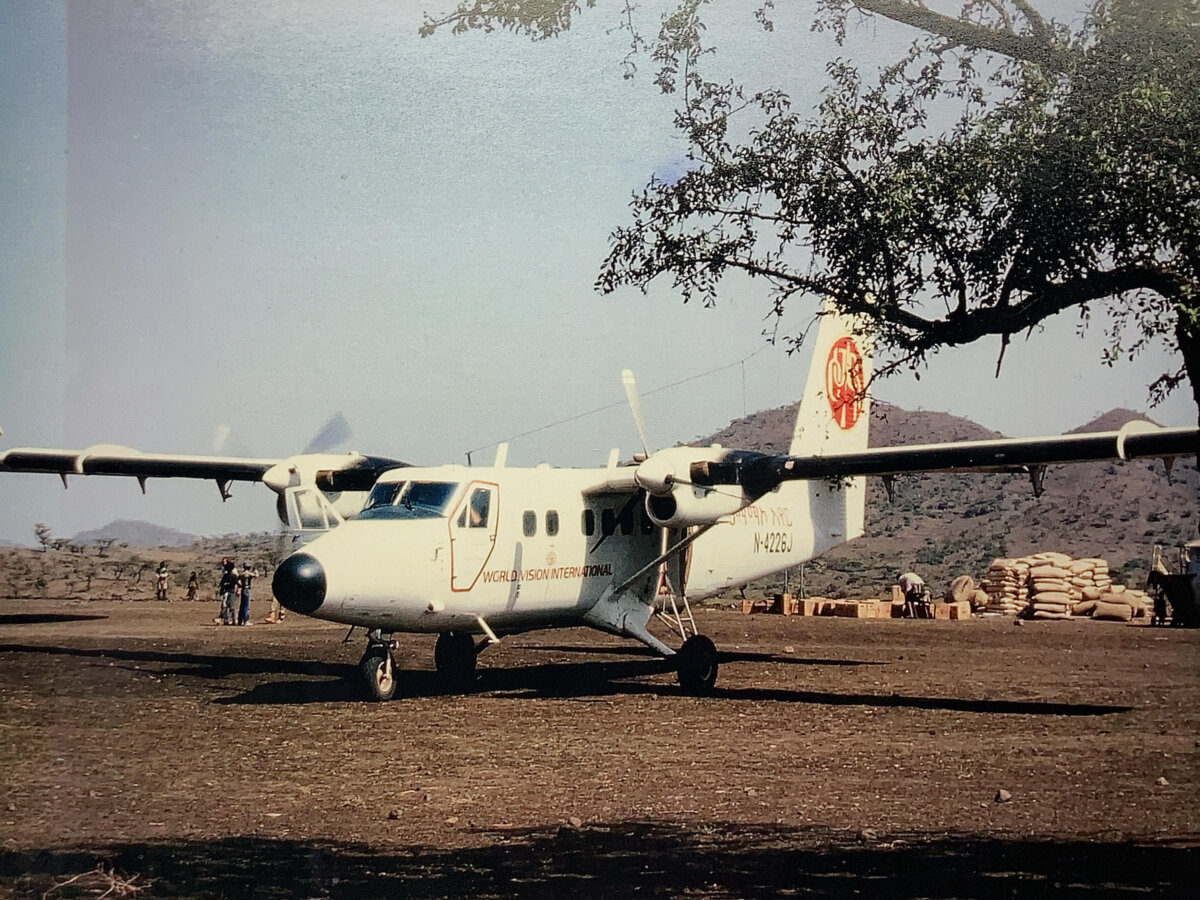
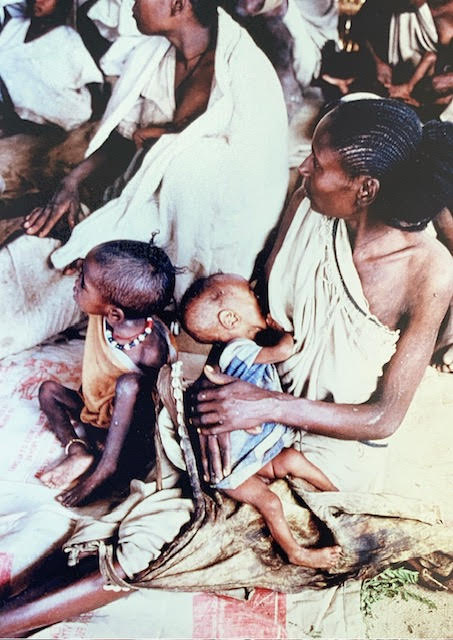
Rew was selected for a paid position as a pilot with MAF and flew drought and famine relief runs throughout Ethiopia in a Twin Otter airplane operated by World Vision. During the first half of his deployment, missions focused on relief for areas south of the capital of Addis Ababa where crops had been destroyed due to drought. An estimated one million people died from hunger in Ethiopia from 1983 to 1985.
“There were some times you were flying to places that were essentially drought relief, helping the people not fall into the horrors of starvation,” Rew said.
Deployments would last from one day to several weeks. He landed on simple dirt or grass airstrips and stayed in small rural hotels that usually had enough food to supply his crew. On one mission, however, Rew and his co-pilot had to bring their own food supply. During the second half of his year, Rew mainly flew missions to the north, which he said was in even worse shape.
“Now you’re beginning to deal not only with famine and the horrors of famine, but you’re also dealing with famine exacerbated by civil war,” he said, adding that people living in remote communities in the hills would start out on foot for places they heard might have food, getting weaker and weaker as they walked.
The Ethiopian Civil War lasted from 1974 to 1991 and was fought between a Marxist military junta ruling the nation and an array of rebel groups including the Eritrean People’s Liberation Front and the Tigray People’s Liberation Front. The conflict led to 1.4 million deaths and hundreds of thousands of people wounded and displaced. Rew regularly saw Ethiopian military forces but didn’t see any front-line combat, which was actively avoided with help from the Ethiopian government.
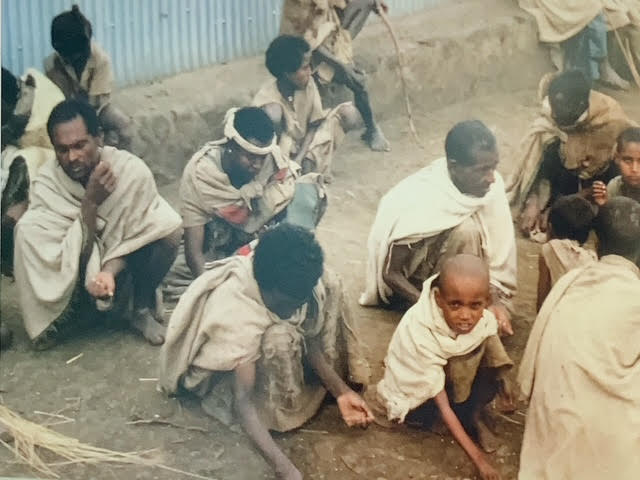
Rew flew Canadian-built de Havilland Twin Otter aircraft with co-pilot and mechanic Keith Ketchum from Vancouver and later American-born co-pilot Andrew Galloway from Toronto. Flying up to 12 hours per day, they mainly delivered large sacks of grain, along with high-protein biscuits and milk powder to starving areas of Ethiopia. At times they would also transport medical equipment and cooking equipment to feeding camps. They would sometimes fly multiple runs per day, parking on the runway as aid workers unloaded supplies.
Although he rarely stayed long at drop zones, on the occasions he did enter feeding camps, the misery and suffering made a deep impact on him.
“The problem with some of these feeding camps is that they were sort of a desperate last measure,” Rew said. “So there wasn’t always adequate shelter, there wasn’t always adequate medical care, and there wasn’t always adequate sanitation.”
Near the end of his mission, Rew helped fly a videographer named Muhammad Amin around Ethiopia as part of a documentary being made by Michael Buerk for the BBC. The Oct. 23, 1984, documentary had a major impact. It turned the world’s attention to the suffering in Ethiopia and spurred Irish singer and activist Bob Geldof to record the single “Do They Know It’s Christmas?”
Geldof subsequently organized two Live Aid charity concerts in the summer of 1985 in London and Philadelphia, which were watched by an estimated 1.9 billion people globally.
Rew left Ethiopia on Nov. 1, 1984, without realizing the impact the documentary would have. He said he was unprepared for the media attention and multiple interview requests he received upon returning to Canada.
Controversy over the proceeds of Live Aid later arose, including now-withdrawn allegations by the BBC that large portions of the money raised by Live Aid went to buy weapons for the Tigray People’s Liberation Front.
“In March, World Service’s Assignment said cash raised by charities to help Ethiopia had been diverted by rebels,” BBC said in a November 2010 apology and retraction, referring to the program produced by the public service broadcaster World Service owned and operated by the BBC.
“The BBC has admitted that Assignment gave the impression that Band Aid and Live Aid money had been diverted despite no evidence to back that up.” Band Aid was the group of star musicians assembled by Geldof to record “Do They Know It’s Christmas?”
Rew said the aid he delivered was in tandem with various trusted organizations.
“Anytime you deliver aid, there are risks associated with misdirection of aid and misdirection of money and so on and so forth, so it certainly didn’t surprise me that it became a bit of a controversy,” he said, though adding he is confident that most of the aid got where it needed to go during his missions.
“There were lots of aid workers, expatriate work, positioned around the country, so you weren’t dropping it off at some place where the food was only going to be administered by Ethiopian regional administrators who might be under threat to give some food to the military.”
According to the 2024 “Top 10 Impact Charities” report by Charity Intelligence Canada (Ci), of the 300 Canadian charities analyzed for the “measurable demonstrated impact” they made, the overall average return per dollar donated was $1.50, while the average return of its top 10 impact charities was about $7 for every dollar donated.
Regulation of charities in Canada is primarily done through the Canada Revenue Agency’s Charities Directorate, which provides oversight and ensures compliance with standards.
Ci closely scrutinizes Canadian charities and has been involved in some high-profile cases. Managing director Kate Bahen says her organization hasn’t investigated the Ethiopian drive, as Ci was only formed in 2007. However, she says that on a personal level, she has the impression that the movement was a game-changer.
“I was a teenager when Live Aid happened. I feel it changed giving,” Bahen said.
“At our school we didn’t eat for a day in solidarity for the starving in Ethiopia—not sure that did much good or was effective. It was different than the Terry Fox Run. Maybe it put international aid on the map relative to local charities and causes that are so integrated into schools.”
Bahen noted that telethons preceded Live Aid but that the Live Aid concerts took things to a new level.
Speaking of his experience in Ethiopia and the ensuing success of Live Aid, Rew particularly remembers it as a testament to the influence of mass media.
“It was an incredible demonstration of the power of the media,” he said. “The way Michael Buerk speaks, and the film work of Muhammad Amin was just so powerful. … I’m sure they didn’t have any idea how it would be received, either. And they broadcast this piece on October the 23rd and the whole world changed.”
 Friends Read Free
Copy
Facebook
Tweet
Friends Read Free
Copy
Facebook
Tweet