Prime Minister Mark Carney did not take part in a press availability Jan. 23 following his cabinet gathering in Quebec City, with Finance Minister François-Philippe Champagne saying the prime minister couldn’t attend at the last minute due to a “scheduling issue.”
Champagne took questions from the press, but did not provide further details on the reason for Carney’s absence.
Carney’s lack of attendance at the scheduled media availability comes following an apparent escalation of tensions between Carney and U.S. President Donald Trump, with the American president withdrawing a previous offer for Carney to join the U.S.-led Board of Peace on Jan. 22 and saying China will “eat them up” as Ottawa pursues closer relations with Beijing.
The prime minister’s last recorded interaction with the press came the night of Jan. 22 when asked how talks are going with Trump.
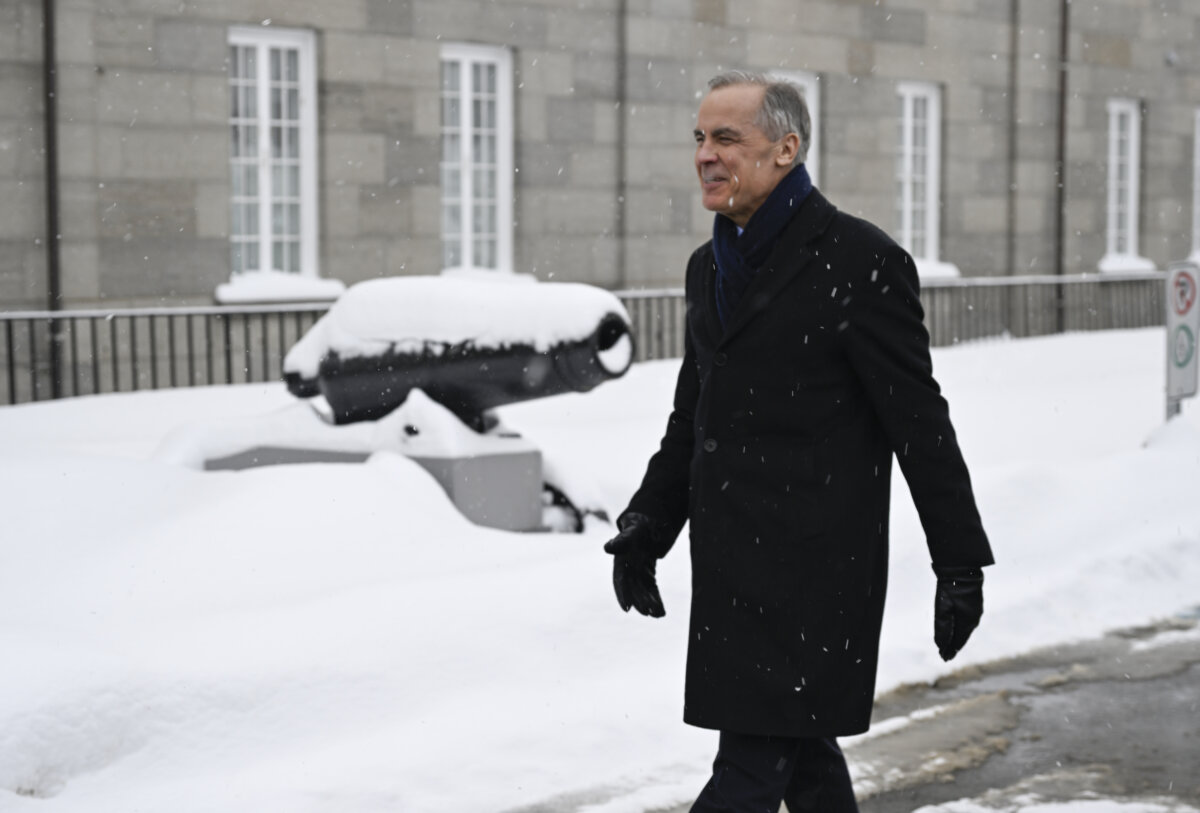
“Oh, that’s the most boring question. Think of a new one,” Carney responded while walking out of Quebec City’s Citadelle fortress where Liberal cabinet meetings had been taking place. “New question,” he added in French before getting in a vehicle to leave.
The Jan. 22–23 Liberal cabinet meeting was focused on goals set forth in a mandate letter from Carney in May of last year that was aimed at making a trade and security deal with the United States, growing Canada’s economy, stabilizing immigration, bringing down the cost of living, boosting affordable housing, strengthening Canada’s military, and cutting government costs.
The new year’s cabinet meeting comes following a busy fall sitting last year in which Carney passed his first budget, Conservative MPs Chris d’Entremont and Michael Ma joined the Liberal caucus, and former cabinet minister Chrystia Freeland quit her seat after taking a job as an adviser to Ukrainian President Volodymyr Zelenskyy. The addition of two MPs and loss of one brings the Liberal Party to 170 seats in the House, two shy of a majority government.
China Deal
In addition to these developments in Ottawa, Carney has been busy taking many international trips, something Foreign Affairs Minister Anita Anand said is part of his goal of doubling non-U.S. exports by 2035.
The prime minister signed various agreements with Beijing Jan. 16, including a pledge to slash tariffs on up to 49,000 Chinese electric vehicles (EVs) per year, with Ottawa saying it expects China to cut its tariffs on agricultural products and seafood in return. The trip also resulted in commitments to form closer China-Canada ties on defence, energy, agriculture, and tourism as part of a broadened new “strategic partnership.”
Trump initially reacted to news of the Canada-China deal by saying it was “a good thing” on Jan. 16.
Carney went on to deliver remarks Jan. 20 at the World Economic Forum’s (WEF) annual meeting in Davos, Switzerland, where he called on middle powers such as Canada to form new alliances with each other. He also said it is unacceptable for middle powers to be taken advantage of or forced into economic integration by unnamed great powers.
“You cannot live within the lie of mutual benefit through integration, when integration becomes the source of your subordination,” Carney said in an apparent reference to Canada’s deep trading relationship with the United States.
U.S. Commerce Secretary Howard Lutnick said Carney’s remarks were likely just “political noise” toward a reelection effort. He added that Canada’s closer relations with Beijing could harm Canada’s efforts to renegotiate the U.S.-Mexico-Canada Agreement (USMCA) with Washington.
Canada has been subject to 35 percent tariffs on all non-USMCA compliant exports to the United States since Aug. 1 of last year, after failing to reach a trade or security deal. Canadian exports of aluminum, steel, softwood lumber, copper, certain auto parts, and some categories of furniture are also subject to higher sectoral tariffs and duties.
Trump Responds
“They should be grateful to us, Canada. Canada lives because of the United States. Remember that, Mark, the next time you make your statements,” Trump said.
Carney responded on Jan. 22 with a speech to Canadians from Quebec City, saying “Canada doesn’t live because of the United States. Canada thrives because we are Canadian.”
Later on Jan. 22, Trump said he has withdrawn an invitation for Carney to join his Board of Peace. “Please let this Letter serve to represent that the Board of Peace is withdrawing its invitation to you regarding Canada’s joining, what will be, the most prestigious Board of Leaders ever assembled, at any time,” Trump said in a post on Truth Social.
Updating his previously apparent positive reaction to the China-Canada deal, Trump posted Jan. 23 on Truth Social that China “will eat them [Canada] up” within a year of Ottawa and Beijing doing business together.
The day before, Trump also downplayed the contribution of NATO allies in the war in Afghanistan, saying in a Fox News interview that non-American troops had “stayed a little back” from the conflict’s frontlines and adding “we’ve never needed them.”
“I will say that we all know the sacrifices of the men and women in uniform during the war in Afghanistan, and Canadians are very proud of their service. Canadians are very grateful for their service,” Champagne said Jan. 23 when asked about Trump’s comments, adding, “You cannot rewrite history.”
Noé Chartier and Matthew Horwood contributed to this report.
 Friends Read Free
Copy
Facebook
Tweet
Friends Read Free
Copy
Facebook
Tweet