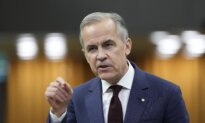

Prime Minister Mark Carney says he did not discuss North American free trade negotiations with U.S. President Donald Trump during their latest phone call, as the July 1 review date for the pact draws closer.
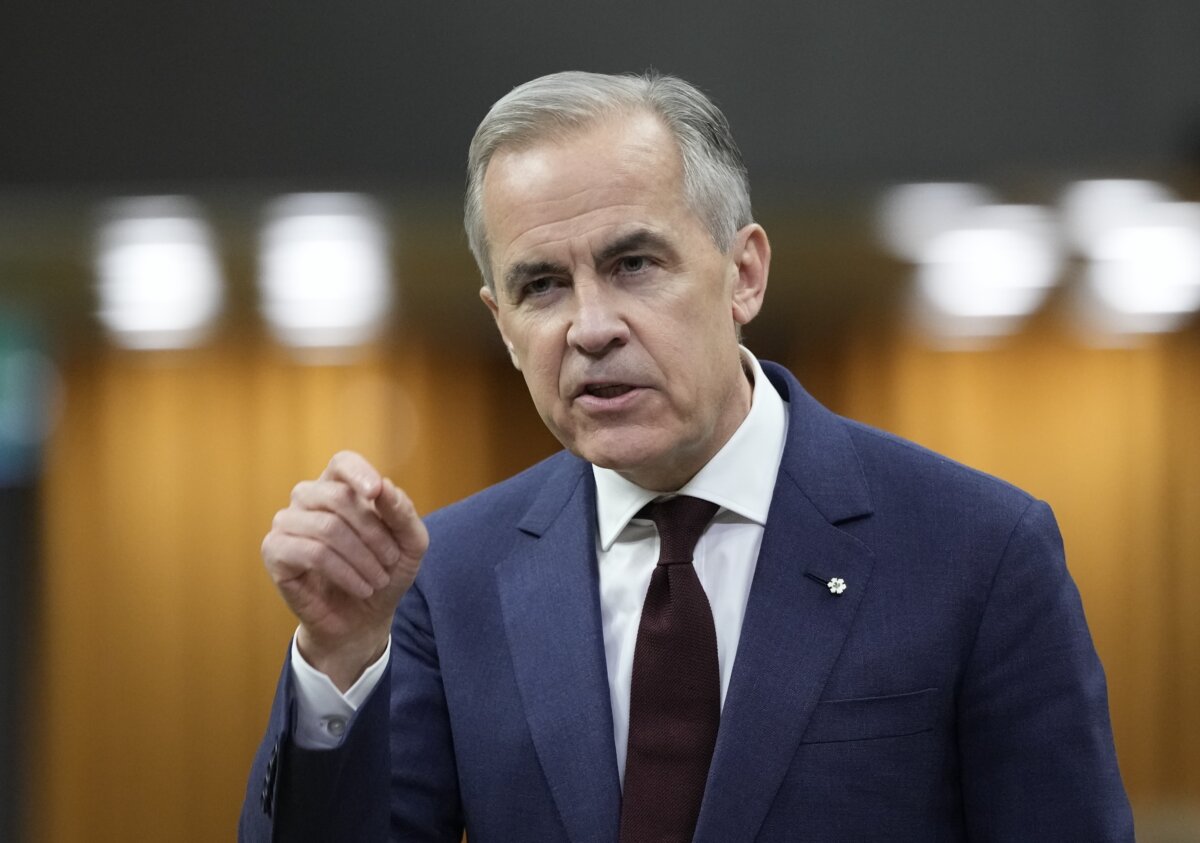
During a press conference in Ottawa on June 25, Carney said the two leaders held a “long” phone call the day before, discussing issues including the war in Iran and NATO.
“There’s things we’re working on together—I think those are best left until they come to fruition,” Carney said.
A readout of the phone call between Carney and Trump was sent to some journalists but was not posted on the Prime Minister’s Office website, unlike readouts of other calls. The readout simply read, “Today, the Prime Minister, Mark Carney, spoke with the President of the United States, Donald J. Trump, in advance of the NATO Summit.”
During the press conference, the prime minister said he and Trump did not discuss ongoing negotiations of the Canada-United States-Mexico Agreement (CUSMA). He said a “breakthrough” in negotiations would likely come at a lower level between Canadian and U.S. representatives.
Carney was also asked about U.S. Ambassador Pete Hoekstra’s June 23 comments that the three countries were “not anywhere close” to announcing an interim CUSMA agreement.
“What I have seen with the president is that you’re not close to making a deal, and then you make a deal,” Carney said in response.
Carney said while this does not mean the deals Trump makes are necessarily “good deals,” it means that Canada must be prepared and have “done the work” to achieve them. The prime minister added that Ottawa is not going to sign a “bad deal” with Washington.
Conservative Leader Pierre Poilievre told reporters on June 25 that while he was pleased that Carney and Trump held a phone call, it was “unbelievable” that CUSMA was not discussed.
“Carney was elected on one main promise: that he would get a deal with the United States. He said that he would be able to, ‘handle Trump.’ He said that he would negotiate a good deal before July 20,” Poilievre said.
“I find it very hard to fathom that Mr. Carney did not raise that with Mr. Trump. He should be working very hard to get a good deal in every phone call,” he said.
Carney had also told reporters on June 17 that while he and Trump did not hold a formal bilateral meeting on CUSMA at the G7 Summit, they had discussed the issue informally.
While Canada and Mexico have formally declared that they want CUSMA extended for another 16-year period, the United States has not announced its official position on the trade pact. If the three countries do not come to agreement until after July 1, the deal will continue until 2036 with annual reviews, unless parties agree to an extension or one of them withdraws.
Trump suggested on June 17 that his preference was to leave the agreement instead of renewing it, telling reporters, “I would rather leave it unsigned. I’d rather have it terminated. … I may sign it, but I would rather–we do better as a country if we don’t have an agreement.”
Janice Charette, Canada’s chief trade negotiator with the United States, said in April that she believed it was unlikely the two countries would resolve all issues around CUSMA before July 1. She added that the date is “not a cliff” but “kind of a checkpoint.”
The United States and Mexico held two rounds of formal bilateral talks on CUSMA in late May and in mid-June, and another round is scheduled for July. The U.S. side has not announced similar formal talks with Canada, but Ottawa had said discussions are still progressing.
Noé Chartier contributed to this report.
 Friends Read Free
Copy
Facebook
Tweet
Friends Read Free
Copy
Facebook
Tweet