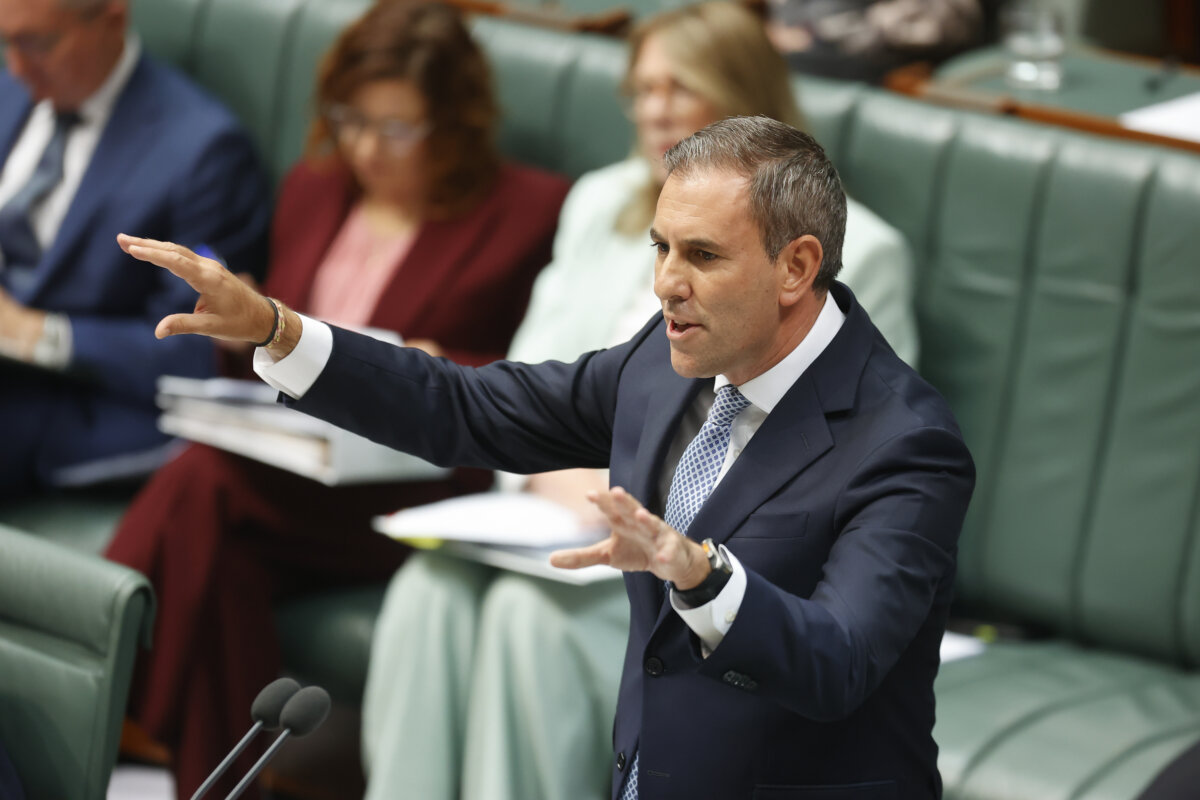

Treasurer Jim Chalmers has introduced two bills to give the government rapid access to funding for fuel security, including a new $2 billion (US$1.37 billion) provision that can be deployed in urgent situations without prior parliamentary approval.
The special mechanism will allow appropriations from the Consolidated Revenue Fund to be released for fuel measures that are “urgent, unforeseen and unable to be met through existing allocations.”
The package includes $800 million under the first bill and a further $1.2 billion under the second, creating what Jim Chalmers described as a “safety net” for the next three months until the end of the current financial year.
Chalmers said the legislation was designed to give the government flexibility to respond quickly to disruptions linked to the Middle East conflict.
Access to the funds will be tightly controlled, with allocations only made if strict criteria are met. Eligible departments include Treasury, Foreign Affairs, Agriculture, Energy, Infrastructure and Industry.
“We’re living in extremely uncertain times, and from an economic point of view, it’s clear that this war cannot end soon enough, but until that happens, we have a responsibility to take measured and mature steps to shield our economy and the Australian people,” Chalmers told the parliament.
Strategic Reserve Bill
Alongside the funding bills, Energy Minister Chris Bowen introduced legislation to establish a strategic reserve aimed at securing fuel, fertiliser and critical minerals amid growing global volatility.
The new bill—Export Finance and Insurance Corporation Amendment (Strategic Reserve) Bill 2026—will allow the government to establish a new fuel security trading power to acquire additional fuel on the international market for domestic use, with support from Export Finance Australia, a government-owned financial service company.
“This fuel security support from the government will not be business as usual. It must be additional supplies that are available on the international market,” Bowen said.
“Export Finance Australia will have a very flexible suite of measures to work with companies it can provide insurance, derivatives, loans and other arrangements to make sure those companies can go and get those cargoes for Australia.”
In addition, the bill will legislate Labor’s earlier commitment to establish a $1.2 billion critical minerals strategic reserve, focused on antimony, gallium and rare earth elements, to stabilise supply and strengthen Australia’s position in global markets.
“We look forward to working with the United States, Japan, Republic of Korea, Europe, Canada and the UK as we implement the critical minerals Strategic Reserve,” Bowen said.
Opposition’s Response
The opposition signalled support for Labor’s broader policy direction but warned of mounting economic risks.
Opposition Leader Angus Taylor said inflation pressures were likely to worsen.
“[It] is hard to find an economist right now that doesn’t think economy that inflation is going to continue to surge in the coming months, not just because of what Labor was already doing, but now we have an additional disruption,” he told the parliament.
While backing the bills, Taylor criticised the government’s response speed and fuel distribution policies.
“They needed to move that fuel, not off to Asia or wherever it was going. They needed to move the fuel to regional communities and those 600 [stations] that didn’t have fuel,” he said.
 Friends Read Free
Copy
Facebook
Tweet
Friends Read Free
Copy
Facebook
Tweet