
News Analysis
The meeting between Vietnamese Communist Party leader To Lam and Chinese Communist Party (CCP) leader Xi Jinping shows Hanoi still views Beijing as a primary partner, but an analyst said that the Chinese regime’s growing economic ties and maritime “salami-slicing” tactics give it leverage to gradually erode Vietnam’s sovereignty.
Lam concluded his four-day state visit to China on April 17, as both sides pledged to expand cooperation in artificial intelligence (AI), semiconductors, and high-speed railways, according to a joint statement.
The two nations also signed agreements on party affairs, public security, judicial cooperation, trade, supply chains, and customs.
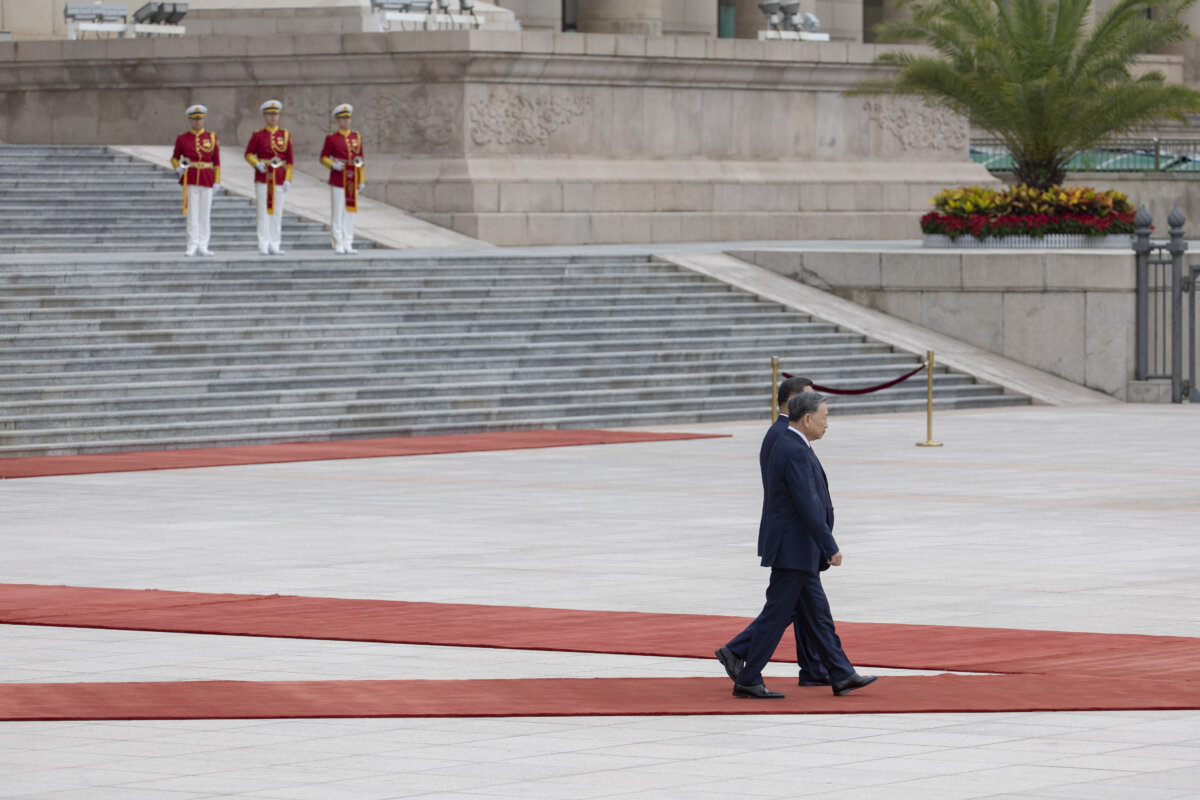
Lam met with Xi in Beijing on April 15, and both party chiefs agreed to continue deepening and elevating bilateral relations.
It was Lam’s first overseas trip since he was elected head of state—a role secured by a unanimous vote of the National Assembly in Hanoi on April 7.
Observers view the elevation as making Lam the most powerful Vietnamese figure in decades, a move that increasingly mirrors Beijing’s political model.
The shift represents a decisive break from Vietnam’s traditional “four-pillar” collective leadership system, which divides power among the party general secretary, the state president, the prime minister, and the chairman of the National Assembly.
Deepening Party Ties
Phan Xuan Dung, a senior research officer at ISEAS–Yusof Ishak Institute in Singapore, said that Beijing chose a “strategically favorable” moment to host Lam, one it has not had for some years.
“To Lam’s consolidation of both the Party General Secretary and presidential roles marks a significant shift in Hanoi’s internal power balance, one that Beijing has been watching closely,” Dung told The Epoch Times.
“By rolling out the red carpet at this moment, Beijing is reminding Hanoi of the deep ideological affinity between the two communist parties.”
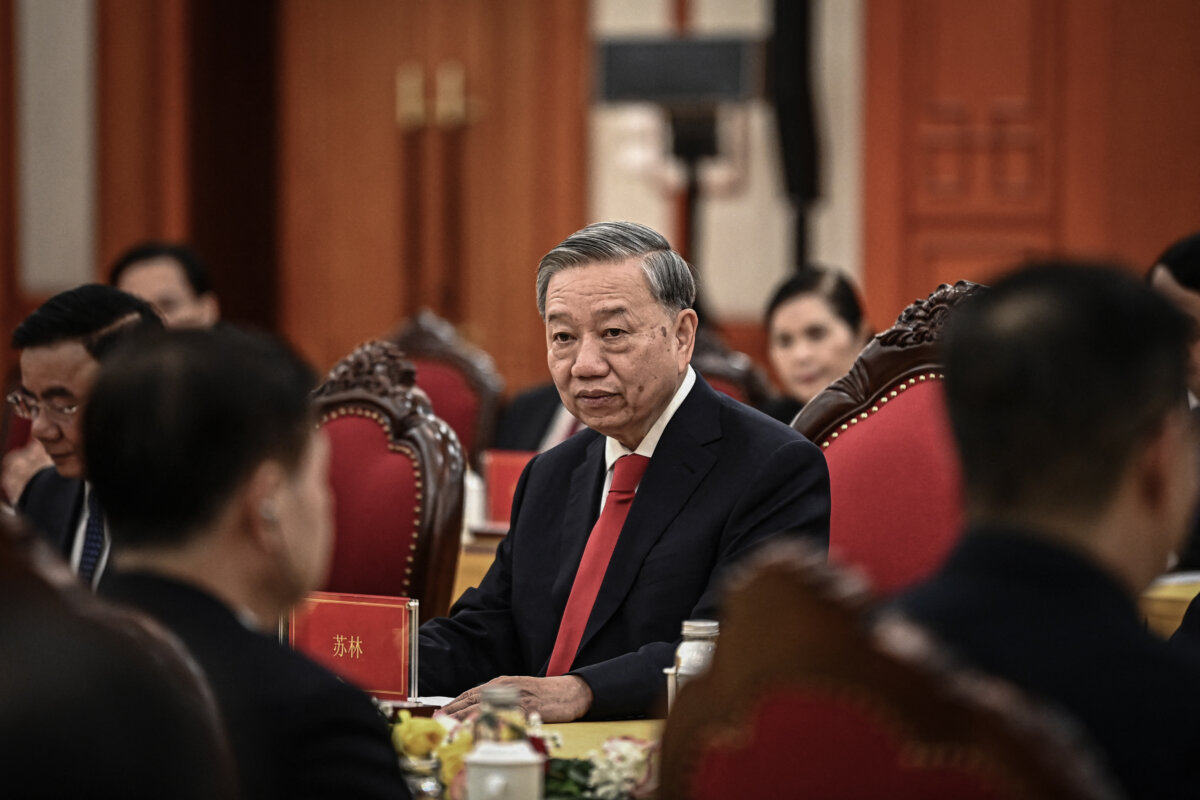
That common ground has always served as a restraining force on how far Vietnam has been willing to move toward the West, Dung said.
Ha Hoang Hop, former chair of a Hanoi-based consultant agency Think Tank VietKnow and now an independent analyst, said Vietnam wants to use this visit to show that it can engage competing powers without abandoning China as a priority.
“It demonstrates that Vietnam still treats China as central despite the United States and Japanese courtship and showcases China’s influence over Hanoi’s top leadership,” Hop told The Epoch Times.
Vietnam has long practiced “bamboo diplomacy”—a doctrine coined by late Vietnamese Communist Party General leader Nguyen Phu Trong that keeps the door open to all nations without committing to any single bloc.
‘Salami-Slicing’ Strategy
Lam and Xi addressed the South China Sea issue, in which the two nations have long-standing overlapping sovereignty claims, during their talks and agreed to manage maritime differences.
Yet Beijing is quietly constructing outposts at Antelope Reef in the Paracel Islands—a South China Sea archipelago also contested by Hanoi and Taipei.
Ha said the CCP’s build-up constitutes a classic gray-zone action, a term referring to aggressive tactics designed to intimidate an opponent while remaining below the threshold of warfare.
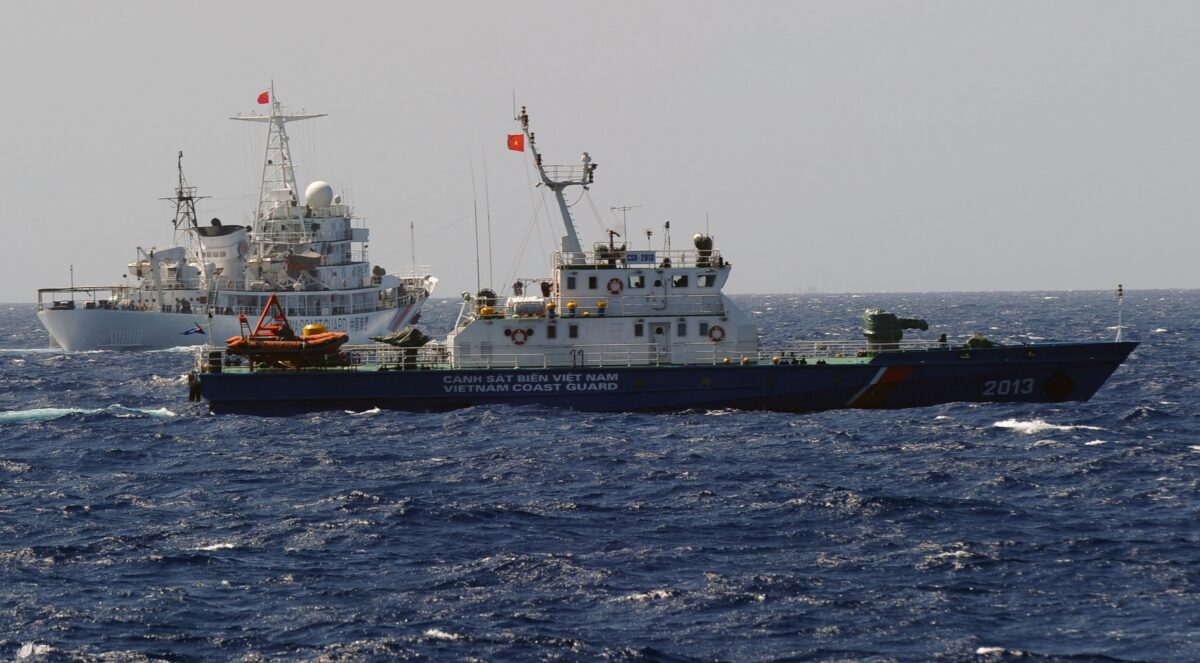
“[Beijing is] incrementally changing facts at sea while absorbing diplomatic protests,” Hop said. “Deeper economic ties give Beijing more leverage for calibrated coercion.”
China has been Vietnam’s top trading partner since 2004, with bilateral trade hitting a record $290 billion in 2025, according to the Chinese state-run news agency Xinhua.
Hop warned that the real danger lies in the Chinese regime’s “salami-slicing” tactics—a strategy of incremental steps designed to achieve results without triggering immediate resistance.
“If [the salami-slicing strategy is] sustained over a decade, it could gradually constrain Vietnam’s operational access without ever triggering a formal confrontation,” Hop said. “The main danger is long‑term strategic fatigue.”
But Dung said Vietnam is not passively watching its maritime space shrink.
“In recent years, it has dramatically accelerated land reclamation in the Spratlys, without triggering overt negative responses from China,” Dung said.
According to an August 2025 report by the Center for Strategic and International Studies Asia Maritime Transparency Initiative, Vietnam has built 21 artificial islands in the Spratly Islands, a South China Sea cluster at the center of a territorial standoff with China, which has built just seven.
Dung said that both Hanoi and Beijing have strong incentives to maintain economic ties and manage South China Sea tensions.
“Disrupting that relationship carries costs for Beijing too,” he said.
“Neither Hanoi nor Beijing can afford the economic and reputational costs of a serious maritime escalation.”
Constrained Compliance
An annual survey published in April by the ISEAS–Yusof Ishak Institute found that when asked to choose between the two superpowers, more respondents in the Association of Southeast Asian Nations (ASEAN) preferred China over the United States.
The report states that 48 percent of those surveyed chose the United States, while 52 percent selected China, up from 47.7 percent the previous year.
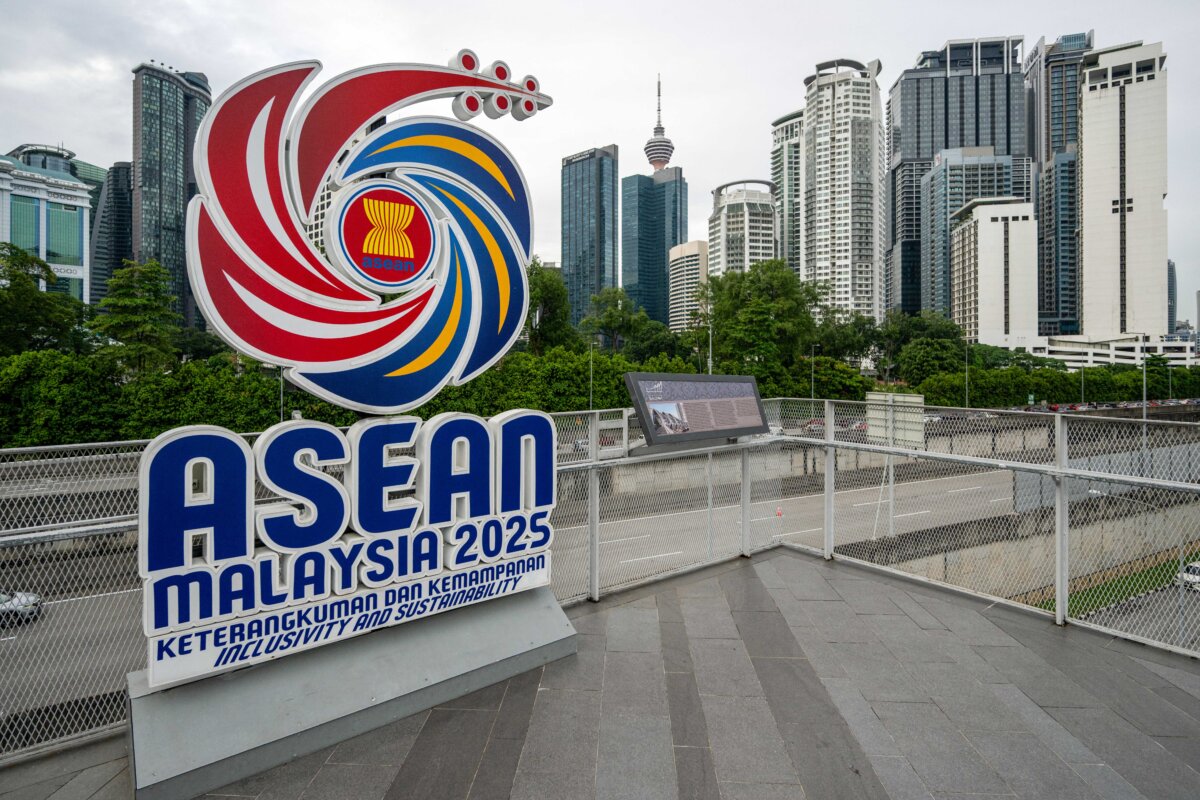
ASEAN consists of 11 member states, including Brunei, Cambodia, Indonesia, Laos, Malaysia, Myanmar, the Philippines, Singapore, Thailand, Vietnam, and Timor-Leste.
However, Dung said Southeast Asian nations are not rushing into Beijing’s arms, as they continue to rely on Washington as a counterweight to China.
“Anxiety about Chinese assertiveness in the South China Sea and overt economic influence remains. But strategic alignment is ultimately a comparative judgment,” he said.
While the CCP has a strong influence in the region, internal economic and political pressures limit its actual ability to secure regional compliance, according to Hop.
“For Vietnam specifically, this creates a genuine but narrow window: push back harder on gray-zone coercion, extract concrete economic concessions, and deepen security partnerships,“ Hop said.
“Beijing cannot afford a second front of open hostility on its southern periphery.”
 Friends Read Free
Copy
Facebook
Tweet
Friends Read Free
Copy
Facebook
Tweet