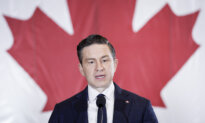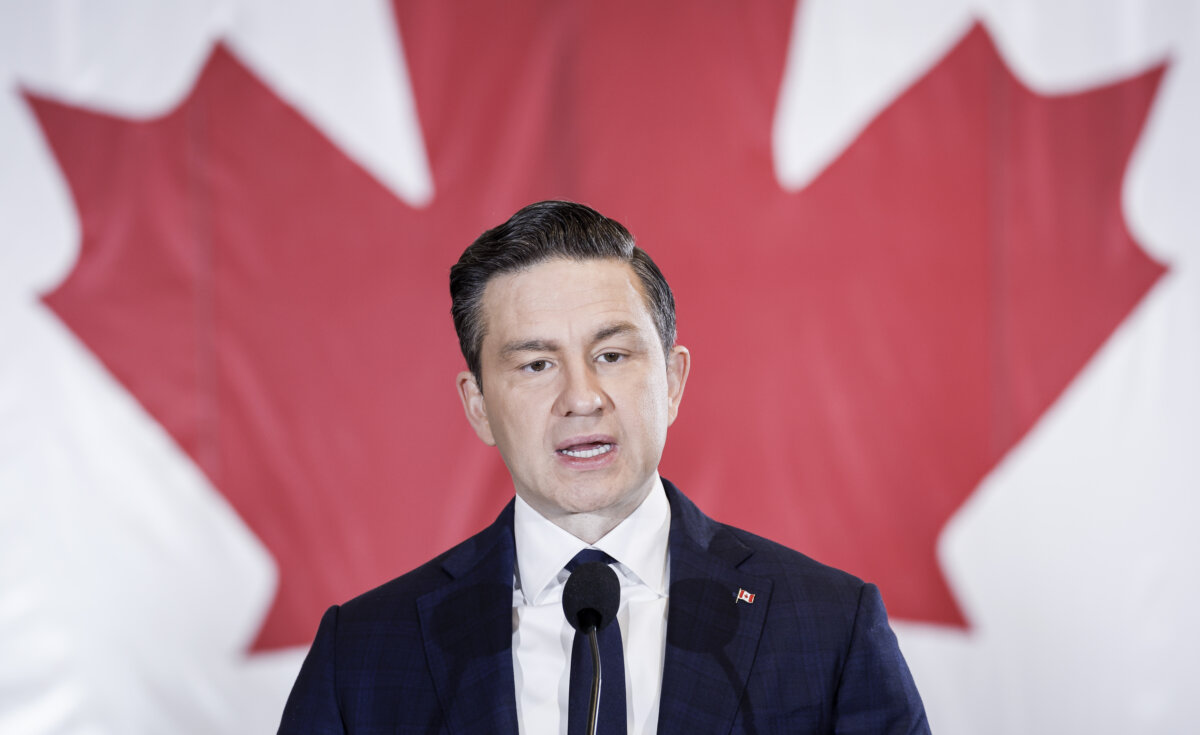

The Conservative Party will soon convene in Alberta to decide whether Pierre Poilievre should continue serving as leader.
The party is holding its next national convention in Calgary from Jan. 29 to 31, where party delegates will hold a leadership review and vote on whether Poilievre should remain at the helm.
The Conservatives have faced added pressure in recent months following the departure of two MPs to the Liberal caucus, while Canada-wide polling has generally shown Poilievre trailing Prime Minister Mark Carney in personal popularity among the broader electorate. Poilievre continues to enjoy strong support within the Conservative caucus, however.
The Conservative Party’s constitution states that if its leader does not resign following a federal election loss, delegates are required to vote by secret ballot on whether the leader should continue on at the next national convention. If more than 50 percent of delegates vote in favour of a new leader, the parliamentary caucus will appoint an interim leader and a new leadership contest will eventually take place.
Separately, the Conservative caucus has adopted provisions of the Reform Act, which set out rules for internal caucus governance, including a process by which MPs can trigger a leadership review. Under the act, a specified proportion of caucus members must request a vote to initiate such proceedings, after which a majority of MPs must support the motion for it to succeed.
Since the Reform Act was enacted by Parliament in 2015, the Liberals and New Democrats have voted against adopting it at the outset of each session of Parliament, meaning their MPs have not had access to that formal mechanism to oust their leader.
The Conservative caucus used the Reform Act to oust Erin O’Toole as leader back in February 2022, with 73 Tory MPs voting for his removal out of the 118-member caucus.
Lead-Up to Review
Poilievre became Conservative leader in September 2022 following the leadership election, and his party enjoyed a significant lead in the polls for the following two years. Prime Minister Justin Trudeau’s resignation, followed by Mark Carney winning Liberal leadership, saw a dramatic rise in Liberal fortunes, which was impacted by U.S. President Donald Trump’s tariff threats towards Canada and the collapse of the NDP’s popularity.
The Liberal Party won 169 seats in that election, which was just three short of a majority, while the Conservatives won 144 seats, the Bloc Québécois won 22 seats, the NDP won seven seats, and the Green Party won one seat.
While the Conservative Party received 24 additional seats compared to the previous election, Poilievre lost his Ottawa-area Carleton seat, which he had held for nearly two decades, to Liberal candidate Bruce Fanjoy. Poilievre received over 39,000 votes, while Fanjoy received almost 44,000 votes.
Following the election, Poilievre said he believed the loss of his seat was due to his stated plans to reduce the size of the federal government, which he said could prove unpopular with the many government workers residing in Carleton.
In Poilievre’s place, Conservative MP and former leader Andrew Scheer served as Opposition leader in the House while Poilievre attempted to win back a seat.
Poilievre went on to regain a seat in the House of Commons following an August 2025 byelection in the Battle River-Crowfoot riding, winning by over 36,000 votes, or 80.4 percent of the vote, after Conservative MP Damien Kurek resigned his seat so Poilievre could run. Kurek became MP for the Alberta riding back in 2019 and won 82.8 percent of the vote in the April 2025 election.
Conservative Party spokesperson Sarah Fischer said on Jan. 20 that Kurek will run in his former riding of Battle River-Crowfoot in the next federal election, and Poilievre will run in a different riding.
According to the latest polling numbers, Poilievre continues to have broad support within his party. Jan. 26 polling from Abacus Data indicated that 76 percent of Conservative voters said they would vote to keep Poilievre as party leader, while 14 percent would vote to remove him.
Support for Poilievre among party members is lower compared to back in November 2023, however, when an Ipsos poll indicated that 91 percent of Conservative voters wanted him to lead the party into the next election amid collapsing nationwide support for then-Prime Minister Trudeau.
An Angus Reid poll from Jan. 26 also found that Prime Minister Mark Carney has positive views of 60 percent of Canadians compared to 34 percent with negative views, which is an all-time high in popularity since he became prime minister. By contrast, the favourability of Poilievre is at 36 percent among the general population, while 58 percent of those polled had an unfavourable view of him.
Poilievre’s leadership review comes as two Conservative MPs crossed the floor in recent months to join the Liberal Party. Nova Scotia MP Chris d’Entremont announced he was leaving the Tories to join the Liberal Party on Nov. 4, 2025, while Toronto-area MP Michael Ma announced the same on Dec. 11, 2025. Conservative MP Matt Jeneroux announced on Nov. 6 that he planned to resign this spring, and since that announcement he has not voted with the Tories on several pieces of legislation in the House of Commons.
During a year-end interview with Global News, Poilievre said the duty of deciding whether he stays on as leader will fall to party members. “The people of our party—the welders, the waitresses, the plumbers and police officers, the soldiers and small business people—they’re the ones who I’m fighting for, and I’m never going to stop fighting for them,” Poilievre said.
“They will decide with their democratic vote,” he added in reference to the upcoming leadership review.
 Friends Read Free
Copy
Facebook
Tweet
Friends Read Free
Copy
Facebook
Tweet