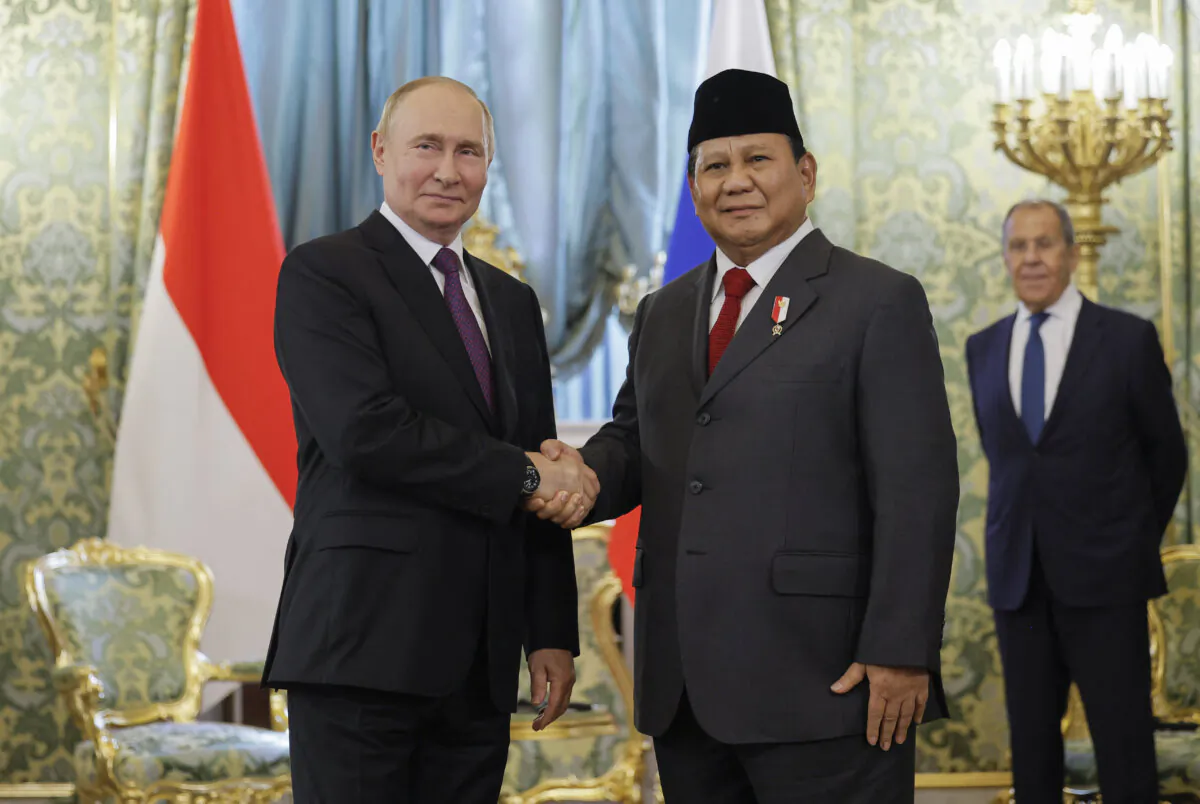

Defence officials have steered away from concerns that the ongoing Australia-Indonesia defence deal will benefit the Russian military amid earlier reports of an airbase being earmarked for the south-east Asian nation.
Instead, officials said there was more concern with Russian-North Korean links in the region.
Late last month, MPs of the Joint Standing Committee on Treaties examined issues around the Defence Cooperation Agreement (DCA) between Australia and Indonesia.
The agreement, signed in August 2024 to replace a 2012 arrangement, enhances cooperation in areas like maritime security, counter-terrorism, and humanitarian assistance.
Senator Jacinta Nampijinpa Price, who was briefly the shadow defence industry minister, asked whether the agreement would, in any case, help Russia with its invasion of Ukraine.
“I suppose we saw prior to the election the bilateral naval drills between Russia and Indonesia in Indonesian waters, which raises some concerns given Russia’s invasion of Ukraine,” she told the Committee remotely.
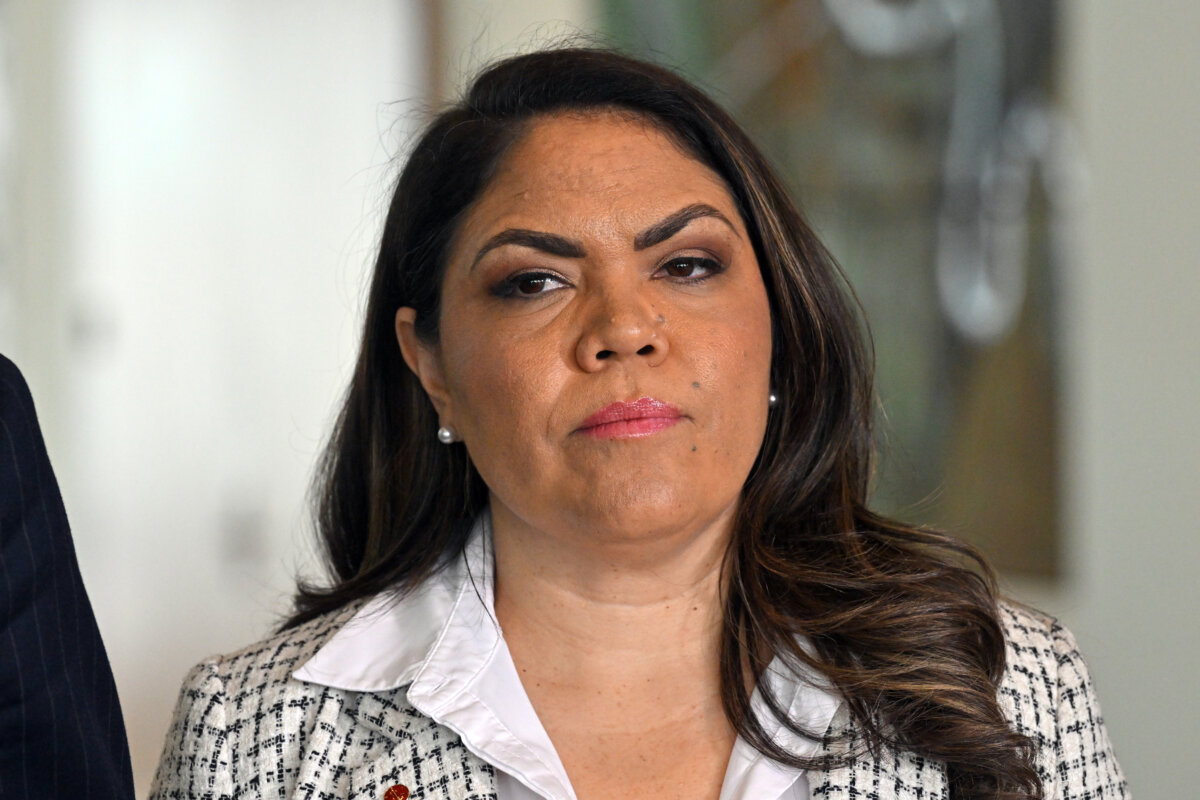
“In April, the military publication Janes reported that Russia had requested to base long-range war planes in Indonesia on Biak Island, which was, of course, refuted by the Indonesian government, but I suppose a question for officials is how these events had any bearing on the agreement, and what are the risks?”
The reputable Janes publication reported on April 14 that Russia had officially requested permission to base several long-range aircraft at the Manuhua Air Force Base, citing separate sources from the Indonesian government.
The base, located on Biak Island in Indonesia’s easternmost province of Papua, is situated approximately 1,300 kilometers from Darwin, in Australia’s Northern Territory.
The request, reportedly made following a meeting between Indonesian Defense Minister Sjafrie Sjamsoeddin and Russian Security Council Secretary Sergei Shoigu in February, was firmly denied by the Indonesian government.
“He [Sjamsoeddin] said to me in the clearest possible terms, reports of the prospect of Russian aircraft operating from Indonesia are simply not true,” said deputy prime minister and Defence Minister Richard Marles in comments to the media.
Indonesia’s Own Decision: Officials
Bernard Philip, first assistant secretary of the international policy division in the Department of Defence, responded to Price saying it is “a matter for Indonesia to pursue the relationships that it seeks to pursue.”
“Australia respects Indonesia’s right to make sovereign decisions about its engagement with foreign governments,” he said.
“For Australia’s part, our position on Russia and its actions around the world is clear, and we condemn Russia’s illegal and immoral invasion of Ukraine, and have been working to provide Ukraine with support, including through the training under Operation Kudu and the provision of defence material assistance to Ukraine.”
Philip said that regarding the relationship with Indonesia, Australia is “very much focused on working to deepen defence ties” and shape a “peaceful, stable, and prosperous” Indo-Pacific region.
“In our discussions with partners, including Indonesia, we make very clear our position on Russia and its war in Ukraine,” he said.
The first assistant secretary also noted that for Australia’s part, they have concerns about Russian behaviour not only in Ukraine, but in other areas.
“In that respect, I would highlight the relationship between Russia and [Democratic People’s Republic of Korea or DPRK] as something that we are concerned by and would see as quite destabilising,” said Philip.
Australia’s Stance Clear to Indonesia
Lauren Bain, first assistant secretary of the Southeast Asian maritime division at the Department of Foreign Affairs and Trade, cited the Indonesian foreign affairs official’s comments that no other country had permission to build or possess a base on its territory.
“We do make our views on Russia’s immoral and illegal invasion of Ukraine very clear to our partners in the region,” she said. “It is, as Mr. Phillips said, a matter for Indonesia to decide how it pursues its international relationships.”
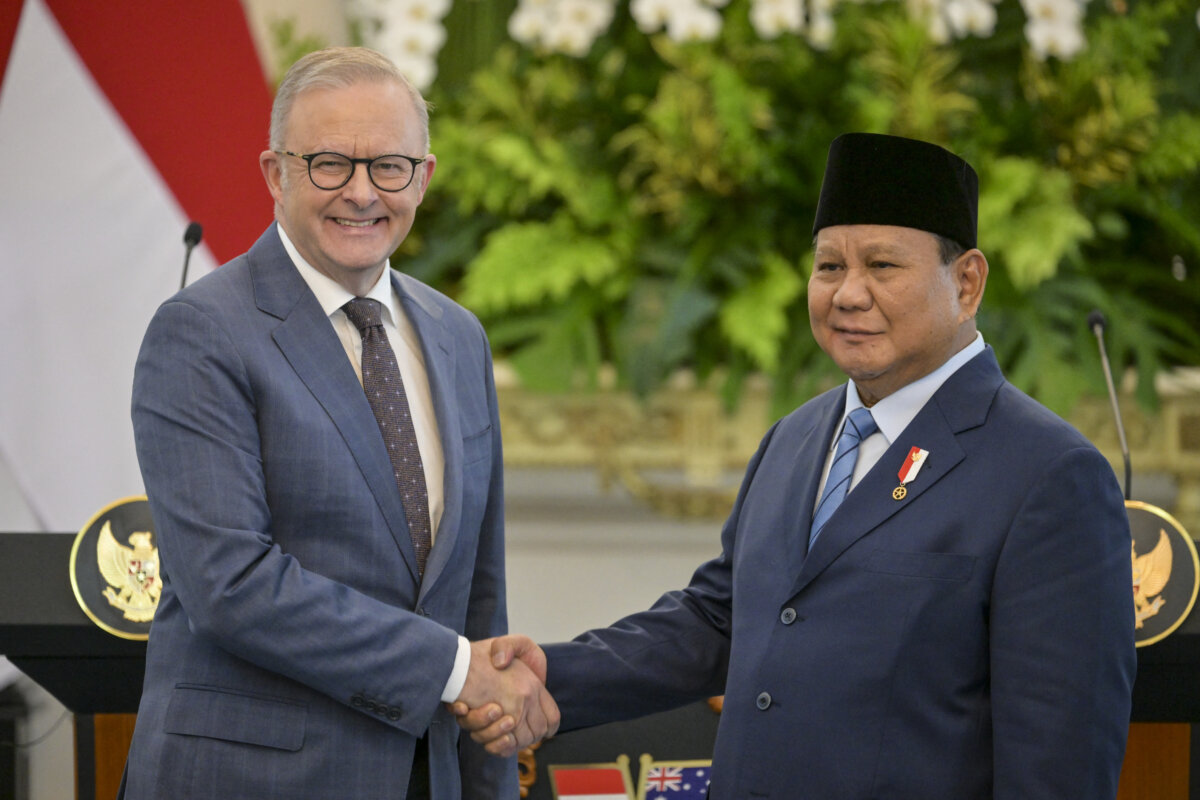
Facing the reported Russia interest in Indonesia and increased aggression from the Chinese Communist Party, Australian Prime Minister Anthony Albanese has announced $15 million over four years to “enhance maritime cooperation” with Indonesia, thereby working more closely for a stabile Indo-Pacific.
Albanese stated that Australia believed the Indonesian government.
“Indonesia’s answer is no. They have made that very clear,” he said.
 Friends Read Free
Copy
Facebook
Tweet
Friends Read Free
Copy
Facebook
Tweet