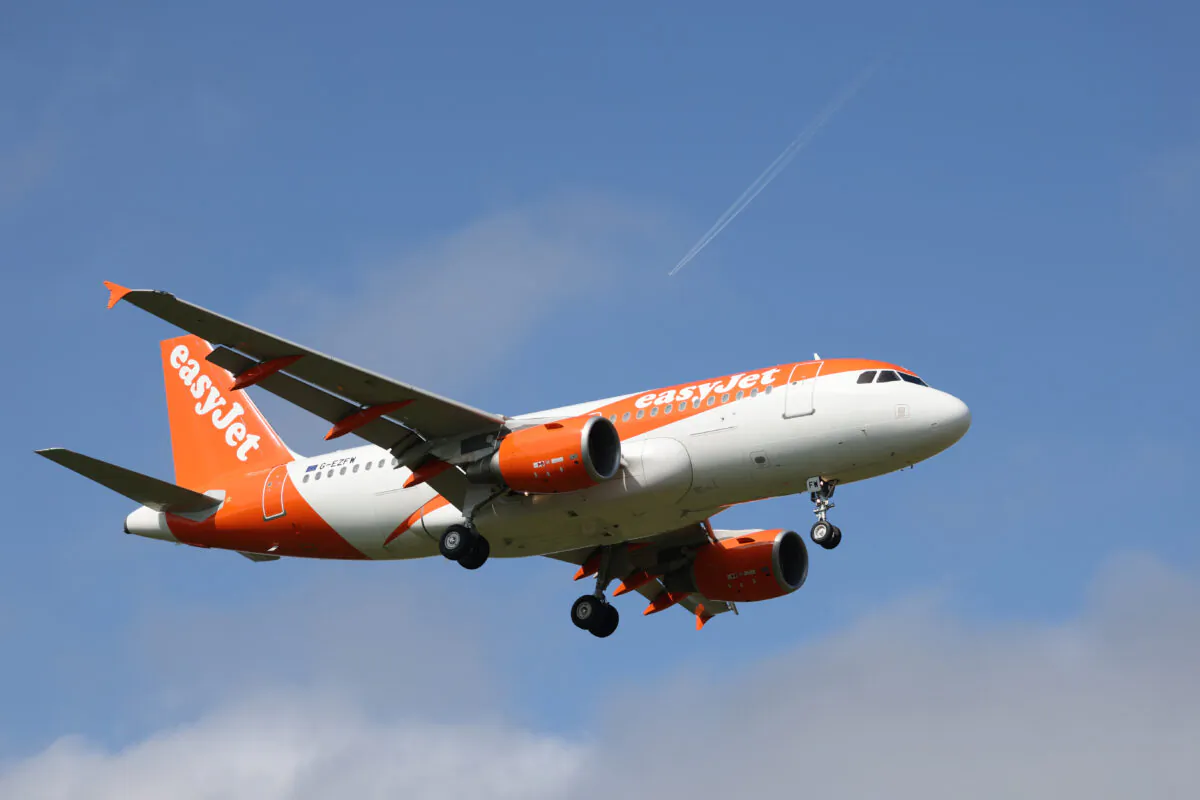

UK airline easyJet reported a first-half loss of 552 million pounds ($741.39 million) on May 21, saying its full-year outlook remains uncertain due to the ongoing conflict in the Middle East.
The budget carrier stated that higher fuel costs and weaker bookings for the peak summer holiday season had left it with an uncertain outlook for the rest of the financial year.
The U.S.–Israeli conflict with Iran and subsequent restrictions in the Strait of Hormuz have caused huge disruption to global aviation. Jet fuel prices have rocketed since late February, rising from about $85 to $90 per barrel to $150 to $200 per barrel, forcing airlines to raise fares, cut capacity, or absorb margin pressure.
EasyJet’s first-half loss of 552 million pounds ($701 million) was broadly in line with the 540 million pounds ($726 million) to 560 million pounds ($753 million) loss it warned of in April.
EasyJet CEO Kenton Jarvis said in a statement that despite the conflict in Iran “creating near-term uncertainty,” the airline “is well placed to manage the current environment.”
He said that easyJet “is not seeing any disruption to fuel supply,” which had been a fear for carriers as the war choked off oil flows, and continues “to operate normally,” urging customers to “book with confidence.”
“Our strategy is clear—through disciplined growth, accelerated upgauging, and continued expansion of easyjet holidays, we aim to bounce back from this year’s Middle East related setbacks, and then further progress towards our medium-term financial targets and deliver attractive shareholder returns as the operating environment normalises,” Jarvis said.
The carrier has started reallocating its capacity to domestic and city routes in response to weaker demand for longer-haul eastern Mediterranean destinations.
Carriers Cut Routes
European airlines across the board have downgraded profit expectations in recent weeks as the looming prospect of a prolonged conflict grows.
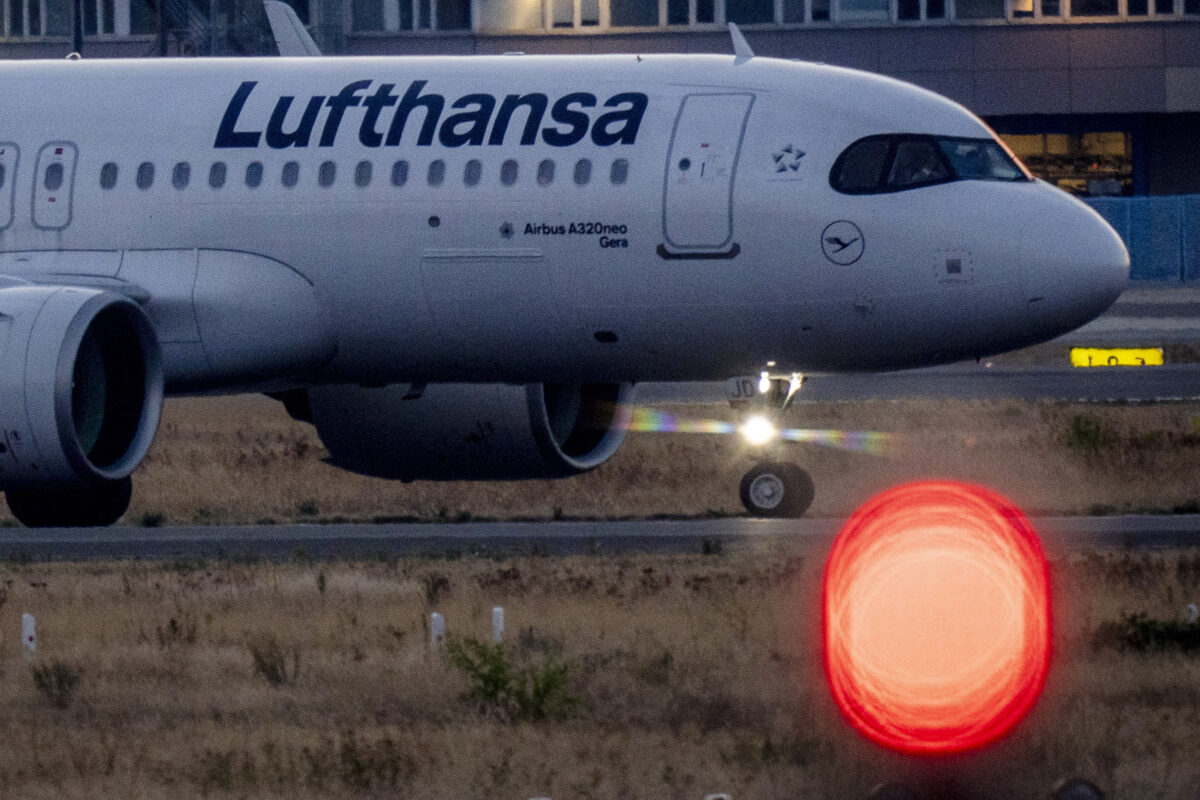
Lufthansa announced on April 21 that 20,000 short-haul flights would be canceled this summer because of the ongoing fuel crisis.
The German flag carrier said in a statement that the flights “will be removed from the schedule through October, equivalent to approximately 40,000 metric tons of jet fuel, the price of which has doubled since the outbreak of the Iran conflict.”
Across the Atlantic, airlines are also feeling the pinch, with American Airlines saying in April that it would raise checked baggage fees and tighten some economy class benefits as part of the carrier’s “continuing evaluation of pricing in light of the current operating environment.”
Delta Air Lines, JetBlue, Southwest Airlines, and United Airlines had also similarly raised fees in response to the surge in fuel costs.
Jet Fuel Shortage Warnings
Those moves came amid multiple warnings of a shortage of aviation fuel, with the European Union warning on May 13 that while there is not a risk to the supply of jet fuel now, there are no guarantees the bloc won’t face shortages in the longer term.
European Commissioner for Energy and Housing Dan Jorgensen told reporters that the outcome depends on the situation in the Middle East.
“We don’t expect a very serious security of supply issue on very short term,” Jorgensen said on the sidelines of the EU’s informal meeting of energy ministers on May 13. “But we cannot exclude that there will be security of supply issues on a longer term.”
The Dutch government estimated on April 20 that the EU could supply enough kerosene to the EU’s economy to last about five months.
In a letter to parliament, it stated that the available supply of kerosene, used as jet fuel, is currently about 78 percent of normal levels, reflecting a roughly 22 percent disruption after imports were cut off due to supply issues caused by the ongoing U.S.–Israeli war with Iran.
The government stated that if supply disruptions remain unchanged, current demand can be fully met for five months for kerosene and for more than one year for diesel and petrol.
International Energy Agency (IEA) Executive Director Fatih Birol also warned on April 16 that Europe has “maybe 6 weeks or so [of] jet fuel left.”
Briol said that flight cancellations could occur soon if oil flows remain stymied by the restrictions in the Strait of Hormuz, through which a fifth of the world’s oil passes.
If the Strait of Hormuz isn’t reopened, he said, for Europe, “I can tell you soon we will hear the news that some of the flights from city A to city B might be canceled as a result of lack of jet fuel.”
Jet fuel is one of the airline industry’s biggest expenses, typically accounting for about 25 percent to 30 percent of operating costs, according to the International Air Transport Association.
Victoria Freidman and Owen Evans contributed to this report.
 Friends Read Free
Copy
Facebook
Tweet
Friends Read Free
Copy
Facebook
Tweet