The European Union has agreed on its 21st round of sanctions against Russia, mainly targeting financial institutions, in a bid to weaken Moscow’s economy and affect its war effort.
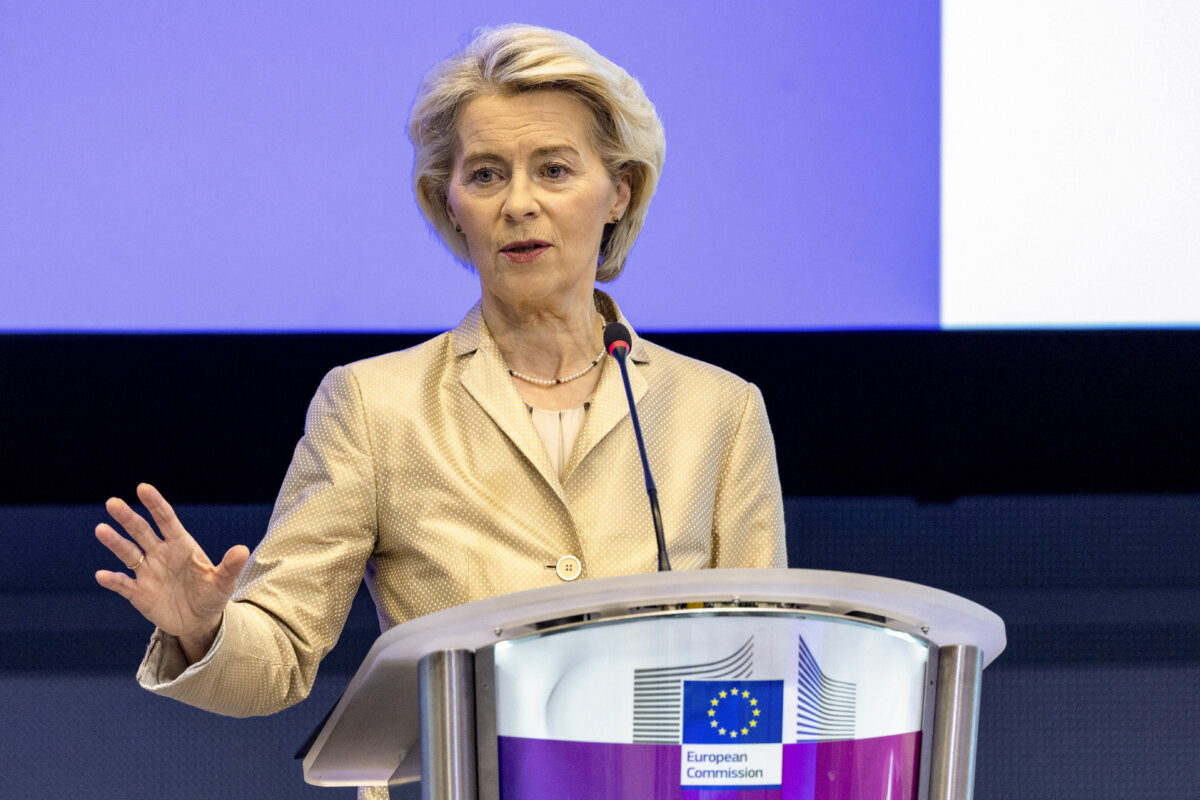
European Commission President Ursula von der Leyen announced the sanctions in a July 23 post on X and said that the bloc was adding 32 more Russian banks to its transaction-ban list, as well as oil trading platforms and cryptocurrency firms.
The package also freezes the oil price cap for one year, “so that the Russian war machine does not benefit from market shocks.”
“At a time when Ukraine has built military momentum, our sanctions continue to weaken the economic foundations of Russia’s war effort,” Von der Leyen said.
EU High Representative for Foreign Affairs and Security Policy Kaja Kallas described the package as the largest round of sanctions raised against Moscow since the start of the Russia-Ukraine war.
“It delivers sweeping measures targeting Moscow’s financial system, its military-industrial complex and energy sector, that keep Russia’s war economy running,” Kallas said.
“We are hitting Putin where it hurts most: cutting off the financial lifelines he relies on to sustain his war.”
The Russian Permanent Mission said in a July 23 statement to the EU in response to the latest round of sanctions that “European bureaucracy, disregarding the economic costs, continues to pursue its course of escalating confrontation with Russia.”
The statement said that the restrictions “will further aggravate the already acute social and economic problems in the European Union,” which the mission said was due to the bloc’s decision to drop Russian energy supplies and to continue to spend billions on aid to Ukraine, “all against the backdrop of instability in global energy markets due to the escalation of the conflict in the Middle East.”
“We reaffirm that the hostile unilateral coercive measures of the European Union against our country will be met with an effective and due response from Russia,” the mission said.
The EU commissioner said that sanctions affect more than 100 banks and crypto operators, 40 shadow fleet vessels, and several oil refineries in both Russia and Moscow ally Belarus.
More than 50 military-industrial entities have also been listed on the sanctions register, including those involved in the production of Russia’s long-range drones, she said.
2,700 Entities, People Sanctioned
The EU has been steadily increasing the number of sanctions on Moscow since 2014, when Russia annexed Crimea, then again at the start of the full-scale invasion of eastern Ukraine in February 2022 and ensuing annexations of the Donetsk, Kherson, Luhansk, and Zaporizhzhia regions.
According to an explainer by the European Council, sanctions target individuals involved in or responsible for actions including missile strikes against civilians and critical infrastructure, the manufacture or supply of drones, and the operation of Russia’s shadow fleet that transports sanctioned oil products.
Restricted entities include banks, paramilitary groups, and political parties. More than 2,700 entities and individuals have been sanctioned.
According to the European Commission, 28 billion euros ($31.86 billion) of private assets in the EU have been frozen.
Rubio Meets With Lavrov
The bloc has been imposing sanctions in a bid to cut off Russia’s financial means to continue the war against Ukraine and force Moscow to the negotiating table.
On July 23, U.S. Secretary of State Marco Rubio met with Russian Foreign Minister Sergey Lavrov on the sidelines of the Association of Southeast Asian Nations Foreign Ministers’ Meeting in Manila, Philippines, in their first face-to-face meeting this year.
Rubio said in a post on X that he and Lavrov discussed U.S.–Russia relations and the need to end the war.
Speaking to journalists after the meeting, Rubio said President Donald Trump had made it clear that the United States was prepared to help facilitate the end of a “senseless war” if the opportunity arose, adding that Washington had conveyed that message to Moscow.
“We had a good conversation, a frank conversation,” Rubio said of his meeting with his Russian counterpart.
The Russian Ministry of Foreign Affairs said in a statement that Lavrov “reaffirmed Russia’s readiness for a political and diplomatic resolution of the conflict.”
Guy Birchall contributed to this report.
 Friends Read Free
Copy
Facebook
Tweet
Friends Read Free
Copy
Facebook
Tweet