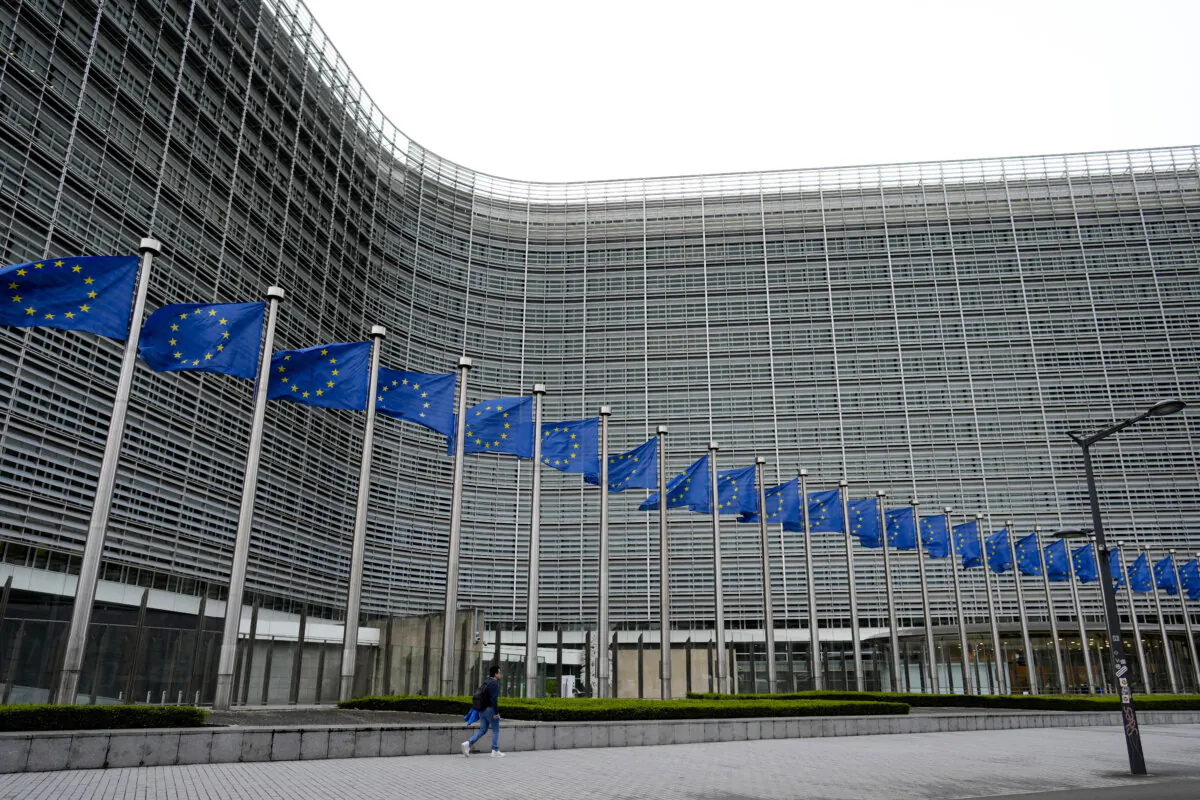

The European Union announced on Nov. 5 that it has agreed to slash carbon emissions by 90 percent by 2040 but with more flexible targets than previously proposed, following an overnight debate ahead of the U.N. climate summit in Brazil.
Three nations—Hungary, Slovakia, and Poland—voted against the agreement on the grounds that it would damage the competitiveness of domestic industries.
Their opposition was not enough to block the measure, which required backing from at least 15 of the 27 member states.
The agreement includes a compromise that will allow member states to buy carbon credits internationally to reach their targets, effectively meaning that wealthier nations can keep their emissions at slightly higher levels as long as they pay for it.
Carbon dioxide credits have faced multiple scandals in which costly projects were found to not deliver the climate benefits they claimed.
Finland, Germany, Spain, and the Netherlands pushed for higher emissions cuts in the debate, while some environmental groups criticized the concession to allow the purchase of carbon credits, saying this effectively outsources the bloc’s obligations.
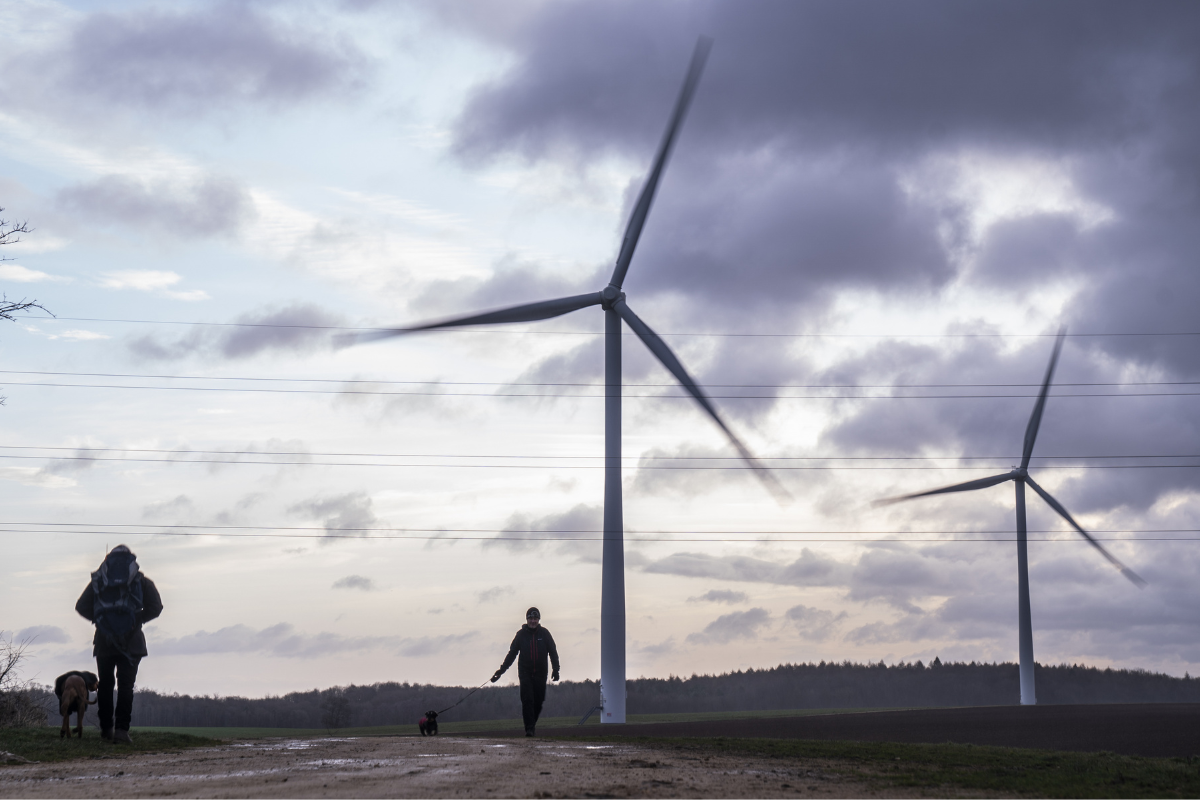
Deindustrialization Claim
Although the agreement does not go far enough for some, politicians of different political persuasions have expressed concern that the targets are “too ambitious” to be met within 15 years.
Peter Liese, a senior member of the European Parliament, told Reuters in April, “Many of us, in particular in Council and Parliament, we see the 90 [percent] as very ambitious, I even would say over-ambitious.”
EU climate ministers were locked in a marathon session overnight into the morning of Nov. 5 before hammering out the agreement.
The European Parliament will now vote on the agreement and negotiate its contents with the European Council before it becomes law.
Growing Skepticism
Wopke Hoekstra, European commissioner for climate, net-zero, and clean growth, said that compromise was necessary, given the current geopolitical and economic situation.
“On this continent, we will continue with climate action, but it has to be bridged, it has to be married with independence and competitiveness. Not one without the other. All three are essential,” he said.
The U.N. asked all governments worldwide to submit 2035 climate plans before the COP30 climate summit, which opens on Nov. 6 in Brazil.
The summit is expected to test the resolve of major economies to stick to their pledges on carbon emissions in the face of opposition led by the United States.
Speaking at the U.N. in September, U.S. President Donald Trump labeled climate change “the greatest con job ever perpetrated on the world” and urged countries to “get away from this green scam.”
‘Far-Reaching Consequences’
Many member states have seen a change of government since the Paris Agreement of 2015, and enthusiasm for green energy policies has waned in many countries amid concerns about economic damage accompanied by a growing skepticism toward the climate change agenda.
The soaring cost of fuel has left some consumers and businesspeople angry with net-zero goals and concerned about further price hikes that green energy policies might bring.
“Setting a climate target is not just picking a number, it is a political decision with far-reaching consequences for the continent,” Lars Aagaard, the Danish climate minister, said.
“Therefore, we have also worked to provide comfort that it can be reached in a way that preserves competitiveness, social balance and security.”
Compromise and Concessions
The bloc also agreed to soften other climate policies of concern, such as by pushing back the launch date of an upcoming EU carbon market by one year, to 2028.
In a further compromise, the agreement allows the EU to reassess its policy depending on the economic performance of member states.
Countries including France and Portugal had asked for the 5 percent carbon credits flexibility, while others, including Italy and Poland, sought 10 percent.
Italy, Poland, the Czech Republic, and others opposed the original 90 percent target as too restrictive for industries struggling under a triple burden of soaring energy costs, cheaper Chinese imports, and trade tariffs imposed by the United States.
Countries in favor of the original higher target, including the Netherlands, Spain, and Sweden, cited more instances of extreme weather and a need to catch up with China in manufacturing green technologies.
The Associated Press and Reuters contributed to this report.
 Friends Read Free
Copy
Facebook
Tweet
Friends Read Free
Copy
Facebook
Tweet