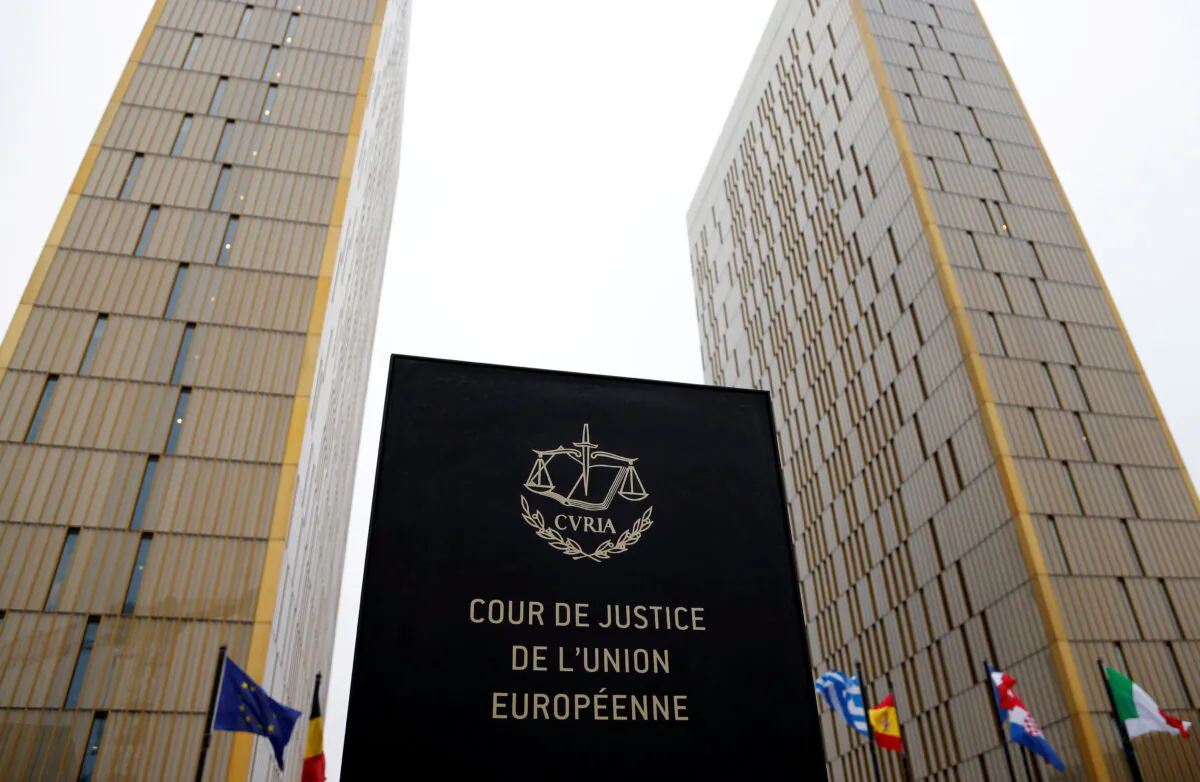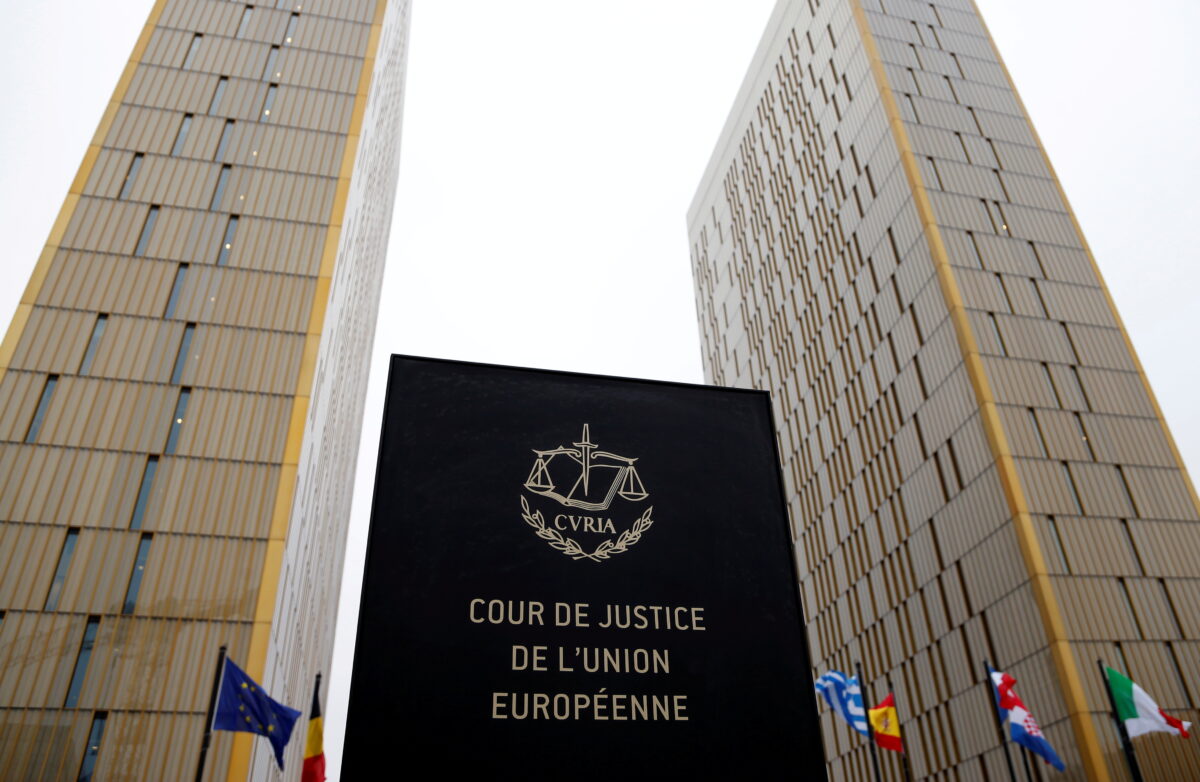

The EU’s top court ruled on June 16 that France can require pornographic websites based elsewhere in the bloc to verify users’ ages.
Since 2025, France has required publishers of pornographic material to implement technical age verification mechanisms to prevent minors from accessing their websites.
Czech firms WebGroup Czech Republic and NKL Associates, which operate major pornography websites, had challenged the rules.
They argued that France was trying to export its rules beyond its borders by forcing Czech-based websites to comply with French age-verification requirements.
On June 16, the European Court of Justice said France’s age-check rules restrict free movement of online services but may be justified on public policy grounds, including the protection of minors.
It said operators of pornographic websites cannot claim a hosting liability exemption for user content they store or rebroadcast if they control that content.
It said such measures can apply to providers established in other EU states if France first asks their home country to act and notifies both that country and the European Commission, except in urgent cases.
The court also said the EU’s “country of origin” principle still applies, meaning that online services are generally regulated by the member state in which they are established.
French Minister for Europe and Foreign Affairs Jean-Noël Barrot said in a June 16 post on X that the ruling was “a victory for the protection of … children.”
“The Court of Justice of the European Union has upheld the blocking of pornographic websites that do not require age verification, as provided for by the law I introduced in 2023,” he said.

Last year, France, Spain, Italy, Denmark, and Greece tested what the European Commission calls its blueprint for an age-verification app across the 27-member bloc.
The EU Commission said that the initiative aimed to allow European users to prove they are old enough to legally access age-restricted websites.
The age verification app was announced as “feature ready” in April.
The UK on June 15 announced plans to ban under-16s from major social media platforms starting next year.
In March, the UK government launched a trial to test whether social media bans, time limits, and digital curfews can improve children’s lives.
Six-week pilots running across the UK involved 300 families to test which measures work in practice.

UK Prime Minister Keir Starmer said on June 8 that technology companies operating in the UK must stop children from sending and receiving nude images on their phones or face legislation forcing them to do so.
“Today I’m calling on tech companies operating in this country to introduce device controls that prevent children from sending and receiving sexually explicit images,” Starmer said at London Tech Week.
Tech companies such as Apple and Google have been given three months to build or activate such systems. Adults would still be able to access or share such content through age verification.
Signal, the encrypted messaging app, criticized the proposal in a June 8 statement, calling it a demand that “all content on all devices sold or used in the country be scanned” using “a dystopian combination of age verification and content scanning.”
“This proposal will not safeguard children,“ Signal said. “It endangers us all whilst strengthening Apple, Google, and Microsoft’s market dominance and their control over our most personal information. … We know from history that once in place, there will be an inevitable authoritarian expansion of the kind of content and people these technologies will be expected to surveil. We also know such tools will be leveraged to automatically report people to government authorities.”
Evgenia Filimianova and Reuters contributed to this report.
 Friends Read Free
Copy
Facebook
Tweet
Friends Read Free
Copy
Facebook
Tweet