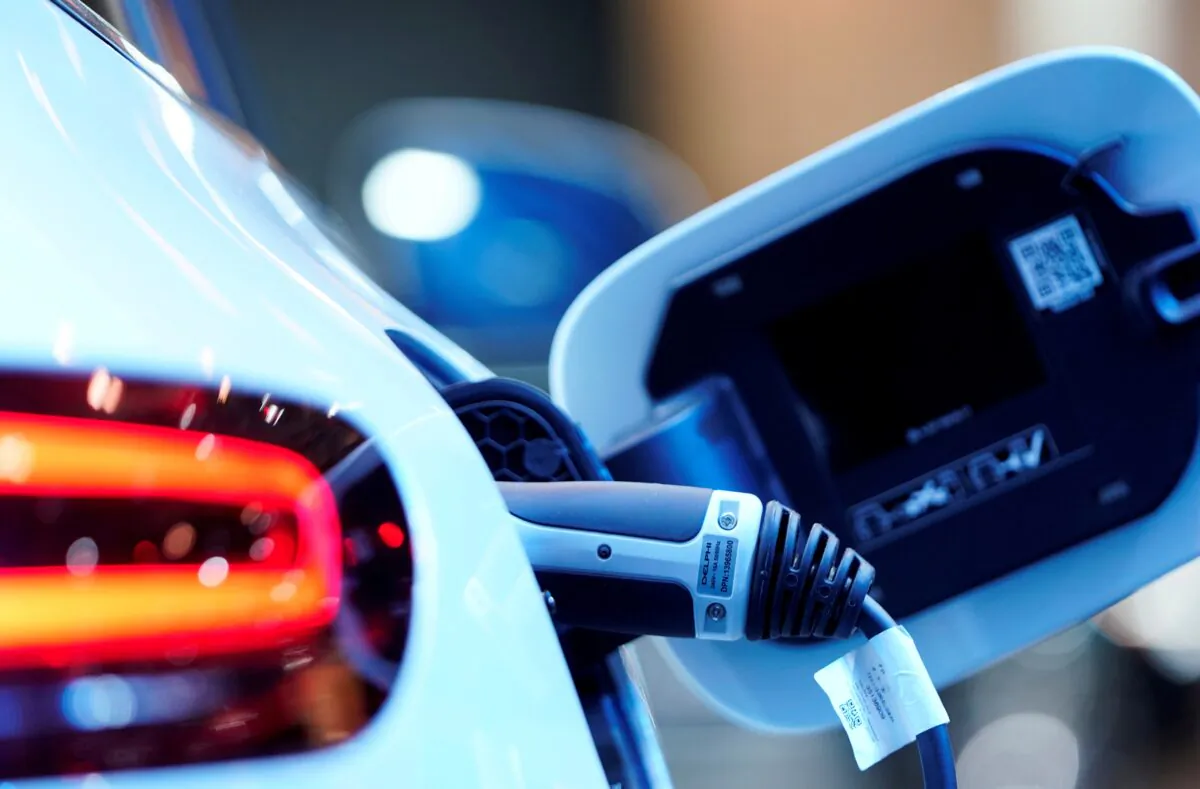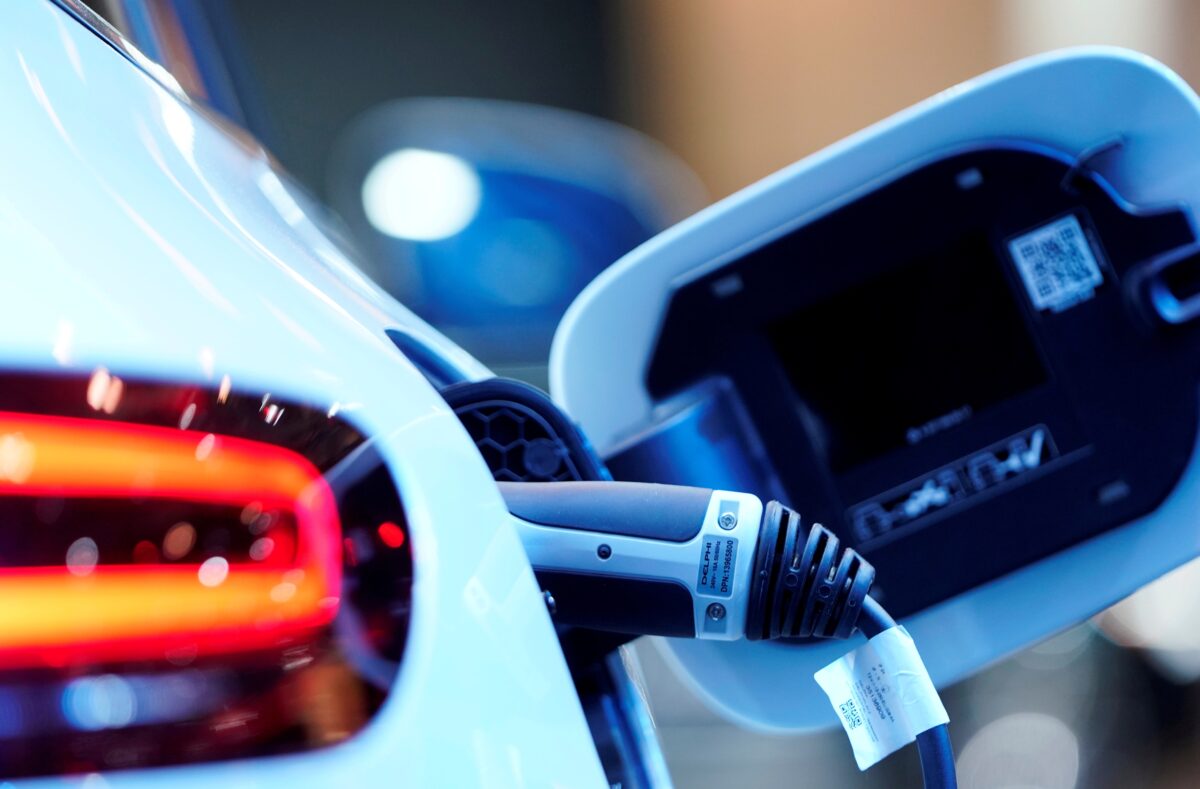

Canada’s energy watchdog is forecasting a decrease in electric vehicle sales this year as Ottawa gears up to implement mandatory sales quotas for zero-emission vehicles in 2026.
Electric vehicle sales fell 23 percent in the first quarter of 2025 in comparison with the same timeframe last year, causing market share to dip to just 9 percent, according to a new report from Canada Energy Regulator.
“Weaker ZEV [zero-emission vehicle] sales in 2025 are likely to be the case for a variety of reasons, including current levels of economic uncertainty associated with tariffs, backlash against one of the top selling brands (Tesla), as well as the recent pause, cancellation, and wind-down of incentive programs across Canada,” the regulator said in its latest market snapshot, which was first covered by Blacklock’s Reporter.
ZEVs refer to battery-electric, plug-in hybrid electric, and fuel cell electric vehicles.
Ottawa’s impending legislation requires 20 percent of new vehicle sales to be zero-emission by 2026, with targets rising to 60 percent by 2030 and 100 percent by 2035.
Conservative MP Melissa Lantsman before Parliament’s summer break proposed a motion to revoke the federal policy, contending that it would raise the cost of vehicles and restrict consumer choice.
Lantsman told the House that the mandate will make it less affordable for Canadians to purchase a vehicle, and that a ban on gas-powered vehicles was “authoritarian, misguided, and altogether nonsensical.”
“Nobody is denying people the choice to drive an electric car,” Lantsman said. “What is wrong is the government mandating that everybody drive an electric car.”
Her motion was defeated on June 17 when MPs voted 194–141 to maintain the federal electric vehicle (EV) mandate. The Liberals, Bloc Québécois, NDP, and Green Party all voted against the motion.
The Tories have been critical of the EV mandate since it was introduced by the Liberal government in 2022 under the leadership of former Prime Minister Justin Trudeau. Conservative Leader Pierre Poilievre pledged during the spring general election campaign to scrap the mandate if his party formed the next government.
The CEOs of Ford Canada, Stellantis Canada, and GM Canada, as well as the Canadian Vehicle Manufacturers’ Association last month asked Prime Minister Mark Carney to repeal the EV mandate during a July 2 meeting.
Canadian Vehicle Manufacturers’ Association CEO Brian Kingston told reporters the mandate was “not sustainable.”
“The targets that have been established cannot be met, and that will be part of the discussion,” he said prior to the meeting.
Rebate Program
Carney has not spoken publicly about the EV mandate in recent weeks, but Environment Minister Julie Dabrusin told reporters on July 3 that the government plans to offer an EV rebate of some kind in the future. She did not provide details on whether it would be a restoration of the original Incentives for Zero-Emission Vehicles (iZEV) program or something new. The iZEV program offered $5,000 off the cost of a new electric vehicle.
She said Carney had told her that the “environment is very important to him” when he appointed her as environment minister, and that the government would continue to make it a priority.
Kingston said while bringing back a rebate program would be helpful, making such a promise without a firm timeline for implementation will undermine EV sales even further.
The most recent Statistics Canada data indicates EVs accounted for 7.53 percent of all new vehicles sold in Canada in April.
EV sales peaked at 18.29 percent in December 2024 while the rebate was still offered by the iZEV program. The rebate program was paused in January after the funding ran out and sales dipped to 11.95 percent in January, then to 6.8 percent in February, and 6.53 percent in March, before climbing slightly in April.
A June 10 report from the Parliamentary Budget Office said that with the removal of fuel charges and assuming the iZEV program extends beyond 2025, the ownership costs of battery-electric vehicles (BEVs) would have to decline by 29 percent in 2030 to achieve the government’s sales goal of 60 percent that year.
Shortly after taking office as prime minister in March, Carney had signed a directive to end the consumer-facing carbon tax, known as the federal fuel charge, effective April 1.
The report further stated that with the removal of fuel charges and if the iZEV program is not reinstated but expires after 2025, the ownership cost of BEVs would need to decrease by 33 percent in 2030 to meet the 60 percent sales goal.
The government spent nearly $3 billion on EV rebates during the five-year lifespan of the program. The Carney government has not said how much would be allocated to a future rebate program.
The Canadian Press contributed to this report.
 Friends Read Free
Copy
Facebook
Tweet
Friends Read Free
Copy
Facebook
Tweet