
Ontario Premier Doug Ford says he had “very productive” conversations with Prime Minister Mark Carney and Industry Minister Mélanie Joly regarding Canada’s automotive sector as Ottawa looks to open its market to Chinese electric vehicles, despite noting that there were some disagreements.
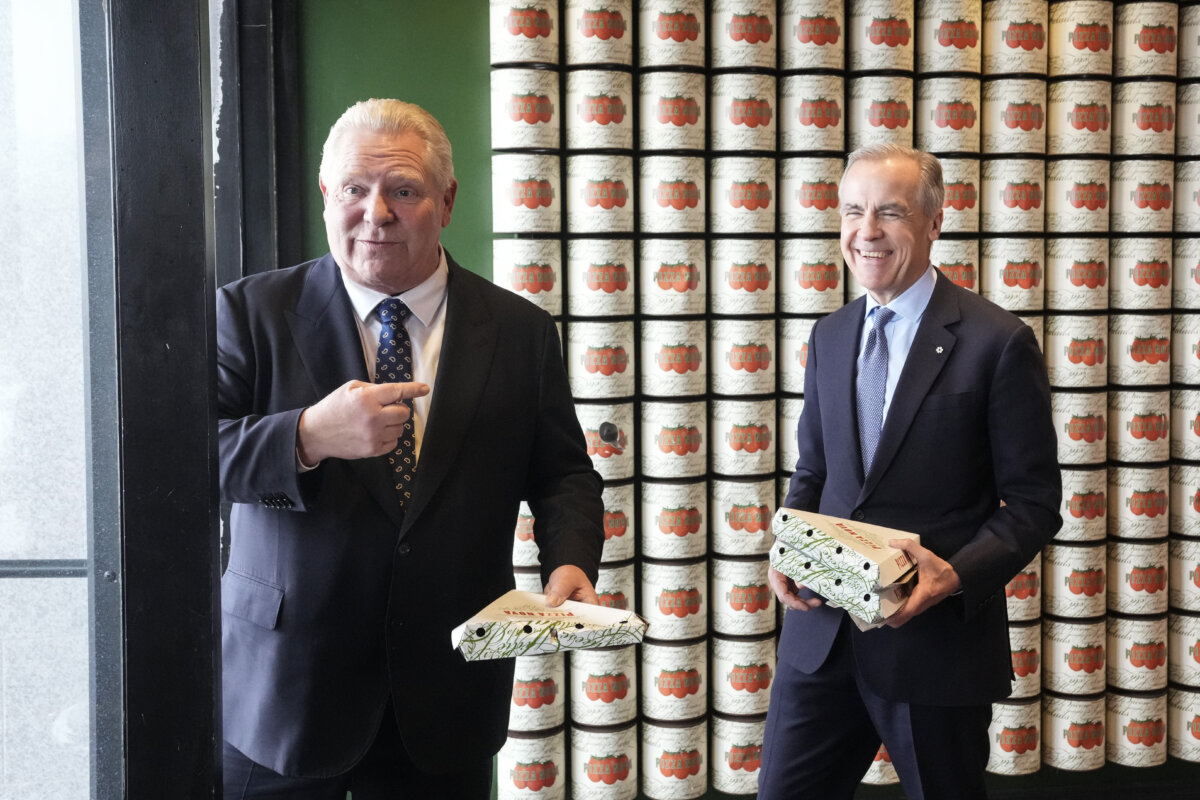
Ford met with Carney and Joly separately in Toronto on Jan. 26, and told reporters that his meeting with Carney was “very, very productive,” noting he is “very confident that we’re going to move forward.” He also said he had a “great conversation” with Joly.
“We’re all part of Team Canada, and the way I describe it is we’re a big family across the country, and sometimes families disagree,” Ford said. “But make no mistake about it, I’d probably say 98 percent we agree on … Everyone’s protecting their area, protecting their turf.”
The meeting followed Carney’s trip to China earlier this month, where he announced Ottawa had signed several agreements with Beijing, including one that would reduce Canada’s tariffs on Chinese electric vehicle imports from 100 percent to 6.1 percent for the first 49,000 vehicles, in exchange for reduced Chinese tariffs on Canadian canola, from 85 percent to 15 percent.
Ford, whose province is where most car plants are located, reacted negatively to the news of the deal between Ottawa and Beijing, saying China will now have a “foothold” in the Canadian market and “will use it to their full advantage at the expense of Canadian workers.”
Ford had also said the deal was made without any guarantee or promise of immediate investments in Canada’s economy, and that to “fix this mess,” Ottawa should drop the EV mandate and federal fees making the industry less competitive.
The premier also said he would have liked Carney to inform him of the deal ahead of time since it would impact his province’s auto industry, but noted he was only advised of the deal a “few hours” before.
Ford further said Canadians should boycott Chinese-made EVs during a Jan. 21 press conference, alongside representatives from the Canadian Vehicle Manufacturers’ Association, Automotive Parts Manufacturers’ Association, and National Unifor, who said Ottawa’s deal with China would harm the province’s auto industry.
After his meeting with Carney and Joly on Jan. 26, Ford appeared to have a more positive tone, while reiterating that his “number one concern” is to protect Canada’s auto workers.
“I think I’ve been pretty clear how I feel, but we’re going to move forward,” Ford said.
“We have one request—build the vehicles here, protect the auto sector,” he added. “Make sure you get your parts here, make sure we get the technology here, make sure you follow the guidelines.”
When asked by reporters what Carney said to alleviate his fears about the deal with China, Ford said, “I don’t get into private conversations I have with the prime minister.”
While Carney has said he expects Chinese car companies will make investments in Canada and the plan is for them to open plants, Ford has said Ottawa is inviting a “flood” of “cheap made-in-China” cars into Canada without obtaining any real guarantee there will be good returns for the domestic economy.
Meanwhile, Joly told reporters she has already met with “many Chinese automakers” and will “continue to have these conversations.” “I think we have to be not naive, but also we have to be open minded,” she added.
She also noted that Ottawa will “never jeopardize or compromise the security of Canadians,” when it comes to the security of software in EVs, which is an issue Ford previously raised. A growing number of reports and researchers have also warned about security risks and the potential for espionage by the Chinese Communist Party through these vehicles.
Auto Strategy
Ford also told reporters Joly put together a “great” auto strategy, which he noted Ontario “will be part of.”
Joly noted the meeting with Ford was “important” and said the federal government has created an auto task force between Ontario and Ottawa. She also said Ottawa will present its auto strategy, which will ensure the federal and provincial governments “coordinate and work together.”
Joly said the task force will look at “future strategic investments,” while ensuring the workforce is protected and workers don’t feel that trade is working against them.
When asked by reporters whether the federal government is considering changing the EV mandate, as Ford had previously called for, Joly said, “We can’t look at one policy, we have to look at everything that is affecting the auto workers.” She added that the government is currently having discussions around the EV mandate and will have “more to say in the coming weeks.”
Noé Chartier contributed to this report.
 Friends Read Free
Copy
Facebook
Tweet
Friends Read Free
Copy
Facebook
Tweet