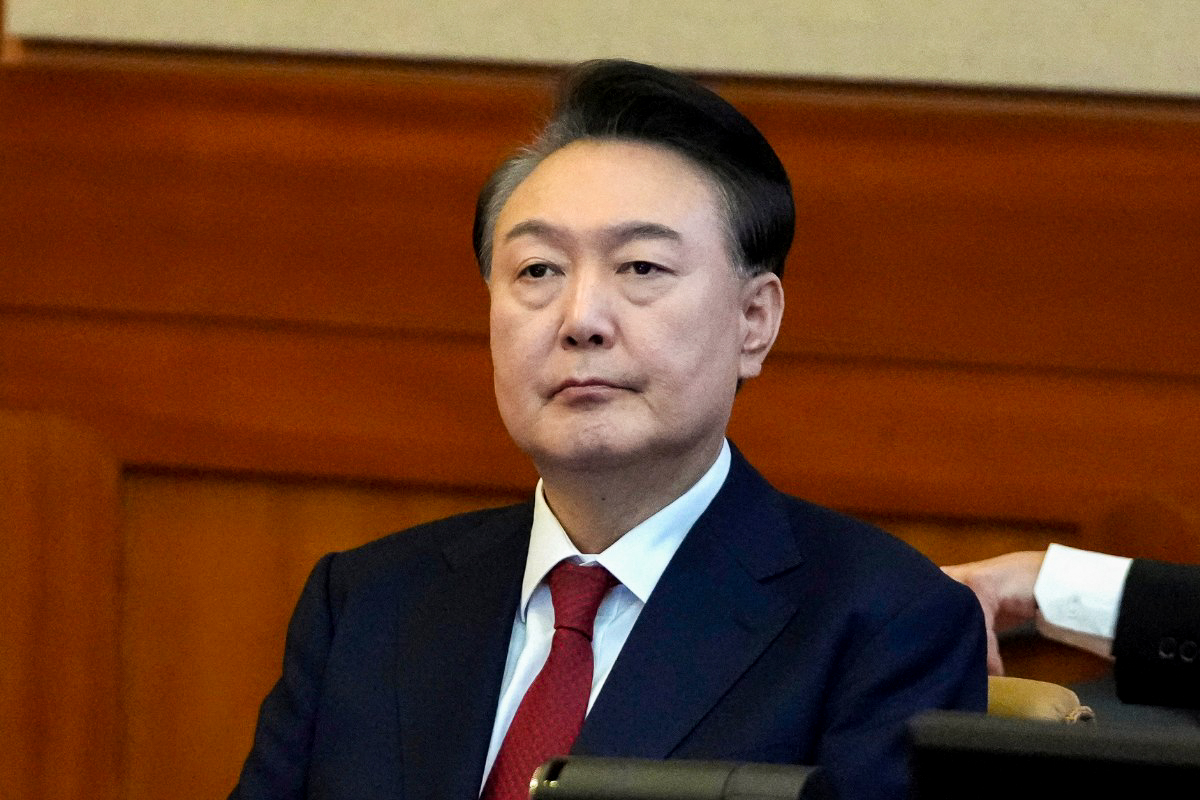

Lawyers for former South Korean President Yoon Suk Yeol on Feb. 24 said he has appealed the life sentence a Seoul court handed him for rebellion in relation to his brief imposition of martial law in December 2024.
Seoul Central District Court on Feb. 19 found Yoon guilty on charges of abuse of authority and orchestrating an insurrection. The former president’s lawyers said in their appeal of the conviction that they aim to address the “errors in fact-finding and misinterpretations of the law” contained in the ruling.
“We will never be silent about what we view as an excessive indictment by a special prosecutor, the contradictory judgment rendered by the lower court based on that premise, and its political circumstances,” Yoon’s legal team said.
The case will now head to the Seoul High Court, where it will be handled by a special panel that deals with cases involving foreign subversion, treason, and rebellion.
Yoon attempted to impose martial law on Dec. 3, 2024, but backed down after six hours, following parliament’s vote to overturn the decree. He said he imposed the measures in order to protect the South Korean constitution because the opposition, which controlled the parliament, was sympathetic to communists and North Korea.
He had previously told the court that it was within his presidential powers to call for a state of emergency and that doing so could not constitute an insurrection.
However, judges at Seoul Central District Court said on Feb. 19 when handing down the life sentence that the former president’s actions amounted to orchestrating a rebellion. Judges ruled that Yoon mobilized police and the military in an unlawful attempt to seize the legislature, arrest political opponents, and establish unchecked rule for a “considerable time.”
Judge Jee Kui-youn told the courtroom that Yoon had conspired with former Defense Minister Kim Yong-hyun to subvert the country’s constitution.
“It is the court’s judgment that sending armed troops to parliament … and using equipment to try to make arrests all constitute acts of insurrection,” Jee said, speaking for the panel of three judges.
Yoon Defends Decision
Prosecutors had sought the death penalty—a sentence that has not been carried out in South Korea since 1997, following the introduction of a moratorium on capital punishment in 1998.
Following the ruling, Jang Woo-sung, a member of the special prosecutor’s investigation team, suggested that they intended to appeal the sentence, saying they had unspecified “reservations” about some of the court’s factual findings and the severity of the sentence.
South Korea’s judicial system allows prosecutors to challenge sentences and rulings—giving them the same rights as defendants—if they believe the decisions are flawed.
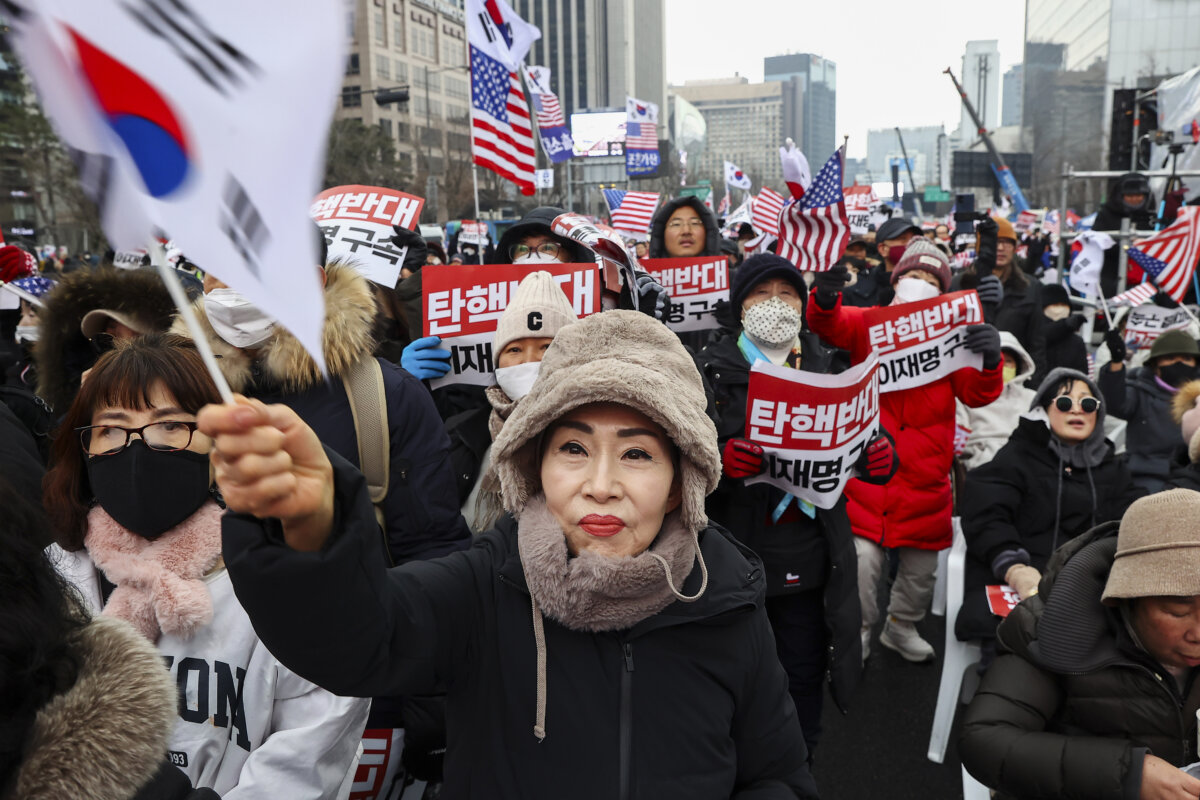
After the sentence, Yoon made a statement defending his decision to impose martial law, but also apologized for any suffering his actions may have caused.
In his Feb. 20 statement released by his lawyers and published by South Korean daily newspaper Munhwa Ilbo, Yoon rejected the verdict as illegitimate, calling it political retaliation.
“Those who seek to smear my resolve to save the nation as a ’rebellion’ and use it as an opportunity to purge and eliminate the opposition, beyond political attacks, will only grow more assertive,” he said.
“I deeply apologize to the people for the frustration and hardships I have caused them, due to my own shortcomings, despite my resolve to save the nation.”
What Followed Failed Decree
Weeks following the martial law attempt, authorities issued a warrant to detain Yoon after he failed to comply with three summonses for questioning. On Jan. 3, 2025, Yoon barricaded himself inside the presidential residence, and the security service blocked investigators.
Authorities detained Yoon in a second attempt on Jan. 15, 2025, with the operation involving more than 3,000 police officers. He was then indicted on Jan. 26, 2025, on charges of leading an insurrection.
On April 4, 2025, he was removed from office after South Korea’s Constitutional Court voted to uphold the Dec. 14, 2024, parliamentary vote to impeach him.
The Constitutional Court’s decision triggered a snap election, and in June 2025, Lee Jae-myung, a former Democratic Party of Korea leader who led the impeachment bid against Yoon, won the presidency.
Yoon, a conservative, faces a total of eight trials related to the martial law decree. He received his first conviction on Jan. 16 for charges such as mobilizing the presidential security service to prevent authorities from detaining him, which resulted in a five-year prison sentence.
Yoon is a former prosecutor who became president in 2022, only one year after entering politics.
He maintains his innocence in all cases.
The Associated Press contributed to this report.
 Friends Read Free
Copy
Facebook
Tweet
Friends Read Free
Copy
Facebook
Tweet