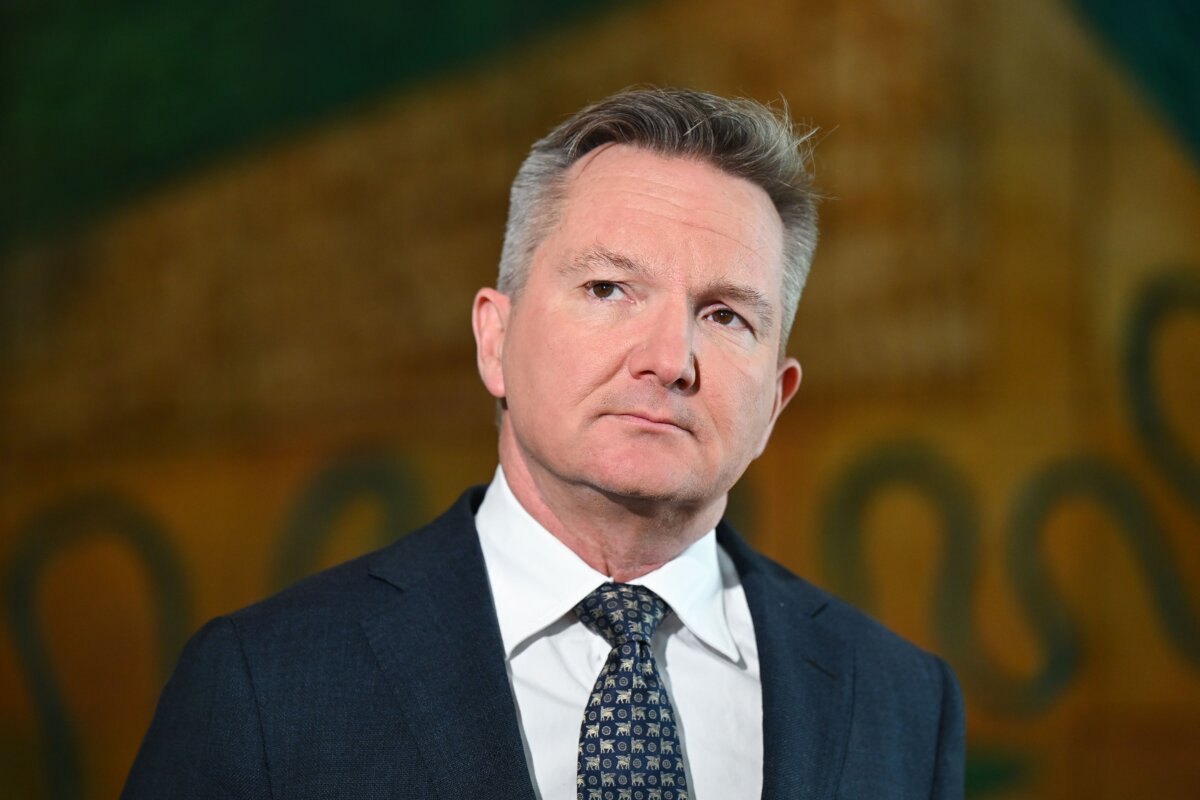

Federal Energy Minister Chris Bowen says Australians may need to wait a few days until a recent fuel excise tax cut flows through and starts lowering petrol prices, which have spiked amid the Iran War.
Bowen revealed current stocks of fuel in petrol stations were brought in under the previous tax regime.
“The fuel in the tank at the service station might have been there for days. They have already paid the tax,” Bowen told the Sunrise program on March 31.
“So please, if you turn up tomorrow and the price has not gone down, they are just waiting for the new petrol with the lower tax to come in.”
The slashing of the government fuel excise—aimed at covering road infrastructure costs—is planned to save around 26.3 cents per litre, about $12-21 each trip to the service station depending on vehicle type.
The minister also said a significant amount of diesel was being directly delivered to farmers and other priority industries.
Bowen also said the Australian government was monitoring the situation in the Strait of Hormuz, particularly the immediate future of the U.S.-Israel-led operation.
“Obviously we are not central to the conversation between United States and Israel and Iran, we are monitoring the situation closely,” Bowen told ABC Radio National.
“Obviously, it’s in everyone’s interest that this conflict is resolved as quickly as possible, not least the people in the Middle East, but obviously the entire world economy.
“And that’s what the prime minister has been calling for … I’ll leave it to the United States administration to comment on whether their objectives have been realised.”
Late in the evening of March 30, U.S. President Donald Trump took to Truth Social to say his administration was in discussions for a “new and more reasonable regime to end our military operations in Iran.”
“But, if for any reason a deal is not shortly reached, which it probably will be, and if the Hormuz Strait is not immediately open for business we will conclude our lovely stay in Iran by blowing up and completely obliterating all of their electric generating plants, oil wells and Kharg Island and possibly all desalinisation plants, which we have purposefully not yet touched,” he said.
“This will be retribution for our many soldiers and others that Iran has butchered and killed over the regime’s 47-year reign of terror.”
Meanwhile, Australian Opposition Leader Angus Taylor says his party wants to focus on becoming more self-sufficient and less reliant on foreign events.
“Our natural resources are one of Australia’s greatest strengths, and it’s time we used them,” he said on social media.
 Friends Read Free
Copy
Facebook
Tweet
Friends Read Free
Copy
Facebook
Tweet