
German Economy Minister Katherina Reiche has called for rethinking the country’s position on nuclear power as energy prices skyrocket amid the ongoing war in the Middle East.
In comments published in the Financial Times on April 1, she said that decisions by previous governments to shut down all of the nuclear power plants left them with only gas to meet demand.
“We need gas to secure our supply—that is the only baseload supply I have left,” she said. “Politically speaking, I have no alternative.”
Gas prices in Europe spiked by more than 60 percent in March because of the Iran war, according to data from Trading Economics, plunging the continent into its second energy price shock since 2022. The previous one came when Russia cut off gas supplies following its invasion of Ukraine.
Electricity prices for May in Germany, based on futures contracts, are four times higher than those in France, according to a Bloomberg report citing central European energy marketplace European Energy Exchange AG.
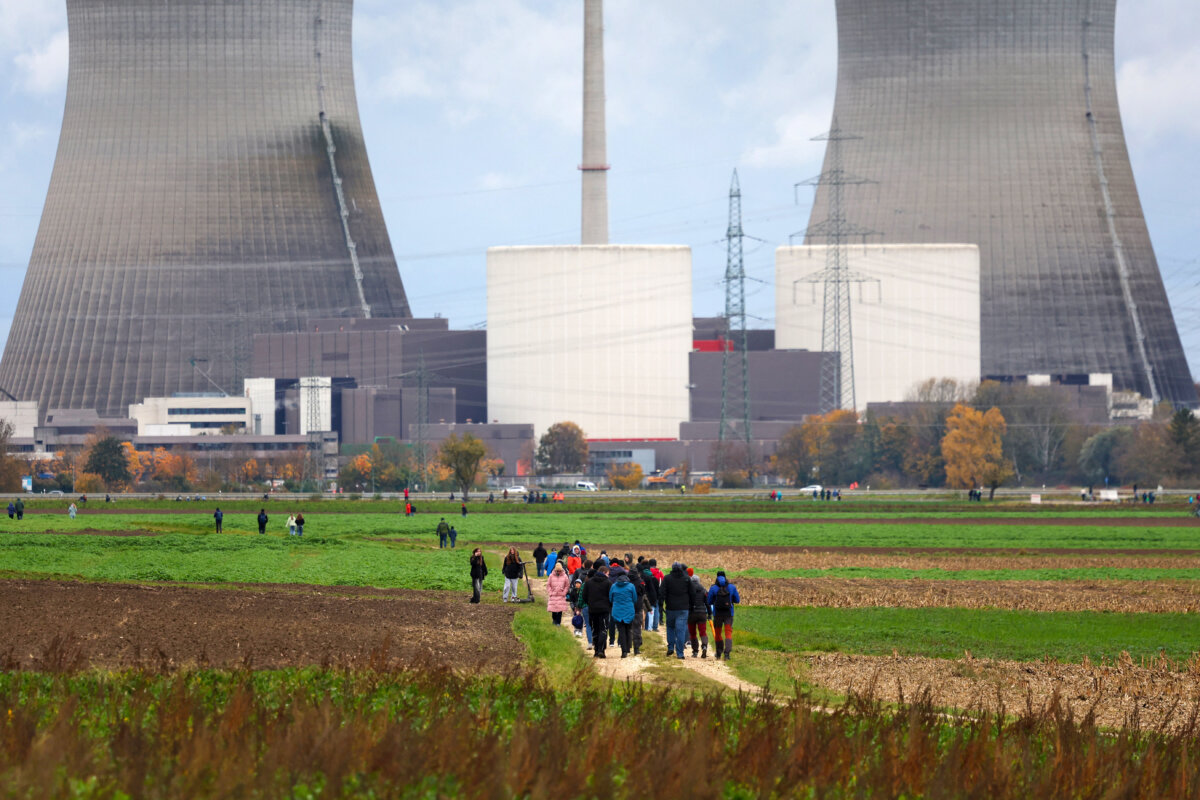
France is Europe’s largest nuclear power producer, while Germany has opted to decommission all nuclear power plants in recent years in favor of renewable energy. The net result has been Germany’s increasing dependence on imported gas.
Reiche is now urging Germany to take part in the nuclear power revival in Europe. Alongside France, countries such as Sweden and Poland are either investing in new nuclear stations or extending the lifespans of current reactors.
“We can decide that we are not interested. Then we stick to gas and become more dependent on one energy source. Or we can say that we are interested in technology again,” Reiche said.
“[Germany,] with all its engineering expertise, must be represented on international committees and if necessary, we must also be prepared to invest in Europe, and in no way oppose other countries that want to go down this path.
“Anyone standing on the sidelines simply commenting loses influence. You must be on the pitch if you want to play.”
Her remarks come a day after the European Union said it was considering reviving energy crisis measures that it used in 2022, when Russia slashed gas deliveries.
Speaking after a virtual meeting of EU energy ministers, EU Energy Commissioner Dan Jorgensen said the plans included proposals to curb grid tariffs and taxes on electricity.
“We don’t know how long this crisis will last. And since we don’t know how deep it will be, we are also preparing different opportunities and possibilities that look more like the ones we used under the crisis in 2022,” he said.
The EU’s emergency policies in 2022 included an EU-wide cap on gas prices, a tax on energy companies’ windfall profits, and targets to curb gas demand.
Jorgensen said the Iran war would likely cause a prolonged disruption to energy markets.
“It will not be short, because even if there was a peace tomorrow, there will still be consequences, because energy infrastructure in the region has been ruined by war,” he said.
The EU’s supplies of crude oil and natural gas have not been hit directly by the closure of the Strait of Hormuz because Europe imports most of those energy sources from outside the Middle East. However, Europe’s reliance on imported fuel leaves it exposed, with global gas prices rising by more than 70 percent since the war began on Feb. 28.
Reuters contributed to this report.
 Friends Read Free
Copy
Facebook
Tweet
Friends Read Free
Copy
Facebook
Tweet