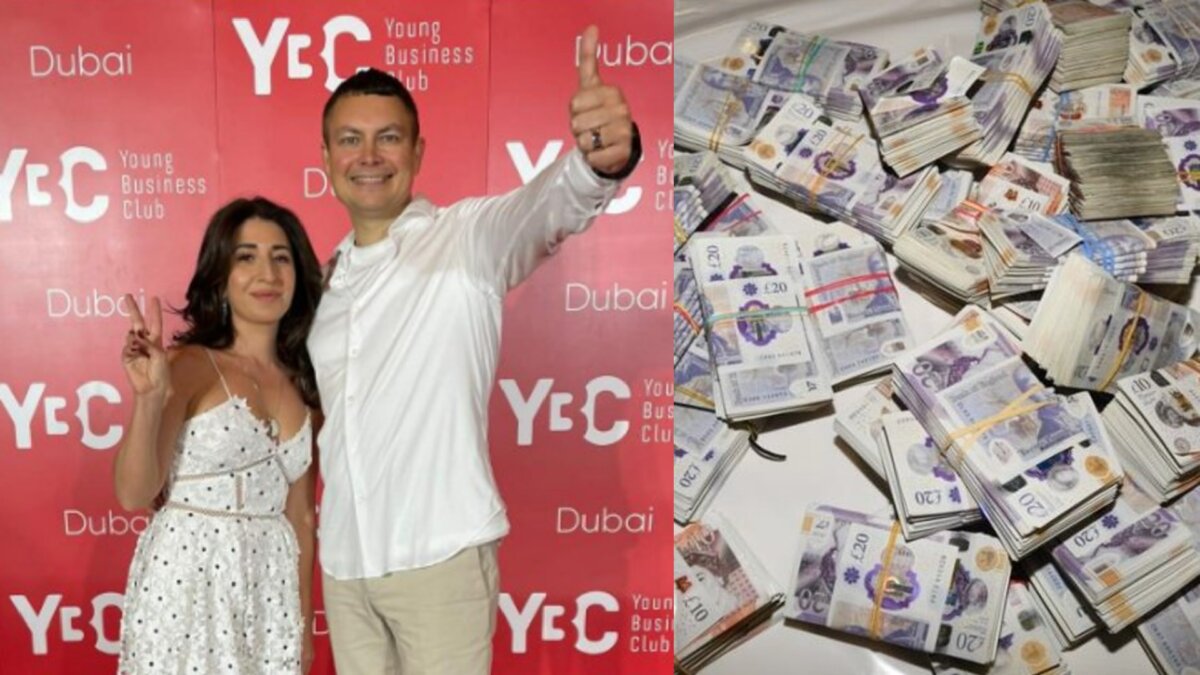
This week, Britain’s National Crime Agency (NCA) lifted the lid on how two UK-based networks were allegedly laundering billions of dollars of money from street-level drug dealing and other crimes and indirectly helping to fund the Russian war effort in Ukraine.
The complex tale involves cryptocurrency, Bulgarian spies, “golden passports,” a pro-Moscow influencer and oligarch in Moldova, and a former professional soccer player in Scotland.
Linking Drugs With Geopolitics
“For the first time we are tying drugs trades in our community all the way through to the highest levels of organized crime, geopolitics, sanctions evasion, the Russian industrial-military complex, and state-linked activity,” said Sal Melki, NCA deputy director for economic crime.
“So we can draw a really clear thread between somebody buying some cocaine on a Friday night, all way through to geopolitical events that are causing suffering across the world.”
In December 2024, NCA first revealed it had taken down two Russian-speaking money laundering networks, TGR and Smart, as part of Operation Destabilise.
The agency alleged TGR was headed up by George Rossi—also known as Yury Maksakov—and his assistants Elena Chirkinyan and Andrejs Bradens, all three of whom were sanctioned by the U.S. Treasury’s Office of Foreign Assets Control (OFAC) that same month.
TGR was also involved in exporting electrical components to Russia in 2024, evading sanctions imposed following the invasion of Ukraine, NCA said.
Smart was allegedly led by Ekaterina Zhdanova, who was assisted by Nikita Krasnov and Khadzi-Murat Magomedov.
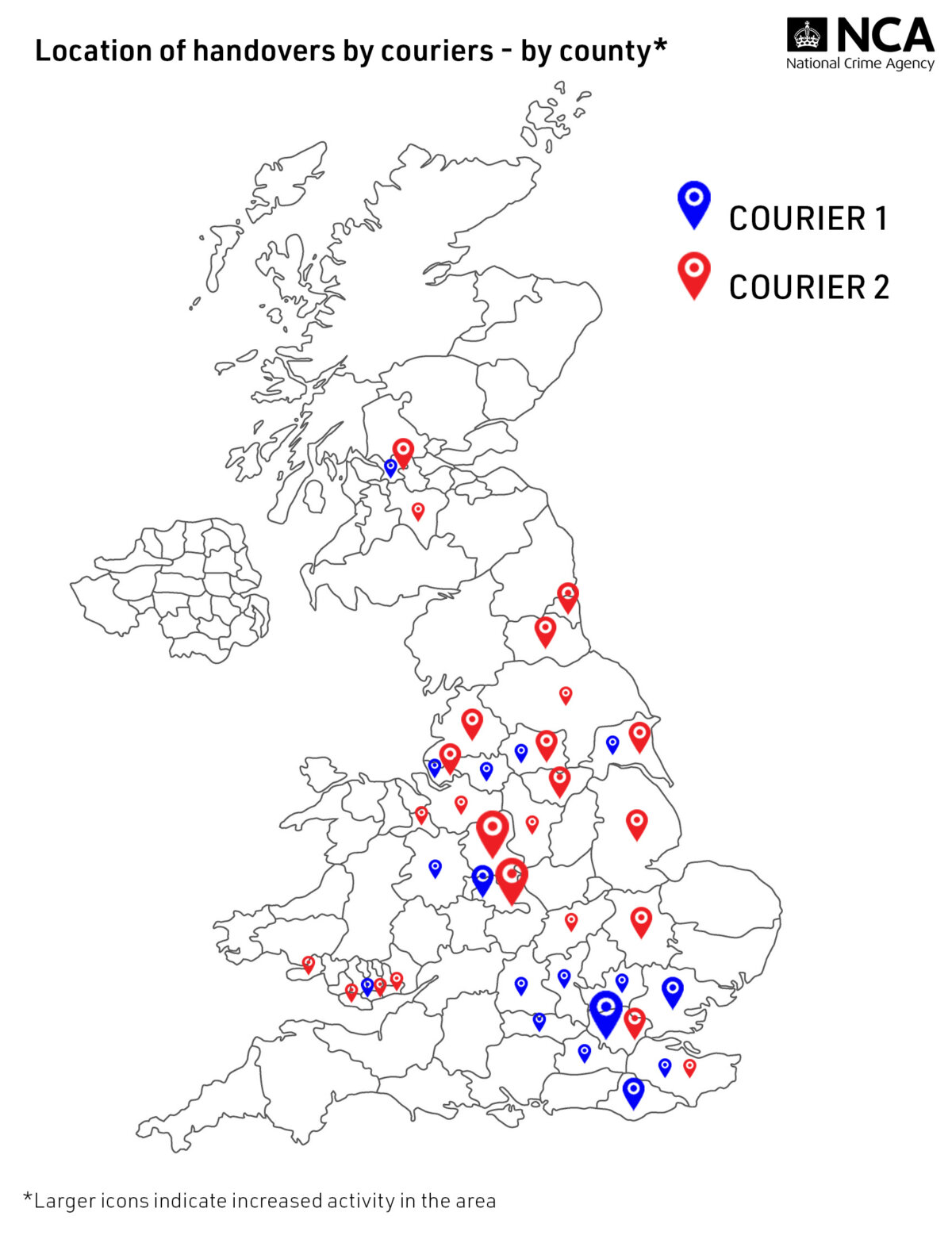
On Nov. 20, 2025, at a briefing for journalists, NCA revealed new details about the depth and breadth of the two money laundering networks, which it said were operating in 28 UK cities.
NCA said the two Russian networks were also laundering money for Irish criminals, including the so-called Kinahan cartel, run by international fugitive Daniel Kinahan, who was sanctioned by the U.S. government in 2022.
For a fee, TGR and Smart would collect “dirty” cash generated from drugs dealers, human traffickers, and other criminals, and convert it to “clean” cryptocurrency.
The revelations about Russian money laundering in Britain come as Ukrainian President Volodymyr Zelenskyy considers a peace plan which has been put forward by the United States, to end the war with Russia.
“We agreed that our teams will work on these proposals to ensure it’s all genuine. … We’re geared up for clear and honest work,” Zelenskyy wrote on Telegram on Nov. 20.
‘Cash to Crypto Swaps’
“These ‘cash to crypto swaps’ are an integral part of a global criminal ecosystem that spans offending in our communities, sanctions evasions and the highest levels of organised crime, including providing money laundering services to the Russian state,” NCA said in a statement on Nov. 21.
The illicit cash was swapped for cryptocurrency, which was then either given back to the criminals, or converted into “clean” cash.
“They were providing the full spectrum of money laundering services, from traditional laundromat schemes at scale, abuse of crypto currencies at scale, abuse of crypto infrastructure, concierge services for moneyed elites. And they also had links to the Russian state,” Melki said.
“These networks were collecting street cash from drugs deals, huge volumes, and converting it into cryptocurrency for onwards movement, cashing out, settling debts or reinvesting in further offending.”
The example of James Keatings shows how the scheme worked on the street level.
In March 2022, after a 12-year career as a professional soccer player, Keatings retired from the sport as a result of an injury, aged 30.
Keatings—who won the Scottish Cup with Hibernian in 2016—fell on hard times and, suffering with a hip injury, began self-medicating with illegal painkillers.
A court hearing heard he succumbed to temptation after being asked by a drug dealer to move a large sum of cash, and in return would be “paid in medication.”
On June 28, 2024, NCA officers conducting surveillance spotted Keatings transferring two boxes, containing 78 bundles of notes totaling more than £390,000 ($511,000).
He pleaded guilty to possessing and transferring criminal property and was sentenced to 13 months in jail in September 2025.

NCA said Keatings was just one of dozens of couriers who were transferring cash which would ultimately end up with TGR or Smart, who were laundering the money and then taking a profit off the top.
Each courier was paid, on average, around £500 ($654) for every £100,000 ($130,800) they collected, said NCA.
On a bigger scale was Fawad Saiedi, who was based in London and laundered £15 million ($19.6 million) while being directed by Zhdanova and Krasnov. Saiedi was jailed for four years and four months.
Krasnov also coordinated a money laundering operation carried out by Semen Kuksov, the 23-year-old son of a Russian oil executive, and Andrii Dzektsa which laundered £12 million ($15.7 million) in just 74 days.
Key Player Had ‘Golden Passport’
Kuksov had been traveling on a Maltese document which he had bought as part of the country’s controversial “golden passports” scheme, which allows foreign nationals to obtain citizenship in return for investments.
He was jailed along with Dzektsa in February 2024.
In October 2025, the Times of Malta reported Kuksov had been stripped of his citizenship.
“We’re well aware of the possible exploitation of citizen-by-investment schemes, and it’s something that we work really closely with the UK Home Office on,” Melki said, “It’s certainly a sort of threat vector that we take seriously and look into.”
In April, the European Court of Justice ruled Malta’s investor citizenship scheme was unlawful.
Kuksov—who was from a wealthy Russian family—was also linked to Valeriy Popovych and Vitaliy Lutsak, who were involved in a lucrative trade in which trucks and other vehicles were bought in Britain—using cash which was being laundered for criminals—and then sold in Ukraine.
The profits were then converted into cryptocurrency.
NCA said the pair “exploited the Russia-Ukraine war to launder criminal profits.”
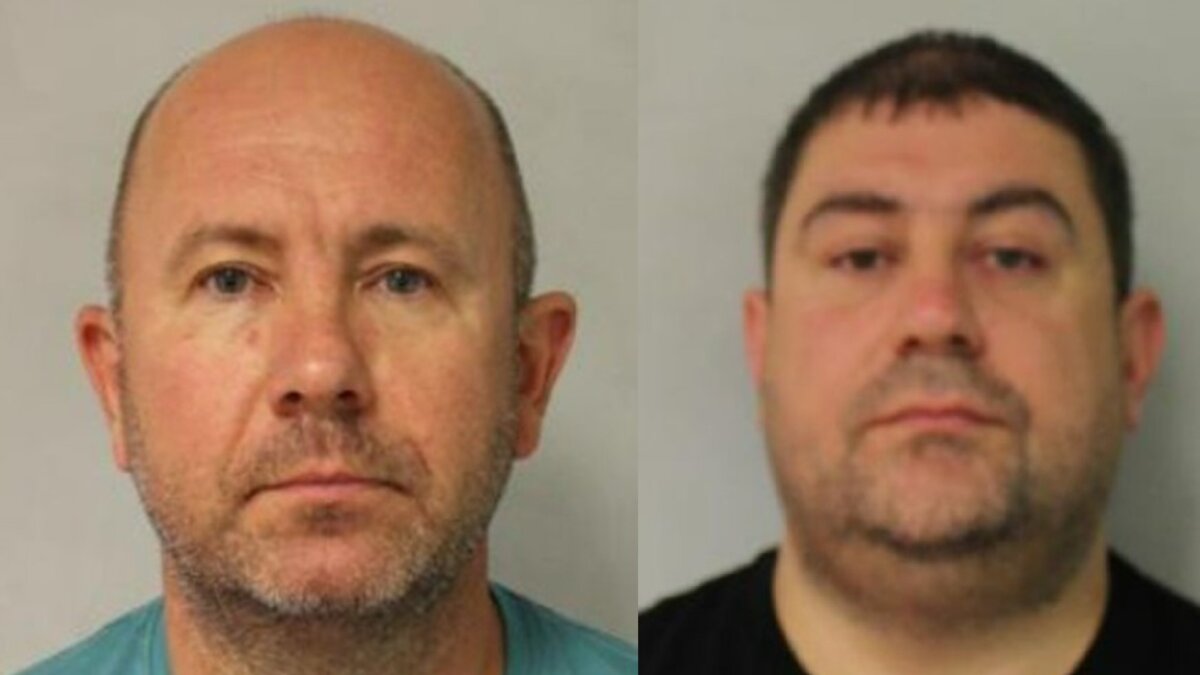
Popovych and Lutsak were jailed for 6.5 years each in April 2025, after a trial which heard they had laundered around £6 million ($7.8 million) between August 2022 and June 2023, and recorded all the transactions on an Excel spreadsheet.
During the investigation, officers found $14 million had passed through various crypto wallets stored on Lutsak’s computer.
Link to Bulgarian Spy Ring
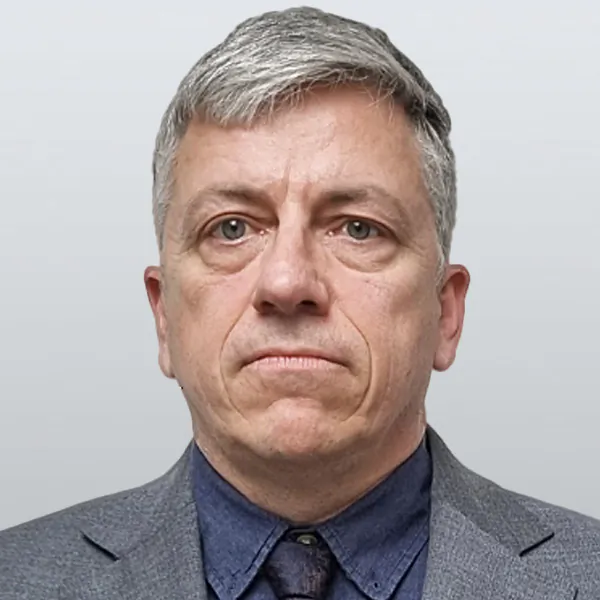
NCA said Smart was also linked to Orlin Roussev, 47, who was convicted in May 2025, after a trial at London’s Central Criminal Court, along with five other Bulgarians, of spying for Russia. Roussev was jailed for 10 years and eight months.
Russian intelligence had been liaising with the Smart money laundering network in the summer of 2023, in an effort to fund Roussev’s spy ring, NCA said.
NCA said TGR and Smart also helped Russia’s “moneyed elites” to bypass financial restrictions to invest money in Britain.
A senior NCA officer, who declined to be named, explained how Operation Destabilise found out about TGR and Smart and their money laundering networks.
He said they began by tracking the proceeds of ransomware activity, particularly that linked to Russian cybecrime groups Trickbot/Conti and EvilCorp, which is allegedly run by Maksim Yakubets, who uses the online alias Aqua.
“What we could see is that some of the Bitcoin that was coming from the victims of those attacks was going into an individual cryptocurrency exchange account,” said the officer.
“That account also had cryptocurrency addresses on there that were linked to international money launderers and individuals based in the UK who we knew to be conducting cash-based money laundering.”
NCA requested the details of the cryptocurrency exchange account details, and identified it as being Zhdanova.
Bought Bank in Kyrygyzstan
The investigators then identified Rossi and his network.
NCA said it discovered this year that a Luxembourg-based company called Altair Holding SA, which was linked to Rossi, had bought a controlling stake in a bank in the former Soviet republic of Kyrgyzstan, in Central Asia, to evade sanctions and pay for the Russian war effort in Ukraine.
In a statement, NCA said, “Altair was identified as owning a controlling stake in Kyrgyzstan-based Keremet Bank which was utilised for sanctions evasion.”
Altair Holding SA bought a 75 percent stake in Keremet on Dec. 25, 2024—Christmas Day.
“The bank has subsequently been identified as facilitating cross-border payments on behalf of Promsvyazbank, a Russian state-owned bank, which supported companies involved in the Russian military industrial base,” NCA said.
Promsvyazbank (PSB) was sanctioned by the U.S. government on Feb. 22, 2022, in response to Russian President Vladimir Putin’s decision to recognize the Donetsk and Luhansk people’s republics, in eastern Ukraine, as independent states.
Two days later, Russian troops invaded Ukraine.
NCA also identified Ilan Shor, a Moldovan oligarch, as having been involved in Keremet’s sanctions evasion scheme.
“Shor was arrested in 2014 for the theft of $1 billion from Moldovan banks and has since been identified as engaging in interference in Moldovan elections on Russia’s behalf,” said NCA.
In September 2024, Shor indicated on social media that he would pay $29 to any Moldovan who voted against joining the European Union in a referendum.
Shor’s company, A7, is sanctioned by Britain and the European Union.
“Networks linked to A7 are likely designed to allow cross-border payments to circumvent sanctions,” NCA said.
First Ruble-Backed Cryptocurrency
In January, A7 and PSB launched the A7A5 token, the world’s first ruble-backed cryptocurrency stablecoin, and in July the research company Elliptic reported $1 billion a day was being transferred via A7A5.
In September, Putin put PSB in charge of the sale of state-owned assets.
The Russian government aims to generate $12 billion from the sales by 2030, including some of the assets it seized from foreign companies who abandoned them after the invasion of Ukraine.
The Russian Finance Ministry had agreed to the creation of a new company, Rosveksel, in partnership with PSB and A7, in which the state would own a 15 percent stake, Russian news agency Interfax reported on Nov. 12.
It said PSB owned 49 percent of A7, and confirmed Shor was the CEO.
Since December 2024, NCA said 45 suspected money launderers had been arrested and more than £5.1 million ($6.67 million) seized as part of Operation Destabilise.
Its international law enforcement partners, which include the FBI, DEA, OFAC, and the United States Secret Service, have seized $24 million and 2.6 million euros ($3 million) from TGR and Smart in the last year, it said.
“Operation Destabilise has not gone unnoticed amongst the criminal community. Members of the network were believed to have reservations over operating in London and, in summer 2024, Russian-speaking laundering networks in the capital were charging significantly higher commission rates in recognition that it was difficult to work in the city,” NCA said.
Zhdanova is in custody in France, where she is awaiting trial, while the whereabouts of Rossi, Chirkinyan, Bradens, Krasnov, and Magomedov are unknown.
“This complex operation has exposed the corrupt tactics Russia used to avoid sanctions and fund its illegal war in Ukraine,” UK Security Minister Dan Jarvis said.
“We are working tirelessly to detect, disrupt, and prosecute anyone engaging in activity for a hostile foreign state. It will never be tolerated on our streets.”
UK Has Been ‘Porous’
The UK had been susceptible to money launderers in recent years, according to Nick Kochan, a journalist and lecturer on financial crime and author of “The Washing Machine: How Money Laundering and Terrorist Financing Soils Us.”
“The UK has has been porous for laundering gangs partly because of the open arms welcome that it’s given to Russia and other Eastern European individuals over recent years,” he told The Epoch Times.
Kochan said the fact the Russians had been able to scoop up and launder so much cash with impunity did not surprise him, but added, “It is quite shocking in retrospect.”
He said the British authorities’ attitude has changed since the Russian invasion of Ukraine in 2022, and NCA is “waking up” to the threat.
The Epoch Times has reached out to the Russian Embassy in London, but did not receive a response by publication time.
The Epoch Times has also reached out to Zhdanova’s lawyer in Paris, Anastasia Pitchougina, but did not receive a response.
The Epoch Times has been unable to reach Rossi, Chirkinyan, Bradens, Krasnov, or Magomedov for comment.
 Friends Read Free
Copy
Facebook
Tweet
Friends Read Free
Copy
Facebook
Tweet