
Primary schools in Delhi, India, will be closed starting Nov. 5 and outdoor activities for secondary schools will be suspended due to severe air pollution levels, authorities said on Friday.
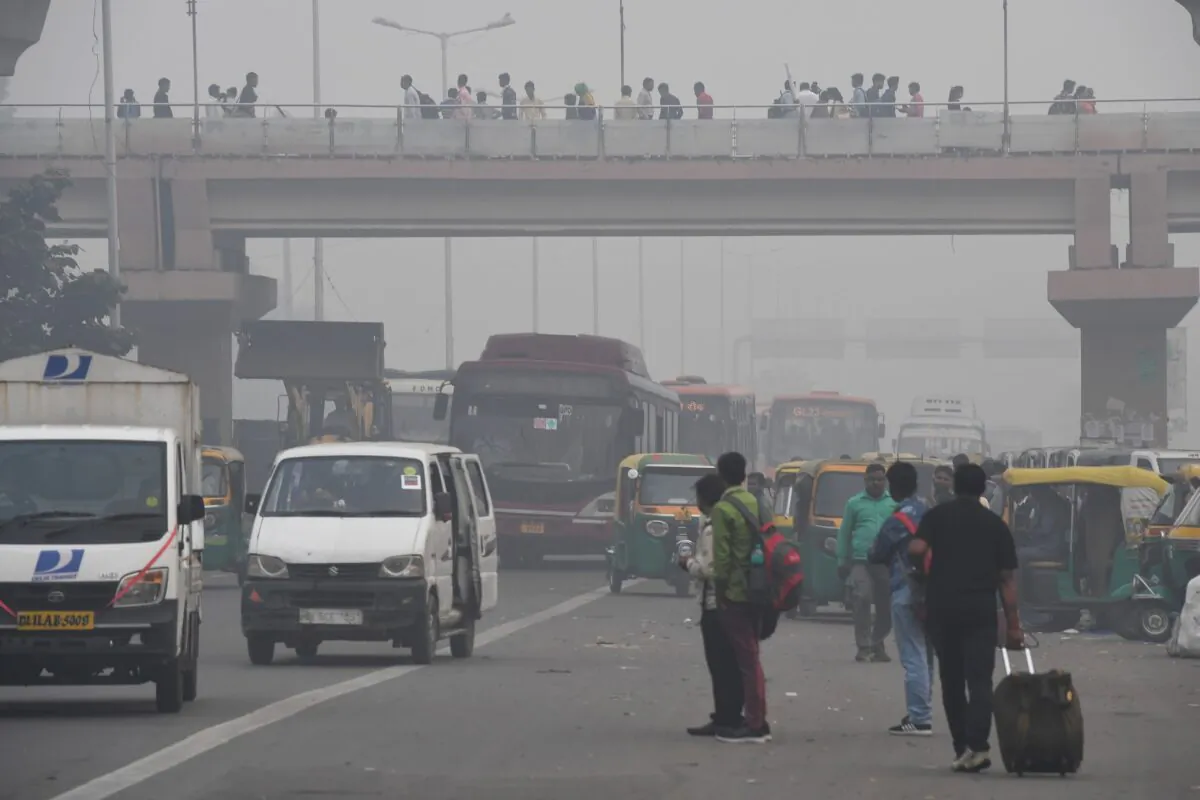
Smog has formed over the nation’s capital of New Delhi due to vehicle exhaust, factory emissions, and smoke from burning crop stubble. Delhi’s air quality index (AQI) exceeded 400 on Friday, indicating severe pollution that could lead to a spike in respiratory illnesses.
“We’re taking all steps to control the pollution situation. Meanwhile, we’re shutting down all primary schools in Delhi from tomorrow,” Chief Minister Arvind Kejriwal said, according to local reports.
India’s federal pollution control board has banned the entry of diesel trucks carrying nonessential goods into the capital, while Delhi’s administration has suspended most construction and demolition work in the region.
Kejriwal urged the Indian government to take action, saying that pollution is a problem throughout Northern India, not just in Delhi. He admitted the stubble burning in Punjab contributed to the pollution.
See pollution in North Indian towns. Its not just Punjab and Del. Entire North India suffering from severe pollution. Lets stop blame game. Lets find solutions as a country
Its our first yr in Punjab. Punjab govt tried its best in short time. By next yr, we shud see good results pic.twitter.com/6FeSIE1FkW
— Arvind Kejriwal (@ArvindKejriwal) November 4, 2022
The decision to shut some schools came after concerned parents and environmentalists took to social media, and residents complained of discomfort in breathing and irritation in the eyes, nose, and throat.
Healthy people can be affected, and those with existing health conditions are at greater risk when the AQI rises past 400, the federal government warned.
According to a Lancet study published in November 2020, air pollution caused about 167 million deaths in India in 2019, with ambient particulate matter pollution and household air pollution being the leading causes.
“The increasing death rate attributable to ambient particulate matter pollution reflects increasing pollutant emissions from rising energy consumption, accelerated urbanization, rapid industrialization, and growing numbers of petroleum-powered vehicles,” it stated.
Reuters contributed to this report.
 Friends Read Free
Copy
Facebook
Tweet
Friends Read Free
Copy
Facebook
Tweet