
Iran has threatened to halt negotiations with the United States over what it describes as Israel’s escalating military campaign in Lebanon, according to Iranian state media and statements from senior officials, although conflicting accounts have emerged over whether talks have actually been suspended.
Iran’s semi-official Tasnim News Agency reported on June 1 that Iran’s negotiating team will stop talks—including the exchange of messages through a mediator—because Israel had continued military operations in Lebanon despite what Tehran considers a ceasefire that applies across all fronts.
The report said Iran views a halt to Israeli military operations in Lebanon as a key condition of the ceasefire and regards Israel’s recent actions as a violation of the truce.
Iranian officials and negotiators are demanding an immediate end to Israeli military operations in both Gaza and Lebanon, along with a complete Israeli withdrawal from occupied areas in Lebanon, according to Tasnim.
Iran’s official state news agency IRNA reported on June 2 that Tehran had “said it would suspend” exchanges of messages with Washington through a mediator in response to continued Israeli operations in Lebanon, framing the move as a warning rather than confirmation that talks had already been frozen.
The clarification, along with a June 2 statement from a senior Iranian official, suggests Tehran may be using the prospect of suspending negotiations as leverage to pressure the United States to restrain Israel while keeping diplomatic channels open.
Late on June 1, U.S. President Donald Trump also signaled that negotiations remained alive, saying in a post on Truth Social that talks with Iran were continuing “at a rapid pace.”
Trump further said he had held a “very productive” call with Israeli Prime Minister Benjamin Netanyahu and, through intermediaries, a “very good call” with Hezbollah representatives, adding that both parties had agreed that “all shooting will stop.”
The Epoch Times reached out to the White House for comment on the Tasnim report and on the status of U.S.–Iran negotiations.
The White House pointed The Epoch Times to Trump’s public statements indicating that negotiations were continuing. Trump also told reporters on June 1 that Iran had not informed Washington that talks had been suspended.
On June 2, the speaker of Iran’s parliament, Mohammad Bagher Qalibaf, also suggested talks were continuing, while warning they’re in danger of collapsing.
Qalibaf said in a post on X that if Israeli forces continue to strike targets in Lebanon, Iran “will not only halt the path of negotiations, but we will also be in direct confrontation with the enemy,” signaling a possibility of renewed fighting.
Trump Moves to Preserve Ceasefire
Beyond suspending negotiations, Tasnim reported that Iran and allied groups within what Tehran calls the Resistance Front are considering broader measures aimed at increasing pressure on Israel and its backers.
These include fully closing the Strait of Hormuz, the key shipping channel that has seen a slight uptick in tanker traffic recently, and targeting the Bab el-Mandeb Strait, another critical maritime corridor that has so far been open in the current conflict.
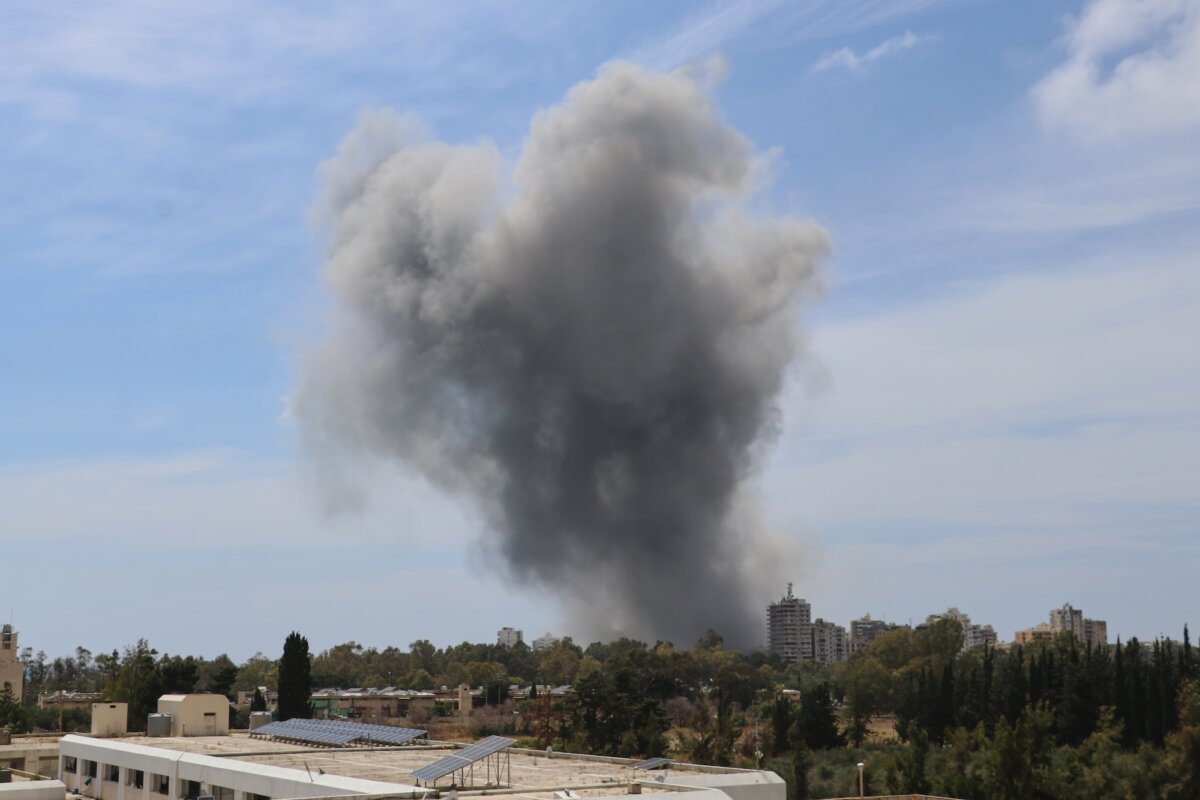
The Tasnim report on the suspension of talks and threats of regional escalation came hours after top Israeli leaders ordered the military to strike Hezbollah targets in Beirut’s southern suburbs, escalating Israel’s campaign against the Iran-backed terrorist group despite a ceasefire that has nominally been in place since April.
“In response to the repeated and ongoing violations of the ceasefire in Lebanon by the terrorist organization Hezbollah and the attacks against our cities and citizens, Prime Minister Benjamin Netanyahu and Defense Minister Israel Katz have ordered the IDF to strike terrorist targets in the Dahiyeh district of Beirut,” Netanyahu and Katz said in a joint statement.
Netanyahu’s order followed weeks of intensifying Israeli military operations in southern Lebanon and expanding ground activity north of the Litani River, in response to what officials said were escalating Hezbollah attacks against Israeli communities.
Israeli senior officials told Epoch Magazine Israel that Netanyahu convened a limited security meeting on May 31 to discuss military plans for Beirut.
According to the officials, Israel had previously prepared strike plans, including civilian evacuation measures, but the United States had opposed attacks in Beirut out of concern they could undermine ongoing negotiations with Iran, aimed at securing a broader peace deal.
The officials said Netanyahu recently spoke with Secretary of State Marco Rubio and argued that Hezbollah could not be granted what he described as immunity in Beirut. The Israeli leader added that broader military action is necessary to deter Hezbollah and disrupt its command infrastructure.
Israeli security officials told Epoch Magazine Israel that Hezbollah had ramped up its strikes, launching rockets and drones toward northern Israeli cities—including Safed and Tiberias—that had previously escaped major attacks.
Iran Links Lebanon Fighting to Ceasefire
Iranian officials have contended that the ceasefire negotiated with the United States extends beyond direct hostilities between Washington and Tehran and applies throughout the region, to include Iran-backed proxies like Hezbollah.
Foreign Minister Abbas Araghchi said in a June 1 post on X that the ceasefire between Iran and the United States “constitutes, without any ambiguity, a comprehensive ceasefire across all fronts, including Lebanon.”
“Any violation of this ceasefire on one front shall be considered a violation of it across all fronts,” Araghchi said, adding that the United States and Israel would bear responsibility for any consequences resulting from violations of the truce.
During a morning press briefing hours before the Tansim report was released, Iranian Foreign Ministry spokesman Esmail Baghaei similarly said Tehran views Israeli military actions in Lebanon as violations of the ceasefire and what amounts to “unprecedented crimes” with “consequences for both regional and global peace and security.”
While Baghaei did not signal an imminent pause to the ongoing negotiations, he did say that Israel’s actions in Lebanon are calculated to “destroy any possibility … that diplomatic processes might somehow lead to an improvement in the situation.”
Part of Iran’s punishment for Israel’s escalation in Lebanon, according to Tasnim, will be the activation of additional fronts in the region, including the Bab el-Mandeb Strait, a critical maritime corridor that connects Europe and Asia to Gulf markets through the Red Sea.
The latest developments came as the United States and Iran exchanged military strikes.
U.S. Central Command said on June 1 that American forces conducted what it described as self-defense strikes against Iranian radar, drone-control, and command facilities after Iranian forces shot down a U.S. drone operating over international waters.
The command also said U.S. forces intercepted two Iranian ballistic missiles targeting American forces in Kuwait and defeated several Iranian drones that threatened regional shipping lanes.
Iran’s Islamic Revolutionary Guard Corps said it retaliated by targeting a U.S. air base, although it did not identify the location.
U.S. President Donald Trump has continued to express optimism that a broader agreement can still be reached.
“It will all work out well in the end,” Trump wrote in a recent post on Truth Social, urging patience and letting the diplomatic process play out.
 Friends Read Free
Copy
Facebook
Tweet
Friends Read Free
Copy
Facebook
Tweet