European officials said on Sept. 17 that Iran has not taken the actions needed to stop United Nations sanctions from being triggered next month over its nuclear program.
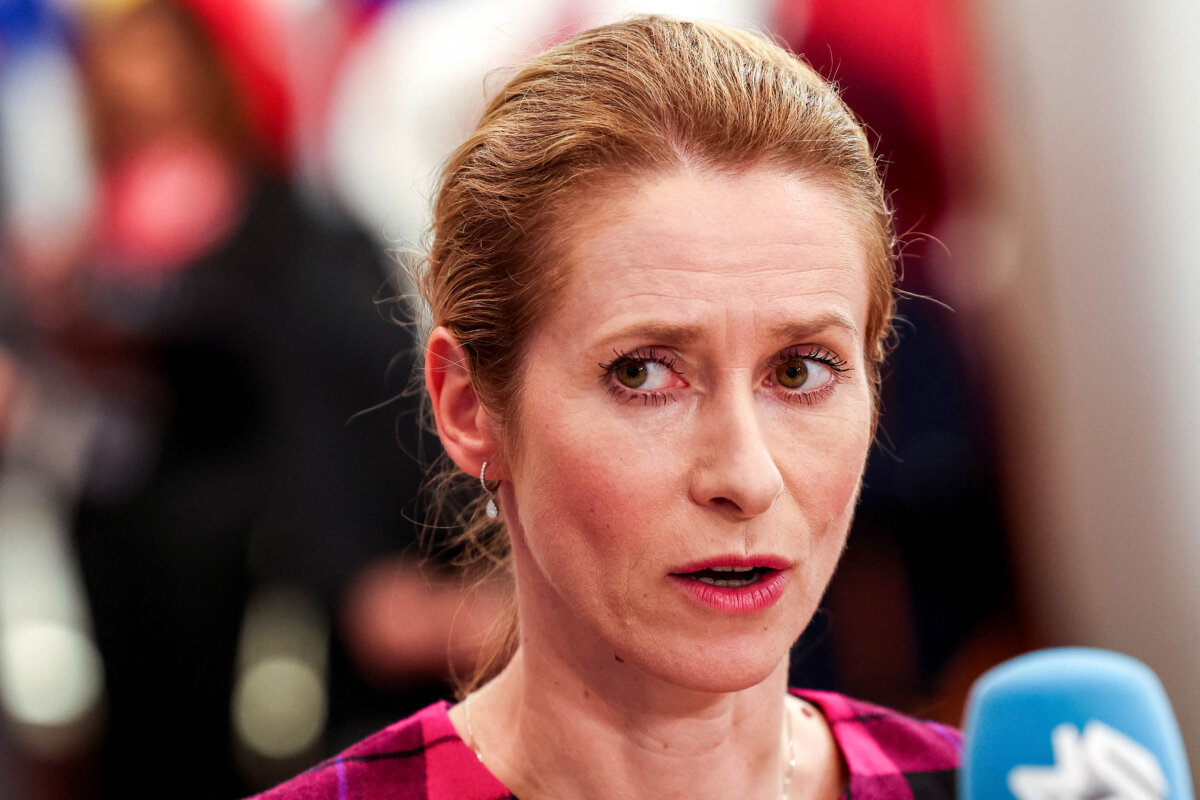
The foreign ministers of Germany, France, and the UK—referred to as the E3—and the European Union’s foreign policy chief, Kaja Kallas, spoke with Iranian Foreign Minister Abbas Araghchi by phone on Sept. 17.
Afterward, the German foreign ministry said on X that European diplomats “underscored that Iran has yet to take the reasonable and precise actions necessary to reach an extension of resolution 2231.”
“Iran has to restart negotiations, allow inspections on sensitive sites and address its stockpile of highly enriched uranium,” the ministry added. “The E3 reiterated the urgency and their determination to move ahead with the reimposition of sanctions absent concrete actions in the coming days.”
Resolution 2231 was passed unanimously by the U.N. Security Council in July 2015, in support of the Joint Comprehensive Plan of Action (JCPOA) agreement with Iran. It provides for a so-called snapback mechanism, which would restore full U.N. sanctions against Iran in the event of Tehran failing to fully comply with the terms of the agreement.
The snapback mechanism would take effect within weeks unless the U.N. Security Council agrees to stop it. Russia and China, both permanent members of the Security Council, do not have the power to veto the mechanism.
In a separate statement, Kallas said the window for finding a diplomatic solution “is closing really fast.”
“We are weeks away from the reimposition of international sanctions,” Kallas said. “Iran must show credible steps towards addressing the demands of France, UK and Germany, and this means demonstrating full cooperation with the International Atomic Energy Agency and allowing inspections of all nuclear sites without delay.”
If the U.N. sanctions were to be restored, Iran’s assets abroad would be frozen, there would be an embargo on arms deals with Tehran, and other measures aimed at preventing the development of Iran’s ballistic missile program would be taken.
In a statement issued hours later, Araghchi said that the reimposition of U.N. sanctions lacked “any legal or logical justification.”
U.S. President Donald Trump unilaterally withdrew the United States from JCPOA in 2018, saying, “America will not be held hostage to nuclear blackmail.”
Trump is on a state visit to the UK and is expected to discuss Iran, among other issues, when he meets British Prime Minister Keir Starmer on Sept. 18.
Unsolvable: Khamenei
On Aug. 26, Esmaeil Baghaei, spokesman for the Iranian foreign ministry, said that a delegation from Tehran told negotiators from the E3 that triggering snapback sanctions would have consequences.
Baghaei said Tehran told the E3 that the foreign ministers do not have the right to trigger the snapback mechanism. He did not provide details about the possible consequences.
Talks between the E3 and an Iranian delegation took place in Istanbul, and further negotiations were held in Geneva in August.
On Aug. 28, the E3 sent a letter to the Security Council saying that “based on clear factual evidence,” Iran was in “significant non-performance” of its commitments under JCPOA, and they were invoking the snapback mechanism process.
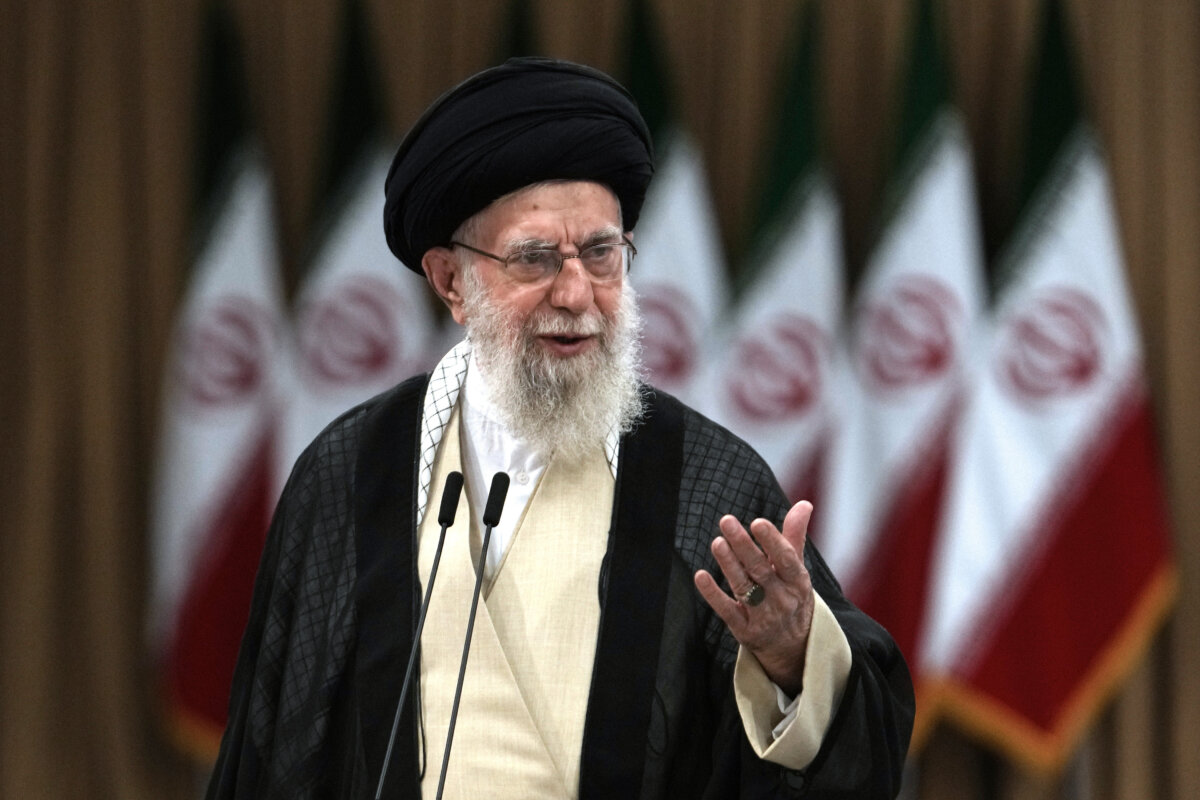
Also in August, Iranian leader Ali Khamenei turned down direct talks with the United States over his country’s nuclear program and said the current situation was “unsolvable.”
Tehran suspended negotiations with Washington after U.S. Air Force B-2 Spirit stealth bombers dropped 30,000-pound bunker-busting bombs on Fordow, a nuclear site deep underground, on the night of June 21–22.
Iran, which has among the largest oil and gas reserves in the world, has always said it seeks only to develop nuclear power and is not making weapons.
The Atomic Energy Organization of the Islamic Republic of Iran’s website quotes a statement from Khamenei in which he said: “The Islamic Republic of Iran regards use of nuclear and chemical weapons as a cardinal and unforgivable sin. We raised the slogan ‘Middle East free from nuclear weapons,’ and we remain committed to this slogan.”
On June 12, the 35-nation board of governors of the International Atomic Energy Agency (IAEA) passed a resolution declaring Iran noncompliant and in breach of its obligations under the Treaty on the Non-Proliferation of Nuclear Weapons.
Within hours of the passage of that resolution, Israel began bombing nuclear sites and other targets within Iran, which continued for 12 days.
Iran and the United States were attempting to negotiate a new deal to replace the JCPOA, with a sixth round of negotiations set to take place in Muscat, the capital of Oman, on June 15. Those talks were canceled following the Israeli strikes.
IAEA Director General Rafael Grossi told Sky News presenter Yalda Hakim on June 18, “We came to the conclusion that we could not affirm there is any systematic effort in Iran at the moment to manufacture a nuclear weapon.”
Iran retaliated against Israel with missile and drone strikes.
A cease-fire was agreed to on June 24, hours after the Iranians launched a missile strike against a U.S. military base in Qatar in retaliation for the U.S. bombing of Fordow, Natanz, and Isfahan.
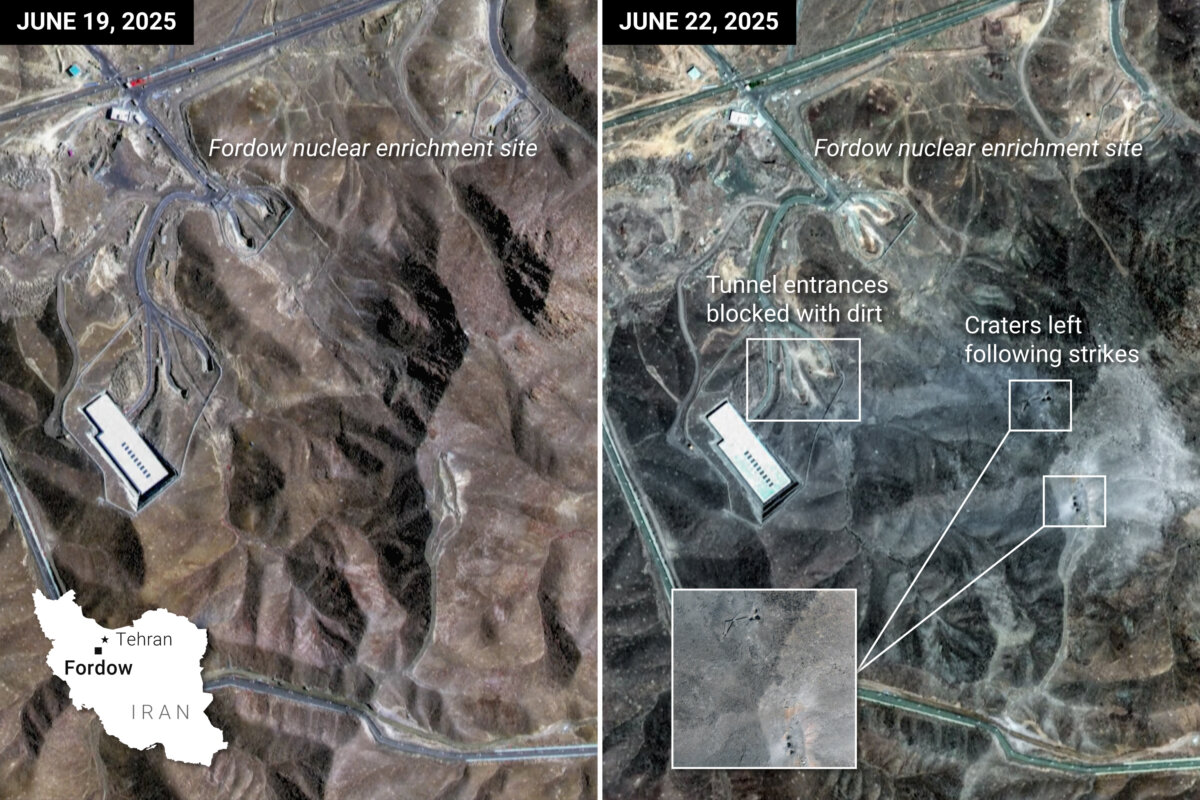
Araghchi confirmed in a Fox News “Special Report” interview on July 21 that U.S. airstrikes had destroyed Tehran’s nuclear facilities but said Iran would continue to enrich uranium.
The Associated Press contributed to this report.
 Friends Read Free
Copy
Facebook
Tweet
Friends Read Free
Copy
Facebook
Tweet