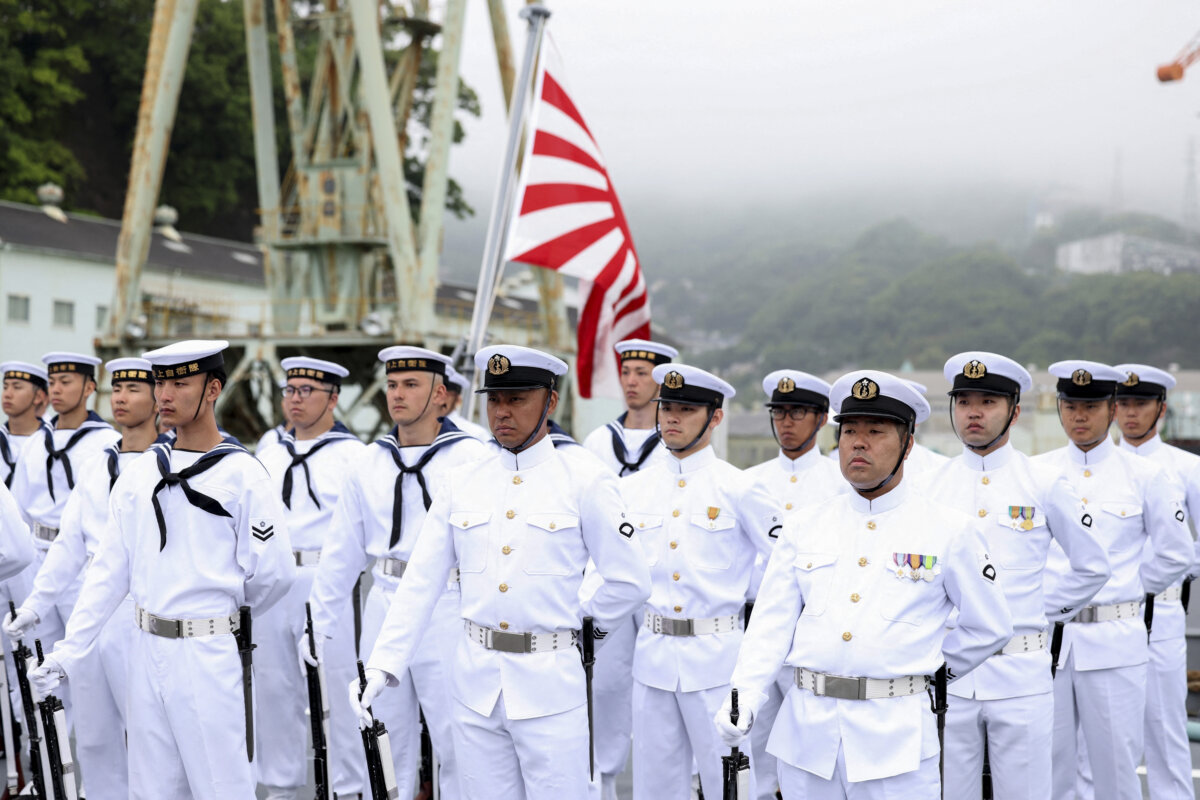

The Japanese Defense Ministry disclosed plans on Aug. 31 to modernize the country’s defense strategy by increasing its use of artificial intelligence (AI) and drones.
The ministry’s budget request for the coming fiscal year is 8.9 trillion yen ($55.6 billion), only slightly up from last year, but the sum is likely to be much higher if Prime Minister Sanae Takaichi’s government approves a new security and defense strategy later this year.
The ministry says in its budget request document that it plans to build a next-generation platform, “AI orchestrator,” which would integrate multiple military systems.
“To support the Self-Defense Forces’ joint operations, we will develop—at an early stage and by leveraging existing overseas technologies—systems that rapidly integrate and analyze data to secure decision-making superiority through target selection and situational visualization, while simultaneously promoting the strengthening of domestic technologies,” the document stated.
The ministry also plans to build a “sovereign cloud” to store highly sensitive data in transit and stable communications networks that would operate in the event of a massive cyberattack or another national emergency.
The document also proposes a new drone strategy which would involve “leveraging unmanned assets to minimize personnel attrition and achieve cost advantages.”
It also recommends “absorbing” enemy attacks during maritime incursions, while combining unmanned assets with stand-off missiles to respond more effectively at greater ranges and at an earlier stage.
‘Neutralizing Underwater Threats’
“Visualizing and neutralizing underwater threats to secure undersea superiority” is another proposed tactic.
Under its five-year defense strategy set in 2022, Japan has doubled spending on its Self-Defense Forces to about 2 percent of its Gross Domestic Product (GDP) to counter Chinese aggression in the region.
Japan’s Self-Defense Forces were established and explicitly designated in 1954 to prevent their use in offensive operations. But in 2014, then-Prime Minister Shinzo Abe succeeded in reinterpreting the country’s constitution so they could be used for “collective self-defense.”
The Beijing regime has repeatedly criticized Japan’s changed posture as “new militarism,” in an attempt to equate it with the Japanese Empire’s policies of the 1930s, which led to large swaths of China coming under the control of Tokyo.
But Japanese Defense Minister Shinjiro Koizumi—the son of a former prime minister—said in a white paper published on Aug. 4 that the security environment surrounding Japan is as severe and complex as it has been since 1945.
“Even in East Asia, the possibility of serious situations taking place that might shake the foundation of the stable postwar international order cannot be ruled out,” Koizumi said.
In March, Koizumi announced that Japan had deployed its first long-range missiles as the country worked to boost its defense capabilities.
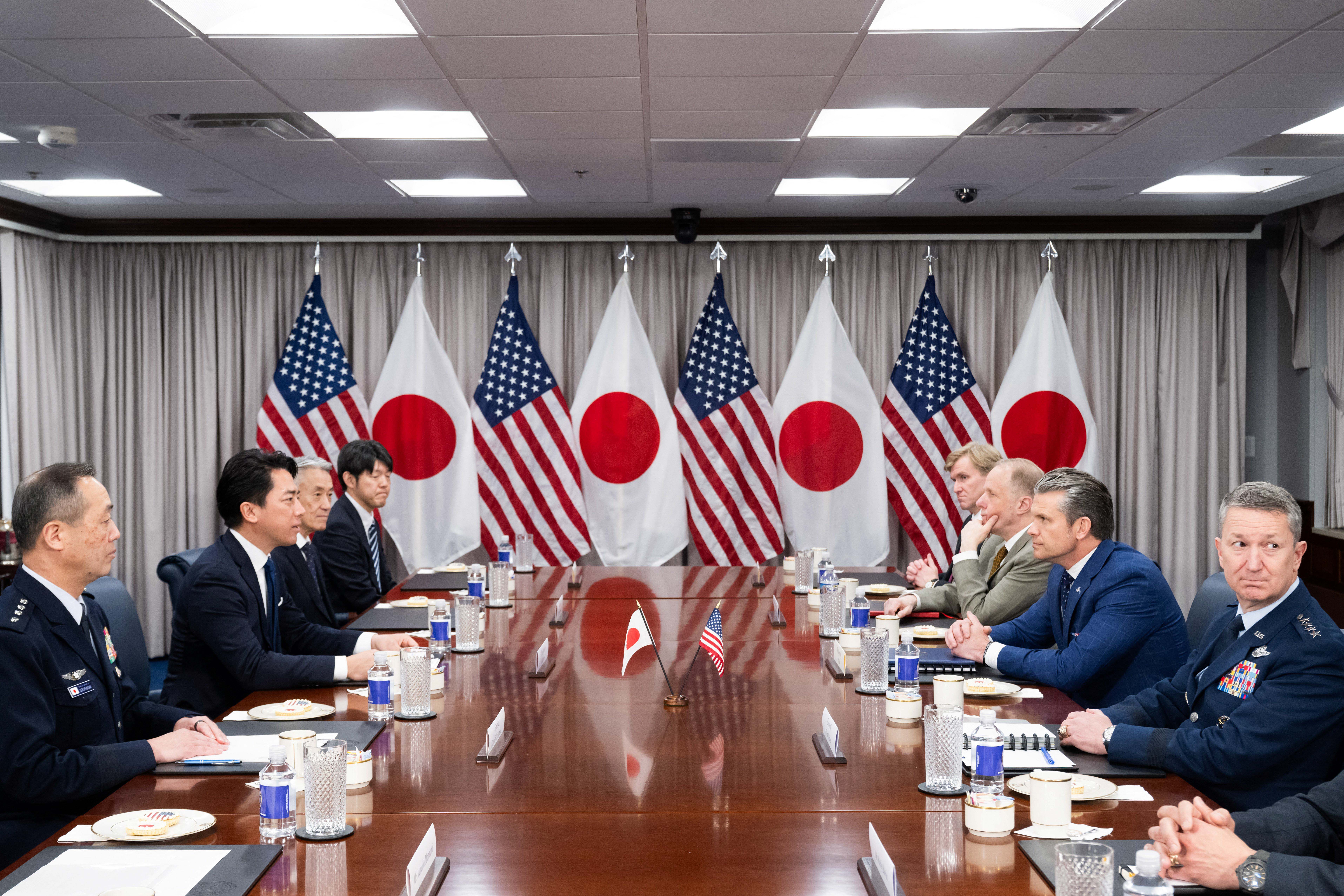 Secretary of War Pete Hegseth (2nd R) and Japanese Defense Minister Shinjiro Koizumi (2nd L) hold a meeting at the Pentagon in Washington, on Jan. 15, 2026. (Saul Loeb/AFP via Getty Images)
The upgraded Type 12 surface-to-ship guided missiles were set up at Kengun Garrison in Kumamoto Prefecture.
In June, Koizumi visited Seoul and discussed with South Korean Defense Minister Ahn Gyu-back ways of deepening defense ties.
But on Aug. 30, Ahn was removed from his post by President Lee Jae Myung as part of a reshuffle.
The Associated Press contributed to this report.
 Friends Read Free
Copy
Facebook
Tweet
Friends Read Free
Copy
Facebook
Tweet