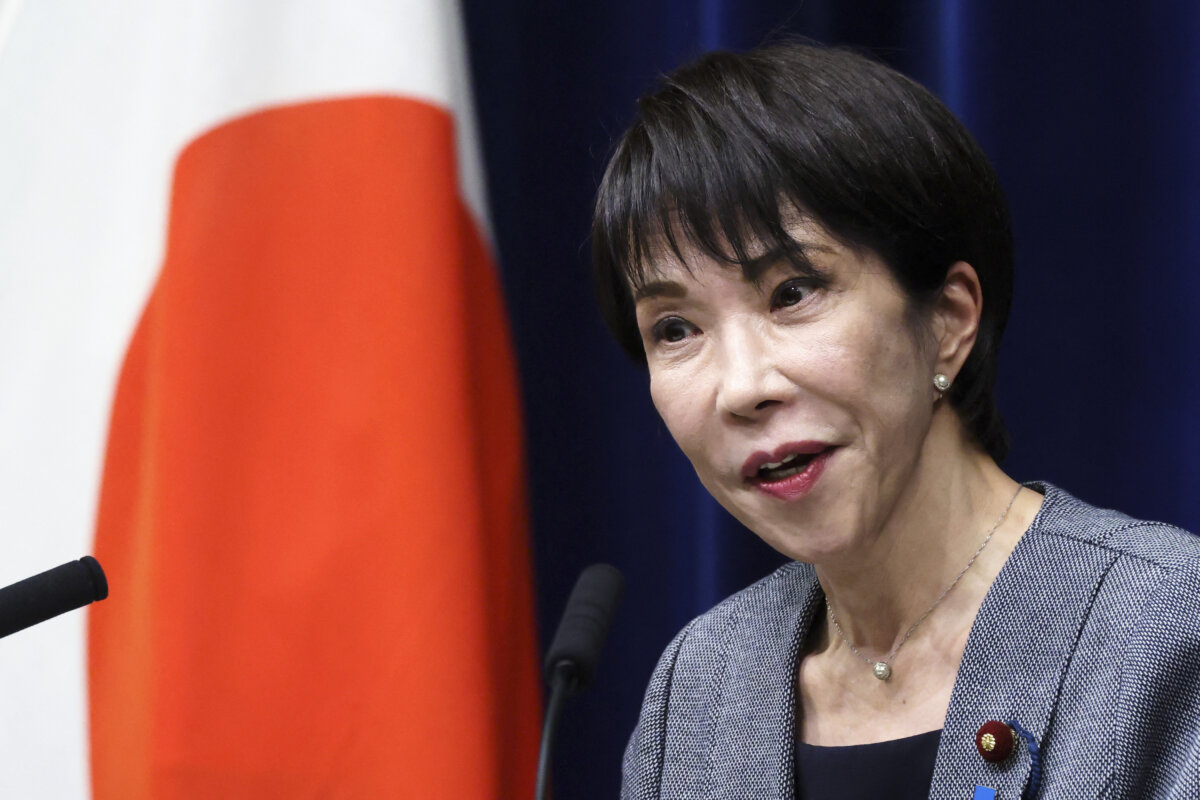

Japanese Prime Minister Sanae Takaichi plans to dissolve the lower house of parliament soon after it convenes later this month, setting the stage for a snap general election, a senior official from the ruling party said on Jan. 14.
Shun’ichi Suzuki, secretary-general of the ruling Liberal Democratic Party (LDP), told reporters that Takaichi had informed him and other top party officials of her intention to dissolve the House of Representatives soon after the ordinary Diet session begins on Jan. 23.
Suzuki did not specify a date for the dissolution or the election itself. He said preparations for a nationwide vote would need to accelerate immediately, given the prime minister’s stated intent.
Speaking to television networks after meeting Takaichi, Suzuki said the ruling camp was already moving into election mode.
Takaichi took office on Oct. 21, 2025, becoming Japan’s first female prime minister after winning the leadership of the LDP. She formed a new coalition government with the Japan Innovation Party, also known as Ishin no Kai, replacing the long-standing partnership with Komeito.
Suzuki said Takaichi told him that voters had not yet had a chance to pass judgment on the new coalition or on the policy agreement between the LDP and the Innovation Party.
“The coalition partners have changed, but the public has not yet judged them,” Suzuki said, describing the prime minister’s explanation.
He said that Takaichi believes that the contents of the coalition’s policy pact “need to be judged by the public” before the government can move forward with confidence.
The secretary-general said the prime minister also wants voters to weigh in on new policy directions that were not part of the previous election campaign.
These include what the government calls a “responsible active fiscal policy” and a review of Japan’s three key defense documents, which guide national security and military planning.
Budget Timing
The prospect of an early election has raised concerns about whether parliament can pass the next fiscal year’s budget before the year ends in March. Suzuki acknowledged those concerns, noting that some critics warn of economic disruption if the budget is delayed.
He said the government already tried to cushion the impact by compiling a large supplementary budget at the end of 2025. The draft budget, approved in December, set out a record 122.3 trillion yen ($770 billion) for the next fiscal year. At that time, Takaichi told reporters the budget was designed to balance economic strength with fiscal discipline.
That package includes measures to fight rising prices and support households, some of which have yet to be implemented.
“We will expedite their implementation,” Suzuki said, adding that the government would seek to minimize any economic impact when the new fiscal year begins in April.
Opposition Reactions
Opposition parties have begun positioning themselves for a possible snap vote, even as they criticize the timing.
Yoshihiko Noda, leader of the Constitutional Democratic Party of Japan, said in a Jan. 11 post on X that his party was prepared to face an election if the lower house is dissolved.
In a follow-up post on Jan. 13, Noda warned against creating a political vacuum at a time of mounting domestic and international challenges, including high prices, energy concerns, and budget execution. He said any dissolution should be carefully explained to the public.
Yuichiro Tamaki, leader of the Democratic Party for the People, was more critical. On Jan. 14, he accused the ruling camp of breaking promises by moving toward dissolution while pledging earlier to pass the budget within the fiscal year. He also criticized candidate placements in electoral districts.
In a Jan. 13 post on X, Tamaki predicted that the lower house could be dissolved on Jan. 23, with an election announcement on Jan. 27 and voting on Feb. 8.
Takaichi is expected to clarify her plans and the election timetable at her scheduled news conference on Jan. 19.
 Friends Read Free
Copy
Facebook
Tweet
Friends Read Free
Copy
Facebook
Tweet