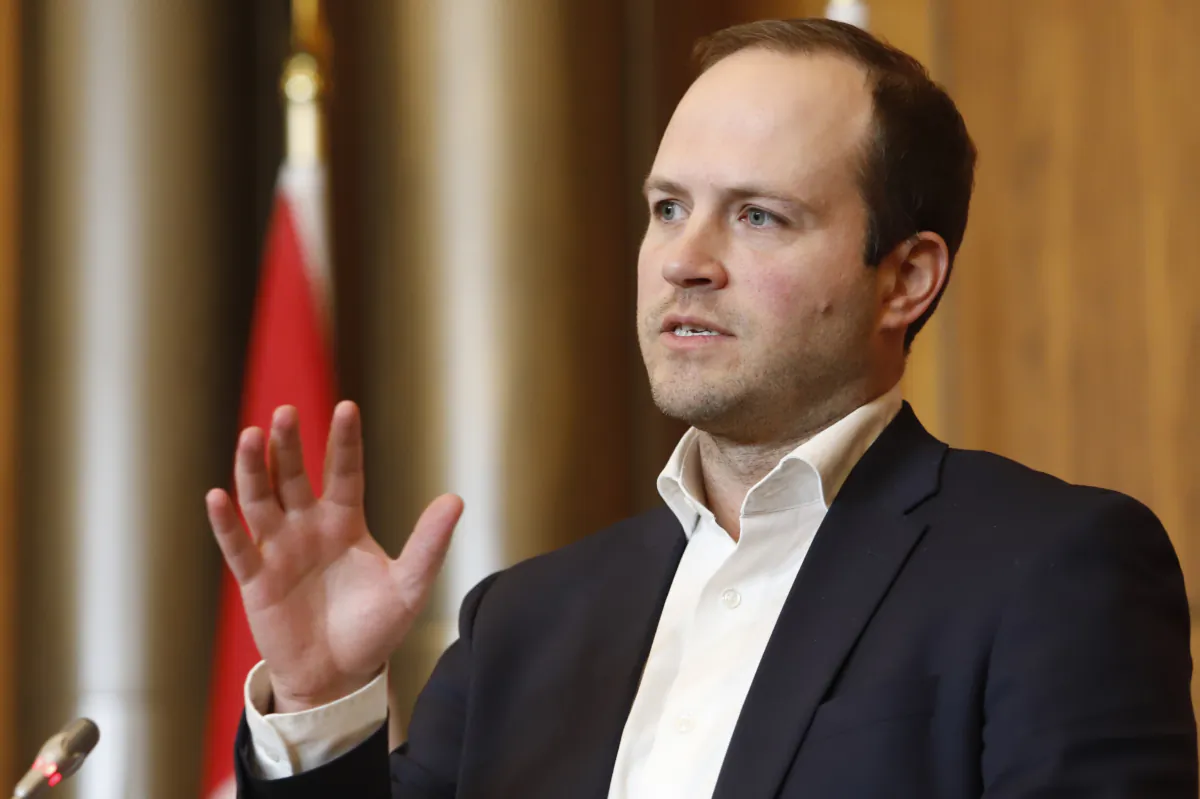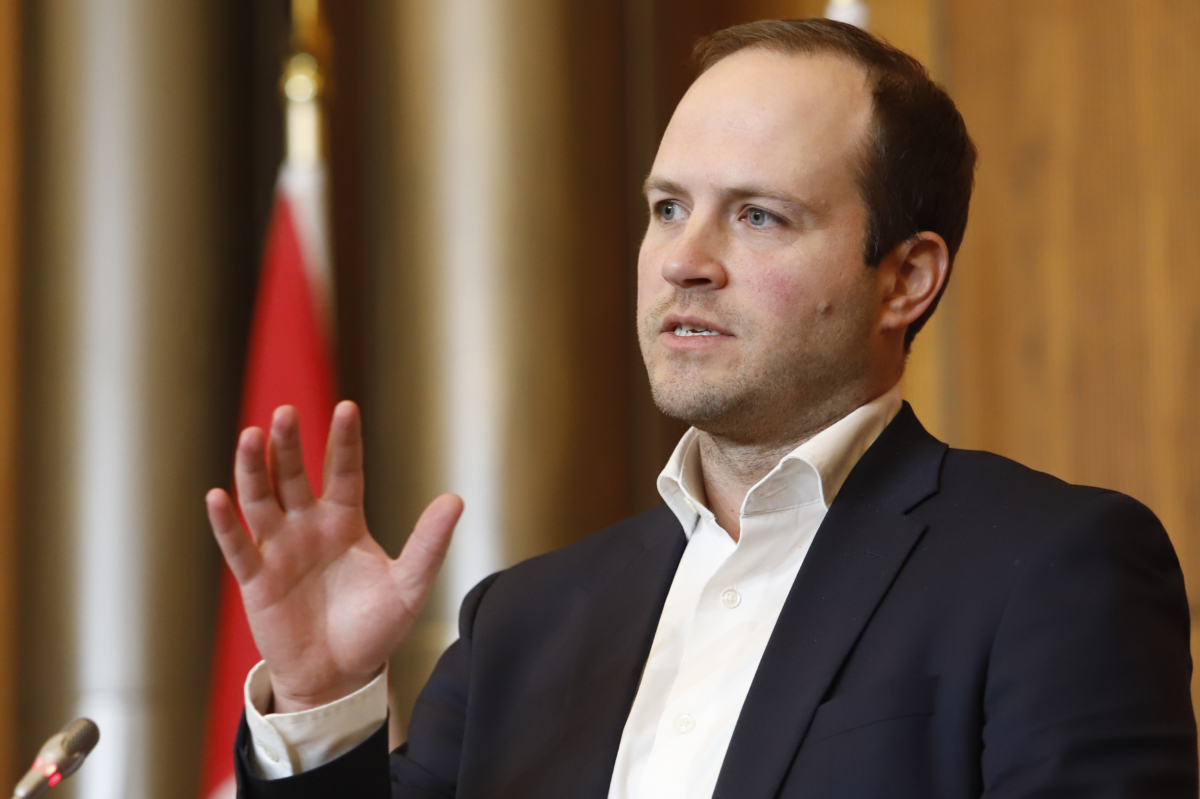

A long-time Liberal MP has posted a video critique of Prime Minister Mark Carney’s first budget, outlining where he says the government has fallen short on meeting expectations set by the party during the spring election campaign.
Former housing minister Nathaniel Erskine-Smith took to social media this week to offer a mixture of criticism and praise for Carney’s budget in a video labelled, “The Good, the Bad and the Ugly.” While Erskine-Smith pointed out several parts of the budget he liked, he spent more time listing the “bad” and the “ugly” aspects of the document that will undergo a vote in the House of Commons next week.
Many of the elements Erskine-Smith referenced in his video have also been cited by opposition parties in their criticism of the budget.
The Good
Erskine-Smith said despite his criticisms of the budget, there are several elements he likes, including a heightened emphasis on the nation’s sovereignty.
“In the face of threats, the government is rightly prioritizing actions to secure our sovereignty, that includes support for businesses and workers affected by tariffs, a buy Canada procurement policy, significant new infrastructure spending and a huge commitment to the Canadian Forces,” the 10-year Toronto-area MP said.
An increased emphasis on Canada’s critical minerals and the government’s response to address rising youth unemployment with its $307.9 million Youth Employment and Skills Strategy also met with his approval. He said he also liked the government’s move to “protect” the Canada disability benefit from taxation by proposing a one-time supplemental payment of $150 to assist recipients in covering the expenses associated with their disability tax credit certification or re-certification.
He praised proposed funding for “innovation” and “attracting talent and research” from the United States, “whose administration seems intent to run intelligence out of its country.”
Erskine-Smith said he is also happy about the government’s increased focus on productivity, something that he hopes will drive economic growth in the private sector and “get the most out of public services.”
“Although, yes, care is required to ensure those efforts don’t go sideways,” he added.
The Bad
The budget proposes more than $140 billion in new spending over five years, resulting in a net spending increase of $90 billion after accounting for $50 billion in savings from program cuts, Erskine-Smith said.
The budget contains significant deficit financing to support non-capital, new expenditures, he said, noting that just 36 percent of the net new spending is capital-related.
“Yes, honouring our initial 2 percent commitment to NATO made sense, and a middle class tax cut was a platform promise, but these are far and away the two largest financial commitments,” he said. “They are non-capital, and they should be paid for. My kids shouldn’t pay for today’s military or for me to save $400 of income taxes.”
He also noted that Old Age Security reforms “are still not a topic of our political discussion,” despite being the country’s largest non-capital expenditure.
Erskine-Smith said the budget also fell short on both environmental policy and housing initiatives, two issues that played a large role in Carney’s campaign promises.
He said the budget “rightly highlighted” the role of an increased industrial carbon price, but did not introduce any new environmental policy beyond that commitment.
“Yes, we are moving forward with strong methane rules and clean investment tax credits, and these are key pieces,” he said. “But we are also cutting tree planting, moving away from an emissions cap.”
The budget eliminated the Liberal initiative to plant two billion trees by 2031 as a cost-saving measure. The program, which was initiated by former Prime Minister Justin Trudeau, fell victim to Ottawa’s Comprehensive Expenditure Review aimed at curbing government expenditures. It requires most government departments to identify 15 percent in savings over the next three years.
The government has also signalled its intention to eliminate the oil and gas emissions cap, another Trudeau-era program to reduce greenhouse gas pollution from the oil and gas sector with an end goal of carbon neutrality by 2050.
Environment Minister Julie Dabrusin said last weekend that the oil and gas cap would no longer be needed if the government fulfills its commitments to lower pollution via other strategies, however, she did not say how long it would take for Canada to fulfill the requirements necessary to lift the cap.
Erskine-Smith said the budget also failed to reinstate the Canada Greener Homes Loan, which was shuttered on Oct. 1. The program offered interest-free financing to help Canadians make their homes more energy efficient. The former housing minister also noted that the budget offers no new money for environmental initiatives on housing.
“We’ve got the beginnings of Build Canada Homes, a tax cut for new home buyers, and some dollars for housing enabling infrastructure that are important but unfortunately, very unlikely to move the needle on development charges to a degree we would like,” he said.
Build Canada Homes is a federal agency launched to increase the supply of affordable housing in Canada, while the tax cut eliminates the GST for first-time home buyers on new homes up to $1 million.
The budget’s focus on housing “falls short of the specific promises in our platform, and it unfortunately falls well short of the wartime effort that many of us thought we’d deliver,” Erskine-Smith said, referring to the Canadian government’s Victory Housing initiative in the 1940s to rapidly build affordable, prefabricated homes.
The Ugly
Erskine-Smith noted that not many of his criticisms fell into the more serious “ugly” category, but said the budget commitment to a “new inefficient fossil fuel subsidy” for LNG facilities is one of them.
One example of that is the budget proposal to reinstate accelerated capital cost allowances for LNG equipment and related buildings that are low-carbon facilities.
“Look, if there’s a business case for LNG, there is a business case,” he said. “We do not need more public dollars chasing fossil fuels.”
He also criticized the Liberal government’s plan to cut $2.7 billion in foreign aid over the next four years. He said the decision “caters to a prevailing, albeit short-sighted, current view among wealthy donor countries.”
“Now, I know these are not easy times, and a budget process involves tough choices. Of course it does,” he said. “It’s certainly not a budget that should throw us into an election at such an uncertain time, but fairly, it does not live up to its promise of generational investments.”
The Liberal government has survived two confidence votes on the budget so far, and will face its final vote on Nov. 17. The Conservatives and the Bloc Québécois have said they can’t support the budget bill in its current form, while the NDP has said it is still weighing its options.
The minority Liberals now hold 170 seats in the House of Commons after Nova Scotia MP Chris d’Entremont left the Conservatives, crossing the floor to join the Liberals. The government remains two seats short of the number required to pass the budget without assistance from an opposition party.
The government will fall if it is not successful in finding the votes it needs to pass its budget next week, triggering a second federal election in less than a year.
Past Criticisms
This week’s video is the second time the veteran MP and former cabinet minister has publicly criticized Carney.
Erskine-Smith was one of the 10 people Carney dropped from cabinet this spring, a move that the MP said made him “feel disrespected.”
Erskine-Smith announced in January 2024 he would not seek re-election in the 2025 vote after nearly a decade of representing Beaches-East York, but changed his mind last December after being appointed as the minister of housing by then-Prime Minister Justin Trudeau.
Erskine-Smith took to social media in May to express his disappointment over not retaining his housing portfolio as well as being excluded from cabinet altogether.
“I ran again because of the opportunity to make an even bigger difference around the cabinet table and to help fix the housing crisis,” he said in a series of posts May 13 on the X platform.
“It’s impossible not to feel disrespected and the way it played out doesn’t sit right. But I’m mostly disappointed that my team and I won’t have the chance to build on all we accomplished with only a short runway.”
Erskine-Smith held the housing portfolio for less than six months after replacing Sean Fraser, who had resigned from cabinet last December, citing a desire to spend more time with his family.
Fraser reversed course after Carney was named Liberal leader and was re-elected for a fourth term in his Nova Scotia riding. He was named minister of justice and attorney general in Carney’s new cabinet.
Erskine-Smith’s replacement for the housing portfolio, Gregor Robertson, served as the mayor of Vancouver for a decade.
Erskine-Smith wished Robertson luck in the May 13 post and expressed his hope that the rookie MP would move quickly to address the housing issues Canada is facing.
“Our ambitious housing plan is bigger than one person, of course,” he wrote. “I wish the new minister well and hope we’ll see fast action to unleash the market, double down on building community housing, address chronic homelessness, and treat housing as a home first.”
 Friends Read Free
Copy
Facebook
Tweet
Friends Read Free
Copy
Facebook
Tweet