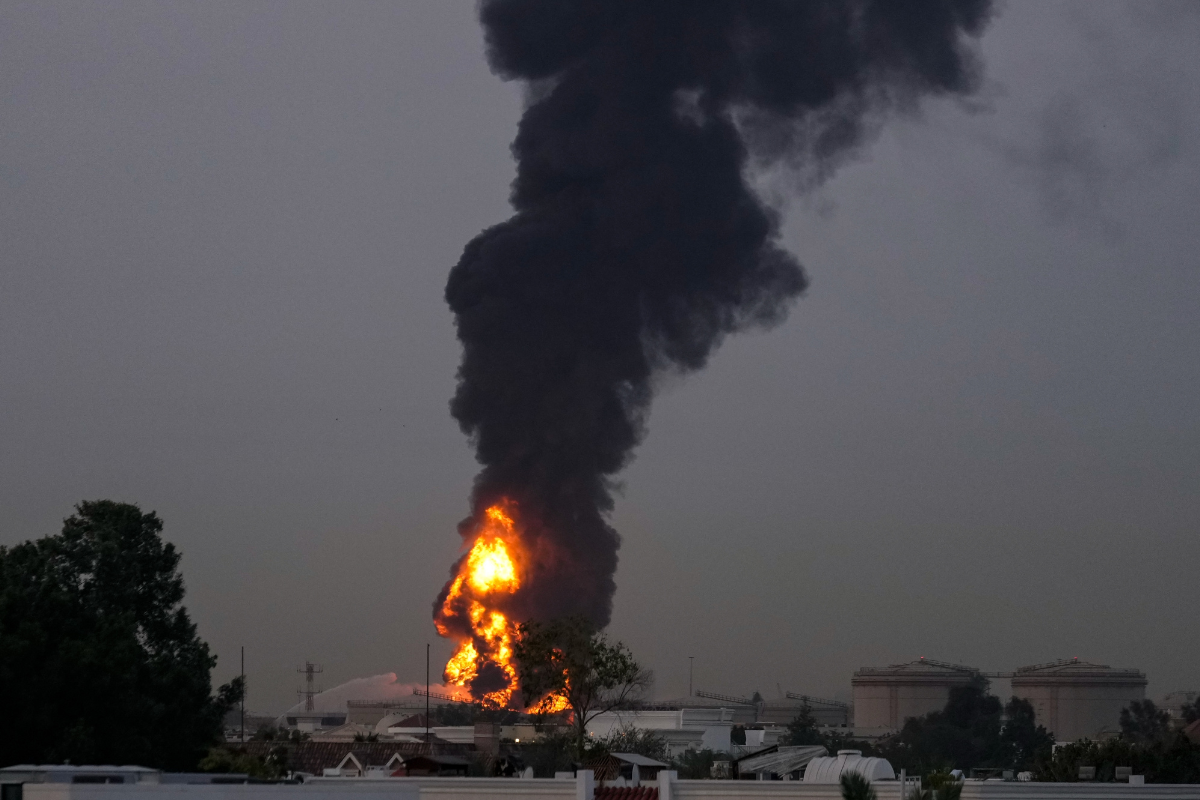

More than 90 percent of Iranian attacks on the United Arab Emirates (UAE) have been on civilian targets, Abu Dhabi said on April 19.
Emirati Minister of State for International Cooperation Reem Al Hashimy told ABC News’s “This Week With George Stephanopoulos” that over the previous 40 days, the country had been attacked by a “little over 2,800” missiles and drones. She also said that “over 90 percent of all of their targets” were civilian infrastructure, such as hotels and airports.
Al Hashimy said she was concerned about the prospect that Iran would retain the power to attack the UAE, even in the event of a peace deal. She said that the Islamic Republic wanted to “break what it was that made the UAE special, which is this incredible model of prosperity and tolerance.”
When asked about the prospects of such a deal, she said Abu Dhabi does want peace in the region, “but it can’t be a bad peace.”
“It can’t be a peace where it doesn’t address the root causes, which is Iran dealing with proxies like Hezbollah and Hamas and the Houthis having a nefarious missile and drone program, a nuclear enrichment program, being able to weaponize the straits,” she said.
She described Iran’s ability to control vital shipping lanes such as the Strait of Hormuz as “a really serious tool” that can “hurt cities from Des Moines to Delhi in spiking up fuel prices and spiking up food prices.”
“They don’t have the right to do that,” she said. “And that’s why what the president has put forward, which is to not allow them to take over the straits, is going to be really important moving forward.”
Al Hashimy confirmed that the UAE opposed beginning the war in the first place, but she also cautioned against trusting the Iranian regime.
“Right now, they’re going to have to really step up in a significant way for us to be able to believe what they say again,” she said.
She said that now that a war has begun, “maximum pressure,” such as U.S. President Donald Trump’s previous threat to start targeting bridges and power plants in Iran, is “what actually takes you forward” when dealing with organizations such as the Iranian Revolutionary Guard Corps.
U.S. Ambassador to the United Nations Michael Waltz discussed Trump’s threat, affirming that “all options are on the table” and that, unlike his predecessor, President Joe Biden, Trump “doesn’t publicly take options off the table and tell [the United States’] adversaries what he’s not going to do, therefore giving them leverage.”
He said that the United States could take out Iran’s infrastructure “relatively easily,” describing the nation’s air defenses as “absolutely decimated.”
“And just to get ahead of a lot of the critics and hand-wringing, throwing out irresponsible terms like ‘war crimes’, attacking, destroying infrastructure that has clearly and historically been used for dual military purposes is not a war crime,” Waltz said.
US Seizes Iranian Vessel
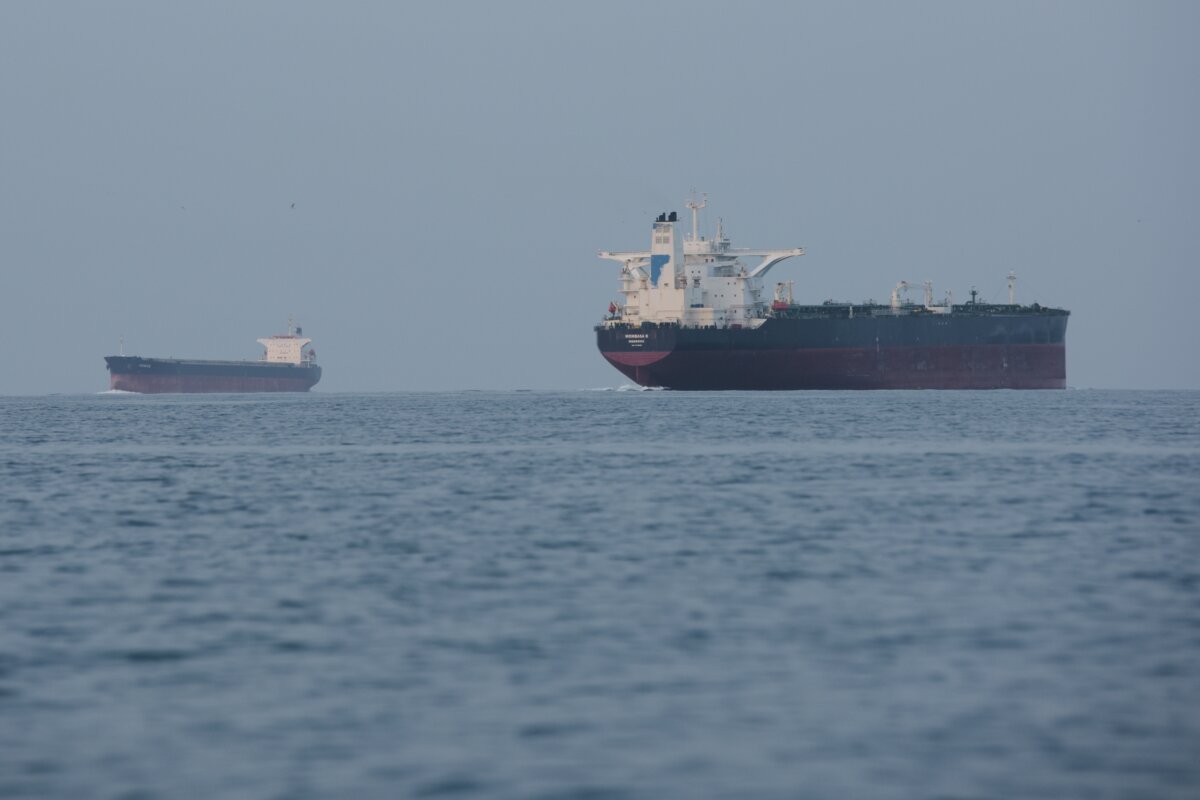
The U.S. Navy is currently blockading Iranian ports, and Iran is restricting traffic through the Strait of Hormuz, through which a fifth of the world’s oil and natural gas flows, amid a tentative ceasefire slated to last until April 21.
The Trump administration is working to secure a peace deal with the Iranian regime before a two-week ceasefire ends, and the president announced over the weekend that U.S. negotiators would arrive in Pakistan on the evening of April 20 for another set of talks with Iran.
Over the weekend, the United States attacked and seized an Iranian-flagged cargo vessel that it said had tried to evade its blockade of Iranian ports.
Trump said in a post on Truth Social that the ship, called the Touska, attempted to get past the U.S. military blockade that has been in effect since April 13.
“It did not go well for them,” he wrote.
A U.S. Navy destroyer intercepted the cargo ship in the Gulf of Oman and first warned it to stop. When it refused, the U.S. ship “stopped them right in their tracks by blowing a hole in the engineroom,” Trump wrote.
“Right now, U.S. Marines have custody of the vessel,” the president wrote. “The TOUSKA is under U.S. Treasury Sanctions because of their prior history of illegal activity. We have full custody of the ship, and are seeing what’s on board.”
In response to the attack, Iran accused the United States of a ceasefire violation.
Trump also reiterated his threat to destroy civilian infrastructure in the country if it doesn’t take the deal that the administration has offered. Tehran has said it is preparing its military during the ceasefire.
Iranian Ministry of Foreign Affairs spokesperson Esmail Baghaei said on April 20 that Tehran did not have plans yet to attend any talks with the United States. He did not rule out Iran’s attendance at talks.
Baghaei said on April 19 that the U.S. blockade of Iran’s ports and coastline is an act of aggression that violates the ceasefire.
“[By] deliberately inflicting collective punishment on the Iranian population, it amounts to war crime and crimes against humanity,” Baghaei said in a post on social media.
His comments were made after the Iranian regime fully reclosed the Strait of Hormuz in response to the U.S. blockade.
Since the war started, at least 3,375 people have been killed in Iran, according to a new toll released on April 20 in official Iranian media by Abbas Masjedi, the head of Iran’s Legal Medicine Organization. He did not break down casualties among civilians and security forces, instead just saying that 2,875 were male and 496 were female. Masjedi said 383 of the dead were children 18 years old and under. The Epoch Times is unable to verify the figures.
More than 2,290 people have also been killed in Lebanon, 23 in Israel, and more than a dozen in Persian Gulf States. Fifteen Israeli soldiers in Lebanon and 13 U.S. service members throughout the region have been killed.
 Friends Read Free
Copy
Facebook
Tweet
Friends Read Free
Copy
Facebook
Tweet